
Table of Contents
In a world where sports often reflect national pride, North Korea’s commitment to girls’ soccer presents a compelling case study. The regime’s emphasis on developing young female athletes highlights its ambitions in sports and its desire to enhance its international image. This article examines how North Korea’s approach to training girls in soccer distinguishes itself and aligns with broader objectives.
For North Korea, the rigorous training of female soccer players transcends the goal of winning matches. It forms part of a comprehensive strategy aimed at exploiting perceived gaps in the international sports landscape. By focusing on athletes subjected to intense training regimens, North Korea seeks to cultivate talent that may be scarce in other countries, particularly in competitive youth sports.
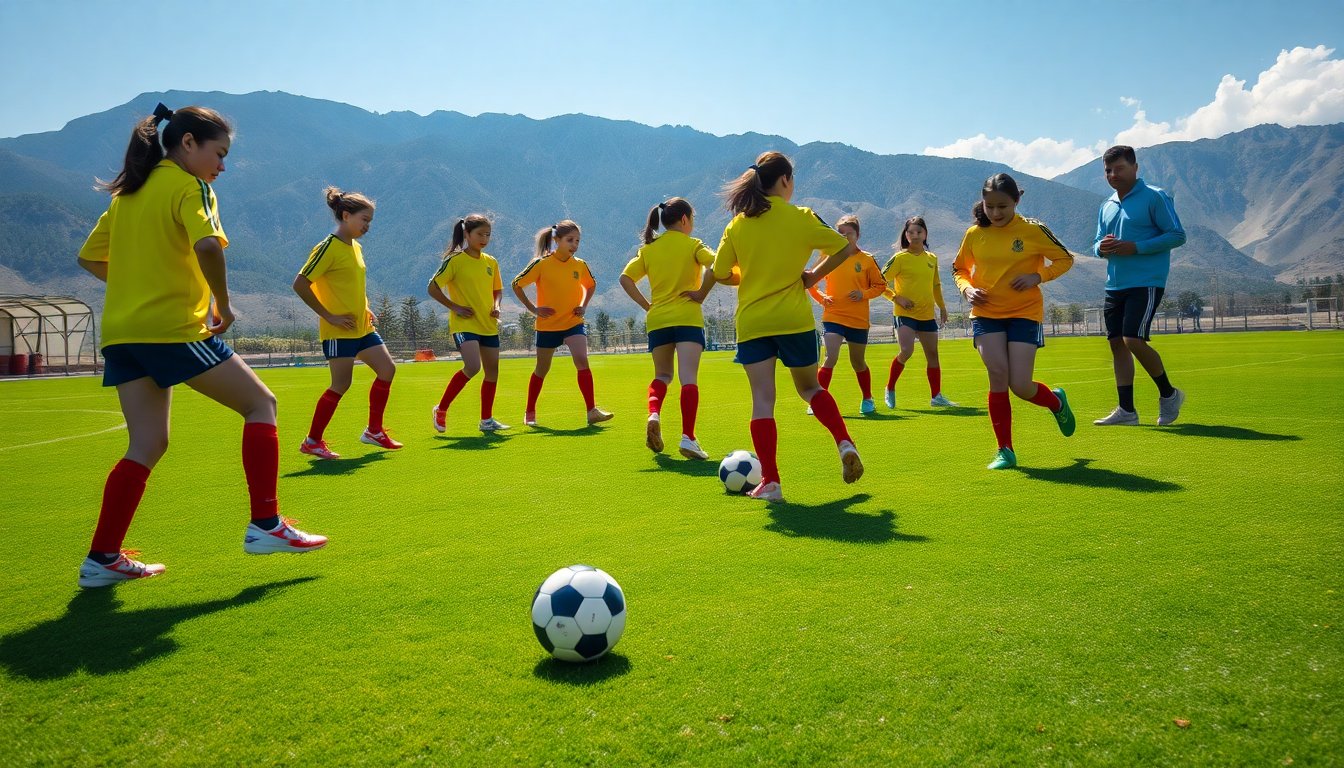
The unique training regimen of North Korean girls’ soccer teams
North Korea’s girls’ soccer teams adhere to a training regimen that is both intensive and demanding. This approach aims to maximize the potential of young athletes, often starting their training at an early age. The training programs are meticulously structured, involving long hours of practice, which can be seen as a form of athletic arbitrage—capitalizing on the less intensive training programs in other nations.
Unlike many countries where youth athletes may enjoy a more balanced training approach, North Korean girls typically commit fully to their sport. This commitment encompasses not only physical training but also an ideological component, where athletes perceive their success as a reflection of national strength. This dual focus on athleticism and ideology is crucial in shaping the athletes’ identities.
Competitive advantages through early specialization
A key component of North Korea’s strategy is the early specialization of its athletes. By identifying promising talents at a young age, the regime can allocate resources and support to these individuals, ensuring they receive optimal training. This early investment often results in a higher skill level compared to their peers in other nations, who may not undergo such rigorous training until later in their youth.
The focus on girls’ soccer also aligns with the regime’s broader goals of promoting women’s participation in sports. By showcasing female athletes on an international platform, North Korea projects an image of progressive values despite its authoritarian governance. This duality allows the country to navigate complex global perceptions while reinforcing its internal narratives.
International implications and future outlook
The implications of North Korea’s focus on girls’ soccer extend beyond the pitch. As these young athletes gain recognition in international competitions, they serve as ambassadors for their country. Each victory or notable performance bolsters national pride and challenges the stereotypes often associated with North Korea. This dynamic can lead to greater engagement with the international community, albeit under the regime’s controlled narrative.
Looking ahead, continued investment in girls’ soccer may yield significant benefits for North Korea, positioning its athletes as formidable competitors on the world stage. However, this strategy faces challenges. The regime must navigate the complex geopolitical landscape, where international relations can affect North Korean teams’ participation in global competitions.
Challenges faced by North Korean athletes
Despite ambitious goals, North Korean female soccer players encounter numerous challenges. Limited resources, coupled with the political climate, often hinder their ability to train and compete effectively. Access to international competitions is restricted, and travel limitations can impede exposure to diverse playing styles and training methodologies.
Moreover, the regime’s tight control over information means the success and struggles of these athletes frequently remain hidden from the outside world. Nevertheless, the passion and determination displayed by these young women continue to inspire hope for a brighter future in North Korea’s sporting landscape.