
Table of Contents
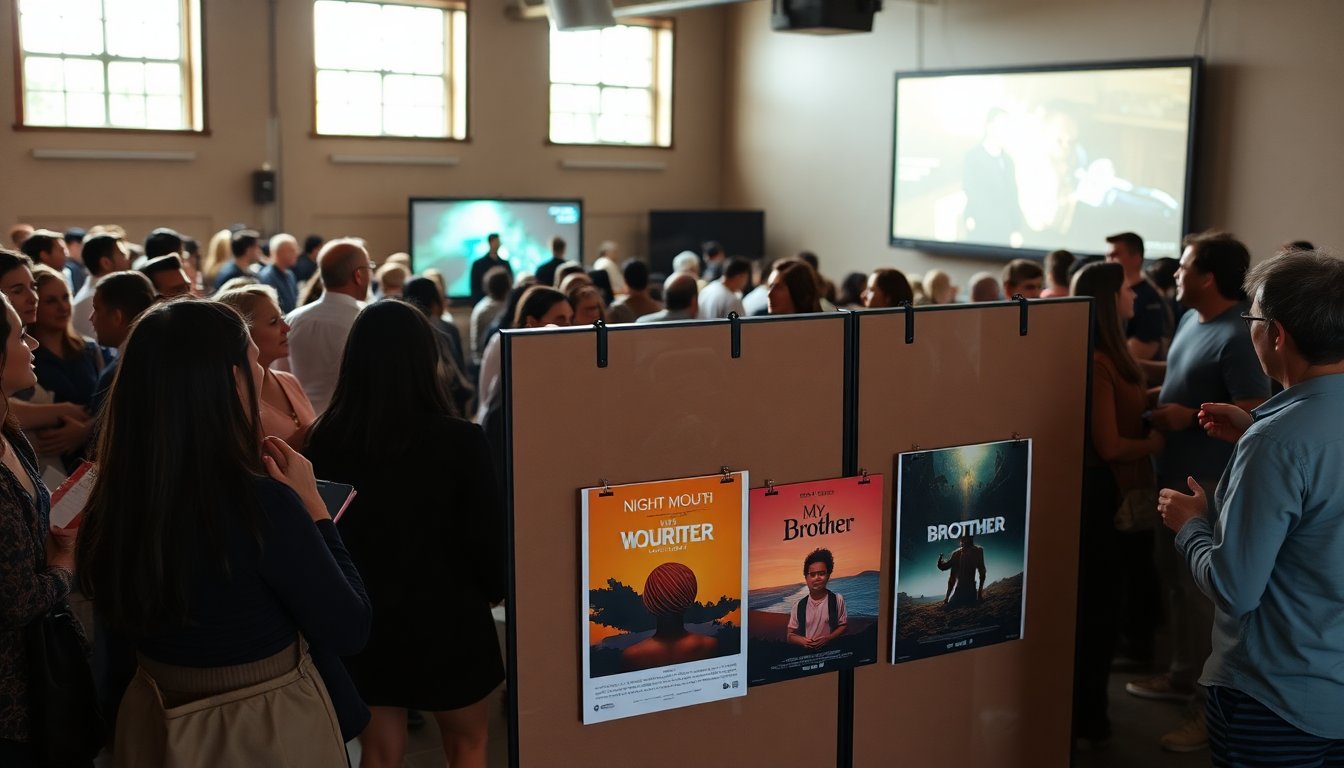
The Brazilian film industry is experiencing a significant transformation, driven by the efforts of Projeto Paradiso. At the recent Ventana Sur market, this initiative unveiled three new fictional feature films that highlight its commitment to promoting innovative and socially relevant cinema. The projects include Stephanie Ricci’s “Night’s Mouth,” Wara’s “Who Named the Earth?,” and Luciana Bezerra’s “My Brother,” reflecting the increasing dynamism within Brazil’s creative landscape.
Founded by the Olga Rabinovich Institute, Projeto Paradiso seeks to enhance the Brazilian film sector through its Paradiso Incubator. Since its launch in 2019, this initiative has gained recognition as one of the country’s leading screenplay development labs. With an emphasis on high-quality storytelling, the incubator has supported 27 projects, providing filmmakers with vital resources to navigate the industry.
New film projects in focus
The three new feature films showcased at Ventana Sur each tell distinctive stories rooted in Brazilian culture and identity. These projects are artistically ambitious and address pressing societal issues, positioning them as compelling entries in the global film market.
Night’s Mouth: A journey through urban solitude
Leading the lineup is “Night’s Mouth” (\”Boca da Noite\”), crafted by São Paulo-based filmmaker Stephanie Ricci. The narrative follows Areta, a 70-year-old woman whose greatest fear is not death but the possibility of being forgotten. One night, after losing her house keys in the bustling heart of São Paulo, Areta embarks on a quest for a 24-hour locksmith. This journey evolves into a surreal exploration of the city, where she encounters various marginalized characters, challenging society’s perceptions of age and isolation.
Ricci describes “Night’s Mouth” as a walking road movie that captures the essence of Latin America’s largest metropolis. Through this perspective, audiences will experience Areta’s unexpected adventure and her interactions with those often regarded as outcasts.
Who Named the Earth?: An exploration of identity and resistance
The second project, “Who Named the Earth?” (\”Quem deu nome à terra?\”), directed by Wara, explores the realms of Indigenous futurism and science fiction. Set in a near-future Brazil governed by a biometric system, the narrative follows Hakan, a non-binary Indigenous character, as they journey with their family to reclaim their heritage and confront systemic erasure. The film intertwines familial bonds with a broader narrative of resistance against cultural suppression.
Wara emphasizes the importance of blending visual storytelling with community and ancestral knowledge. The project has received substantial support, including funding from Ceará State and participation in notable labs such as BrLab Features and TorinoFilmLab. With Brazilian producer Rachel Daisy Ellis now involved, the film is entering a new phase of development.
Expanding opportunities for filmmakers
In addition to these film projects, Projeto Paradiso is enhancing its educational initiatives. Recently, the organization collaborated with the Kourtrajmé schools, which have campuses in France, Senegal, and the Caribbean, to host a workshop in Salvador, Bahia. Titled Vozes Decoloniais: Oficina de Desenvolvimento de Narrativas Seriadas, this workshop is designed to empower emerging storytellers and promote the exchange of artistic ideas across continents.
Workshops fostering new narratives
Running from December 5 to 12, the workshop aims to develop original series concepts through collaborative efforts between participants from Kourtrajmé and members of the Paradiso Talent Network. The first phase of this training took place earlier in the year and involved a diverse group of 60 participants. The second phase will focus on a select group working closely to create a proof of concept for a new series.
This initiative illustrates Projeto Paradiso’s commitment to fostering a diverse range of voices in the Brazilian film industry. The culmination of this workshop will feature a pitching session, allowing participants to present their projects to industry professionals.
Founded by the Olga Rabinovich Institute, Projeto Paradiso seeks to enhance the Brazilian film sector through its Paradiso Incubator. Since its launch in 2019, this initiative has gained recognition as one of the country’s leading screenplay development labs. With an emphasis on high-quality storytelling, the incubator has supported 27 projects, providing filmmakers with vital resources to navigate the industry.0