
Table of Contents
Tesla’s bold move into humanoid robotics
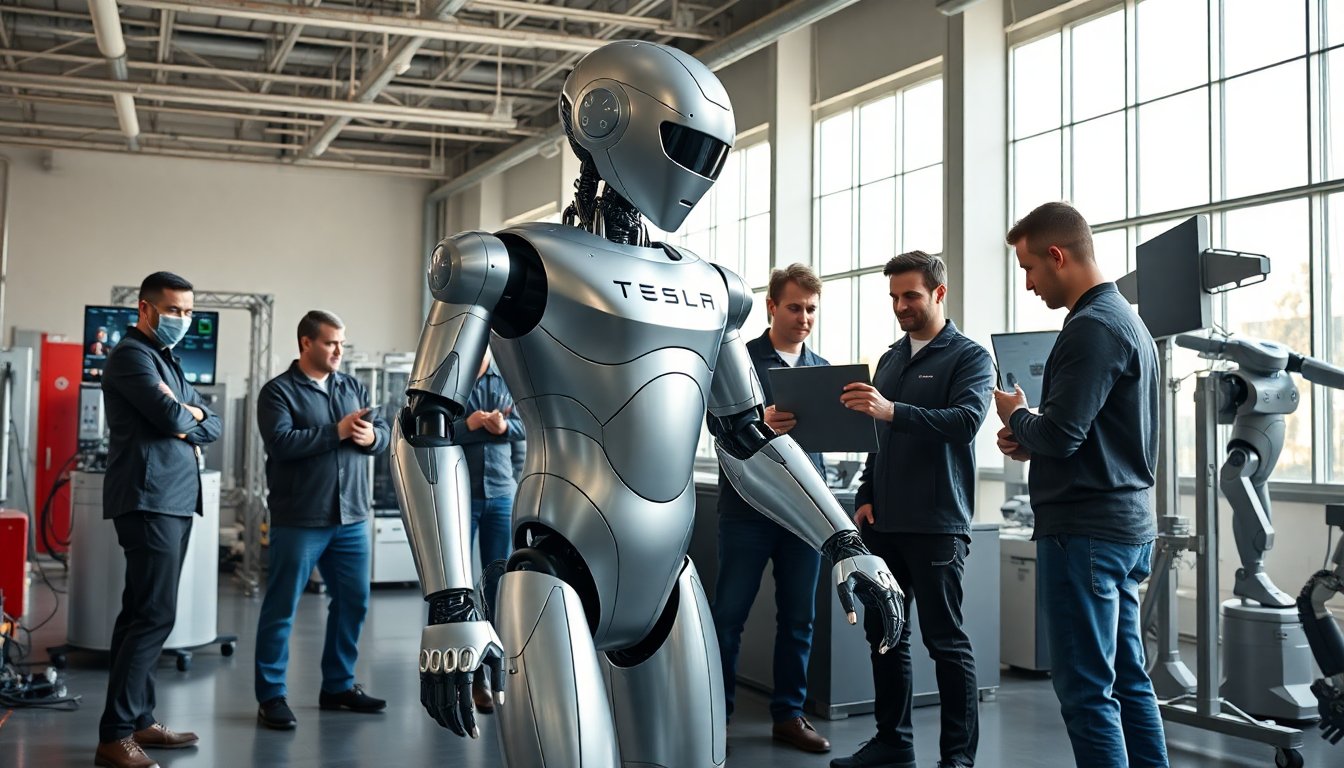
Tesla, the renowned electric vehicle manufacturer led by Elon Musk, is embarking on an ambitious journey to develop humanoid robots, known as Optimus. This initiative marks a significant shift in Tesla’s strategy as the company seeks to integrate advanced robotics and artificial intelligence into its operations.
Okay, but can we talk about the Optimus robot? Despite the excitement surrounding this project, experts suggest that Tesla’s success will heavily depend on its supply chain, particularly in China. While the final assembly of these robots is planned for the United States, the initial components will likely be sourced from China’s rapidly evolving robotics industry. This dual approach underscores the complex relationship between domestic production and international supply chains in high-tech industries.
Investors’ interests in Tesla’s robotics and AI initiatives
As Tesla prepares for its upcoming earnings report, investor focus sharply centers on the company’s plans for artificial intelligence and robotics. Retail investors have actively submitted questions, with many expressing concern about how SpaceX, another venture of Elon Musk, may influence Tesla’s future. A notable inquiry highlighted potential prioritization of long-term Tesla shareholders if SpaceX were to pursue a public listing.
This situation reflects a growing unease among investors, who collectively own approximately 1.4 million shares of Tesla. They seek clarity regarding their positions should SpaceX’s anticipated initial public offering (IPO) materialize. With valuations soaring, investors are eager to understand how their stakes in Tesla could be affected as SpaceX aims for a valuation of up to $1.5 trillion.
Focus on autonomous vehicle technology
Tesla’s advancements in autonomous vehicle technology are drawing considerable attention. The company has initiated the deployment of autonomous vehicles for its robotaxi service in Austin, Texas. This marks a significant milestone as the service operates without safety drivers, demonstrating the feasibility of unsupervised driving in urban settings.
Nonetheless, investors are acutely aware of the hurdles Tesla must overcome to scale this technology. There are ongoing concerns regarding the bottlenecks that currently restrict the expansion of the robotaxi fleet and the economic sustainability of this service, which remains available only in select areas.
The future of the Optimus robot
Elon Musk envisions the Optimus robot as more than just a technological advancement; he believes it could greatly influence the U.S. economy. In recent discussions, Musk highlighted the potential for these robots to revolutionize various sectors, including manufacturing and logistics, which could drive significant economic growth.
However, the timelines for mass production remain unclear. Tesla’s Fremont factory plans to shift from producing the Model S and Model X to focusing on the Optimus line, aiming to manufacture 1 million robots annually. Despite this ambitious target, Musk warned that significant production volumes are unlikely until late in the year, as the robot initiative is still in the research and development phase.
Challenges and opportunities
As excitement builds around the Optimus project, Tesla recognizes the distinct challenges of developing humanoid robots. Unlike the automotive sector, which benefits from established supply chains, humanoid robot production is a novel endeavor that demands innovative solutions throughout the entire process.
In addition, as Tesla gears up to launch the next generation of Optimus, the company is also focusing on improving its Full Self-Driving (FSD) software. Elon Musk has announced plans for the current FSD model to transition to a subscription-based service, prompting discussions about future pricing structures and consumer accessibility.
Tesla’s future in robotics and transportation
Tesla’s focus on humanoid robotics and autonomous vehicle technology signifies a significant advancement into the future. As the company integrates these innovations into its business model, it is essential to observe the unfolding of these initiatives. Striking a balance between utilizing international supply chains and enhancing domestic production will be crucial for Tesla as it aims to transform the manufacturing and transportation landscape.