
Table of Contents
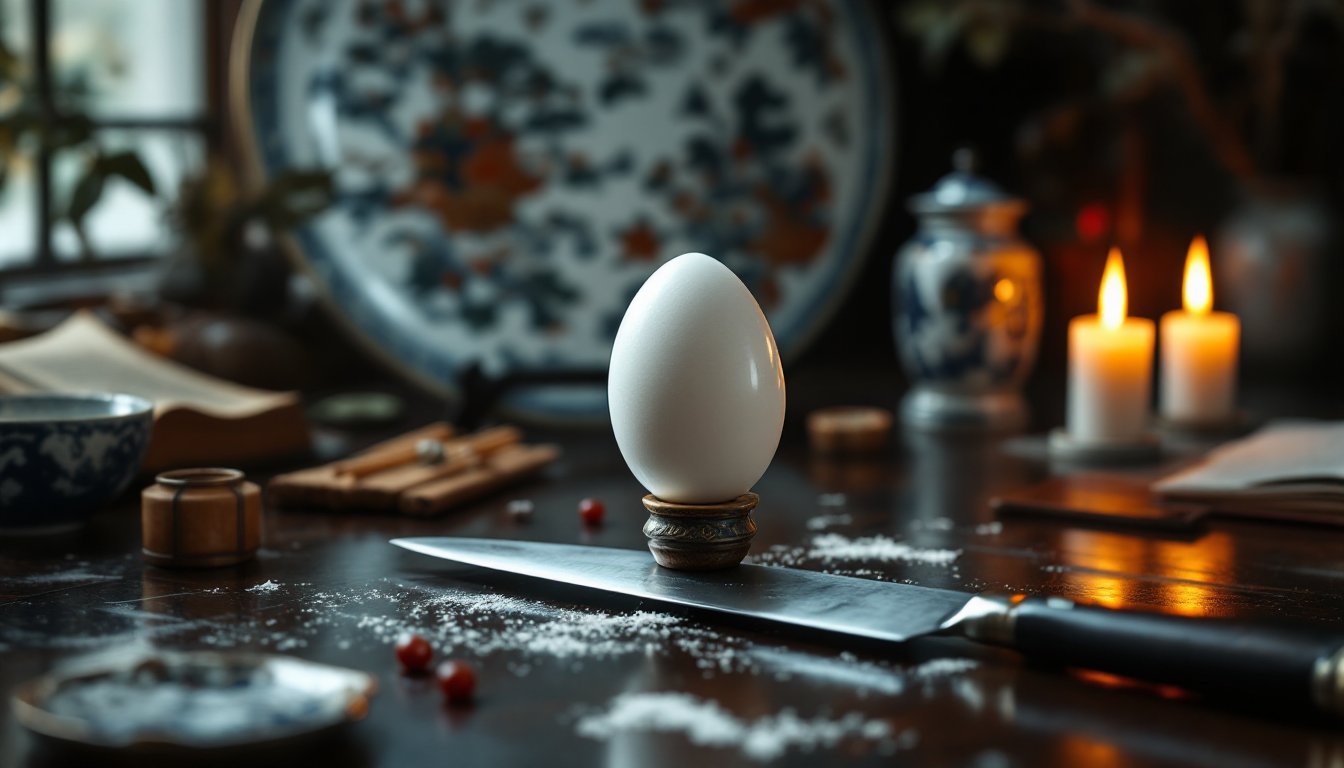
In the rich tapestry of Chinese folklore, rituals and superstitions hold significant importance in the lives of many families. One particularly intriguing practice involves the use of raw eggs to determine if someone has fallen under the influence of a wandering spirit. This ritual, often conducted by egg-standing exorcists, depends on the delicate balance of an unboiled egg placed on a flat surface, such as a mirror or a kitchen knife.
The belief is both simple and profound: if the egg remains upright, it is thought to signify that a spirit has taken possession of the affected individual. This practice is rooted in the traditional superstition known as Cai Zhuang Ke, which translates loosely to “spirit possession” and is typically invoked when sudden illness or unexplained lethargy occurs.
The significance of the egg ritual
This custom transcends mere curiosity; it embodies a broader cultural narrative that intertwines the physical and spiritual realms. Families may resort to this ritual in times of distress, seeking clarity amidst confusion regarding the source of their loved one’s suffering. Balancing the egg serves as a diagnostic tool, reflecting the community’s belief in the tangible impact of spiritual entities on human health.
How the ritual is performed
Performing this ritual necessitates a steady hand and a calm environment. The egg-standing exorcist first prepares the setting, ensuring all distractions are minimized. The egg is then carefully placed on the mirror or knife, and observers hold their breath in anticipation. The moment of truth arrives when the egg either stands tall or tips over, indicating the presence—or absence—of spiritual influence.
This practice, while steeped in superstition, reveals a deep-seated need for understanding and control over life’s uncertainties. For many, the ritual offers a sense of empowerment, allowing individuals to confront what they believe to be external forces affecting their loved ones.
Cultural implications and modern relevance
As society evolves, the significance of such rituals may be viewed through various lenses. While some may dismiss egg balancing as mere folklore, others regard it as a vital connection to their heritage and beliefs. In contemporary society, the ritual serves as a reminder of the cultural narratives that shape personal and communal identity.
Connecting tradition with modernity
In an age dominated by science and technology, where empirical evidence often prevails, such practices might seem out of place. Yet, they endure, illustrating humanity’s enduring quest for meaning in the supernatural. The egg ritual, in its simplicity, invites reflection on the intersection of tradition and modernity, prompting questions about how ancient beliefs can coexist with contemporary understanding.
Ultimately, the ritual of balancing raw eggs to detect spirit possession encapsulates a vital aspect of Chinese cultural identity. It highlights the ongoing dialogue between the seen and unseen, the rational and the mystical. As families continue to engage in this practice, they not only uphold a cherished tradition but also navigate the complexities of their lived experiences, seeking comfort and clarity through time-honored beliefs.