
Table of Contents
In recent years, former President Donald Trump’s interest in acquiring Greenland and asserting influence over Panama has sparked considerable debate. The prospect of a U.S. president seeking to acquire foreign territories in the modern era raises significant questions worldwide. This exploration highlights the motivations behind Trump’s strategic ambitions and their potential impact on global geopolitics.
The geopolitical significance of Greenland
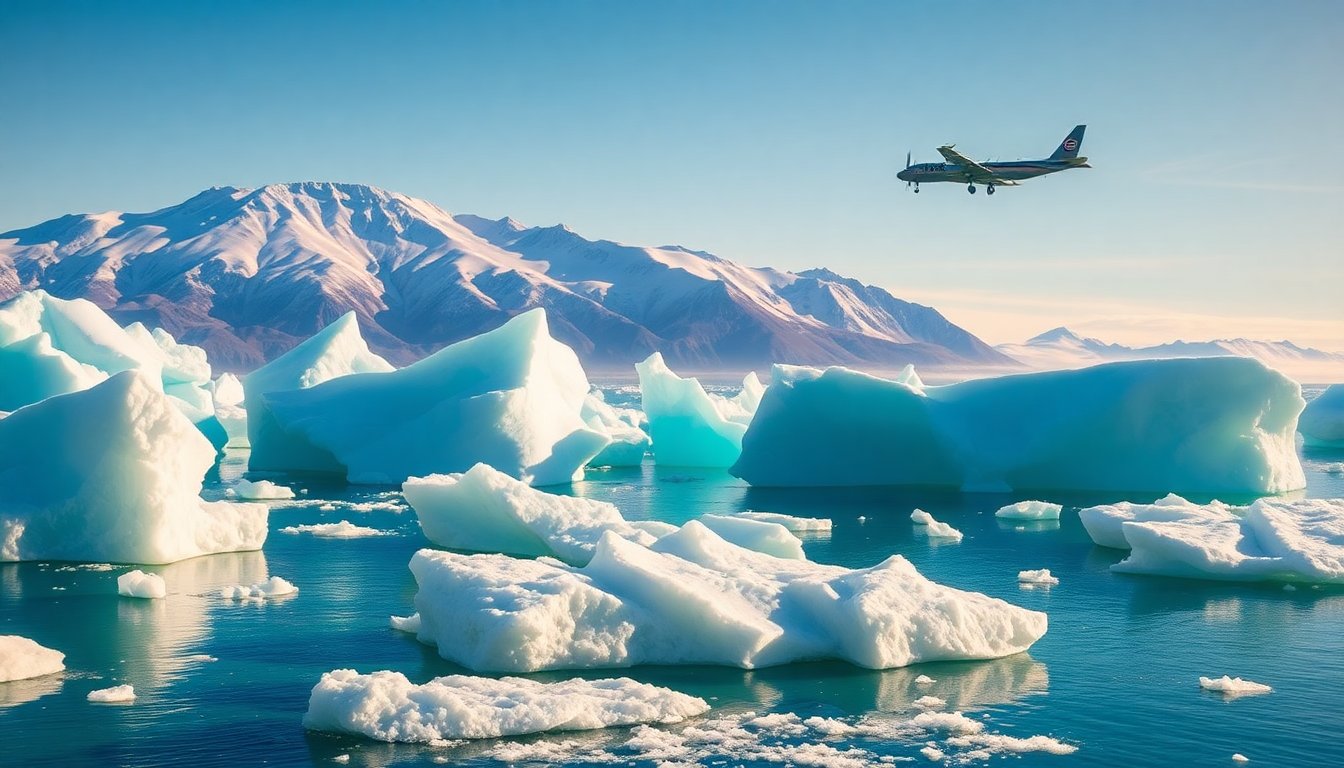
Trump’s vision for Greenland is fundamentally rooted in its strategic importance and rich natural resources. The island’s location in the Arctic is becoming increasingly vital due to the effects of climate change, which is modifying global shipping routes and opening new opportunities for resource extraction.
Resource wealth and strategic positioning
Greenland is believed to hold vast reserves of rare earth minerals, essential for modern technology and energy production. These resources have attracted the attention of multiple world powers, as they are crucial for manufacturing electronics and renewable energy technologies. The potential for oil and gas reserves further enhances Greenland’s appeal, promising economic security for the U.S. amidst fluctuating global energy markets.
Moreover, maintaining a presence in Greenland allows the United States to fortify its strategic position in the Arctic, counterbalancing the interests of nations like Russia and China. As the Arctic becomes more accessible, the competition for resources and influence intensifies, making Greenland a focal point in the struggle for dominance in this increasingly important region.
Panama: A critical maritime hub
Turning to Panama, the significance of the Panama Canal is undeniable. This vital waterway connects the Atlantic and Pacific Oceans, facilitating the swift transit of goods and military assets, thereby enhancing trade efficiency.
The historical context of U.S. interests
The U.S. has long recognized the strategic importance of the Panama Canal, which plays a crucial role in global maritime trade. Historically, American involvement in the canal’s construction has shaped its relationship with Panama, fostering ongoing collaboration regarding trade and security. Trump’s focus on Panama signals a desire to reinforce U.S. influence in Latin America, particularly as other global powers seek to expand their reach in the region.
Trump’s ambition to assert control over Panama reflects a broader strategy of enhancing U.S. geopolitical presence in a region where the influence of countries like China is growing. Establishing stronger ties with Panama could provide substantial military and economic advantages for the U.S., especially in light of shifting global dynamics.
Challenges and global reactions
Despite the potential benefits of Trump’s interests in Greenland and Panama, these ambitions encounter significant obstacles. In Greenland, the Danish government has expressed strong resistance to any U.S. acquisition proposals, emphasizing the need to respect Denmark’s territorial integrity. This has led to a sense of unease among Danish officials regarding U.S. intentions.
Furthermore, Trump’s aspirations have drawn criticism from various global powers, particularly China and Russia, who also have vested interests in these regions. The competition for influence in Greenland and the Panama Canal could escalate geopolitical tensions, raising concerns about regional stability and international cooperation.
Global reactions to Trump’s focus on these territories have varied. While some view it as a strategic maneuver to counterbalance the influence of other powers, others fear it may lead to increased instability in delicate geopolitical landscapes.
Future implications for U.S. foreign policy
Trump’s vision for Greenland is fundamentally rooted in its strategic importance and rich natural resources. The island’s location in the Arctic is becoming increasingly vital due to the effects of climate change, which is modifying global shipping routes and opening new opportunities for resource extraction.0
Trump’s vision for Greenland is fundamentally rooted in its strategic importance and rich natural resources. The island’s location in the Arctic is becoming increasingly vital due to the effects of climate change, which is modifying global shipping routes and opening new opportunities for resource extraction.1