
Table of Contents
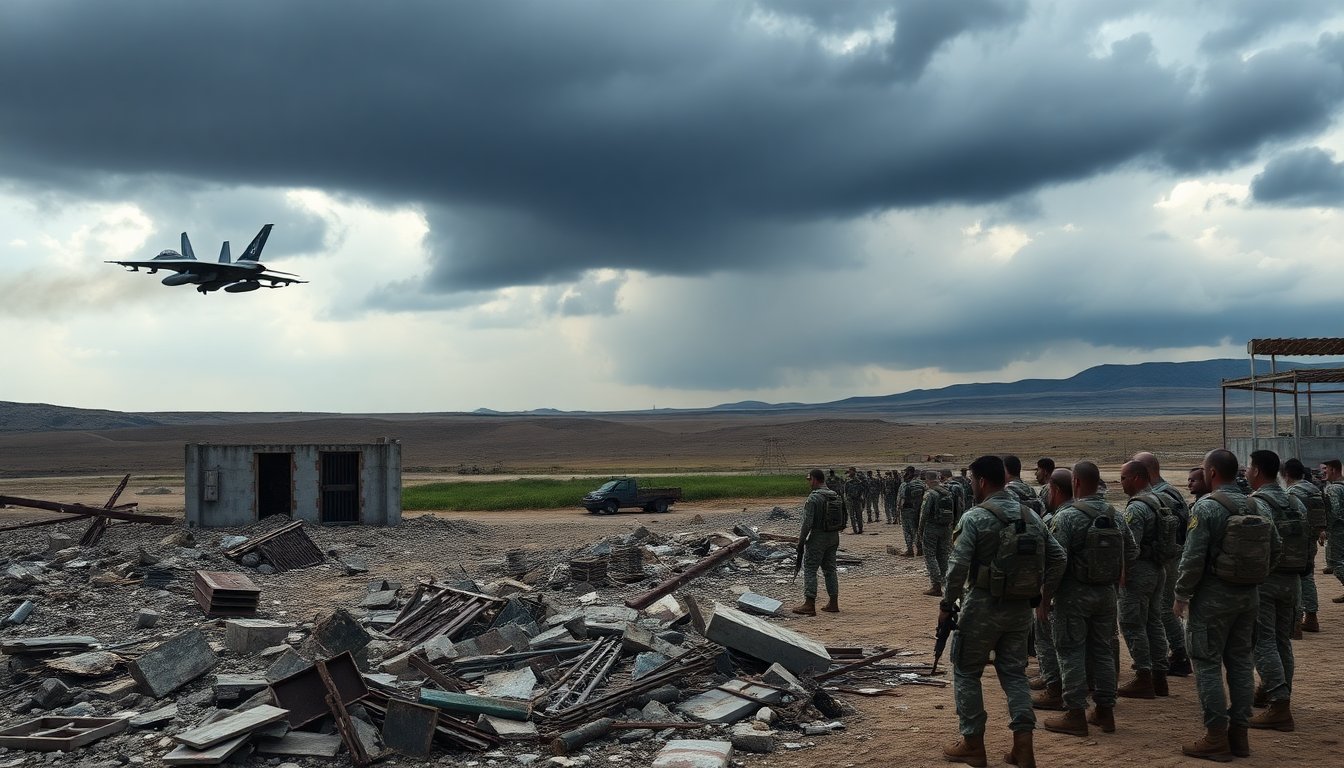
On Friday, the United States military conducted a series of airstrikes targeting multiple locations associated with the Islamic State in Syria. This action was a direct response to a recent attack on American personnel and marks a significant escalation in military operations in the region.
These strikes are part of a broader strategy involving a coalition led by the United States, actively engaged in combat operations against ISIS. In recent months, the coalition has routinely targeted suspected members of the terrorist organization, often collaborating with Syrian security forces.
Details of the operation
Dubbed Operation Hawkeye Strike, the mission was confirmed by U.S. Defense Secretary Pete Hegseth. He stated that the airstrikes aimed to eliminate ISIS fighters, disrupt their infrastructure, and destroy weapon caches. “This is not the start of a new conflict; rather, it is a declaration of retribution,” Hegseth remarked, emphasizing the intent behind the military action.
In a statement via social media, President Donald Trump claimed that the Syrian government fully supported the strikes, underscoring the seriousness of the U.S. response. Reports indicate that over 70 targets were engaged across central Syria, utilizing various military hardware including F-15 and A-10 fighter jets, Apache helicopters, and HIMARS rocket systems.
Impact on regional security
The urgency of U.S. military action became clear following a deadly attack on Saturday, where two U.S. soldiers and a civilian interpreter were killed in Palmyra. This assault was executed by a suspected ISIS affiliate targeting a joint convoy of American and Syrian forces. The attacker, identified by the Syrian Interior Ministry as a member of the security forces, allegedly had ties to ISIS, revealing the complex dynamics in the region.
Despite ongoing military efforts, approximately 1,000 U.S. troops remain stationed in Syria, tasked with supporting anti-ISIS operations. The Syrian government has reiterated its commitment to eradicating ISIS presence within its borders, vowing to ensure that the militant group finds no sanctuary in the country.
Background and context
Syria has been embroiled in a power struggle for years, particularly following the civil war that resulted in the ousting of Bashar al-Assad. The current government comprises former insurgents who have historically fought against both Assad and ISIS. This transition has created a complicated relationship with U.S. forces, as the Syrian government now collaborates with the U.S.-led coalition in the fight against the militant organization.
Last month, a significant diplomatic meeting occurred when Syrian President Ahmed al-Sharaa visited the White House, leading to renewed commitments to combat ISIS. This collaboration underscores the shifting alliances and complex geopolitical relations in the region, especially regarding the U.S. strategy to weaken ISIS’s operational capabilities.
Future implications
As military actions continue to evolve, the implications for U.S. foreign policy and regional stability are profound. The recent airstrikes serve as a reminder of the persistent threat posed by ISIS, even as the organization has faced numerous setbacks in recent years. The U.S. commitment to maintaining a military presence in Syria indicates that the fight against ISIS is far from over, and future operations may be necessary to ensure the group does not regain strength.
The recent airstrikes highlight the ongoing conflict and U.S. determination to counteract ISIS’s influence in Syria. As the situation evolves, the international community will closely monitor how these developments affect both regional security and U.S. military engagement going forward.