
Table of Contents
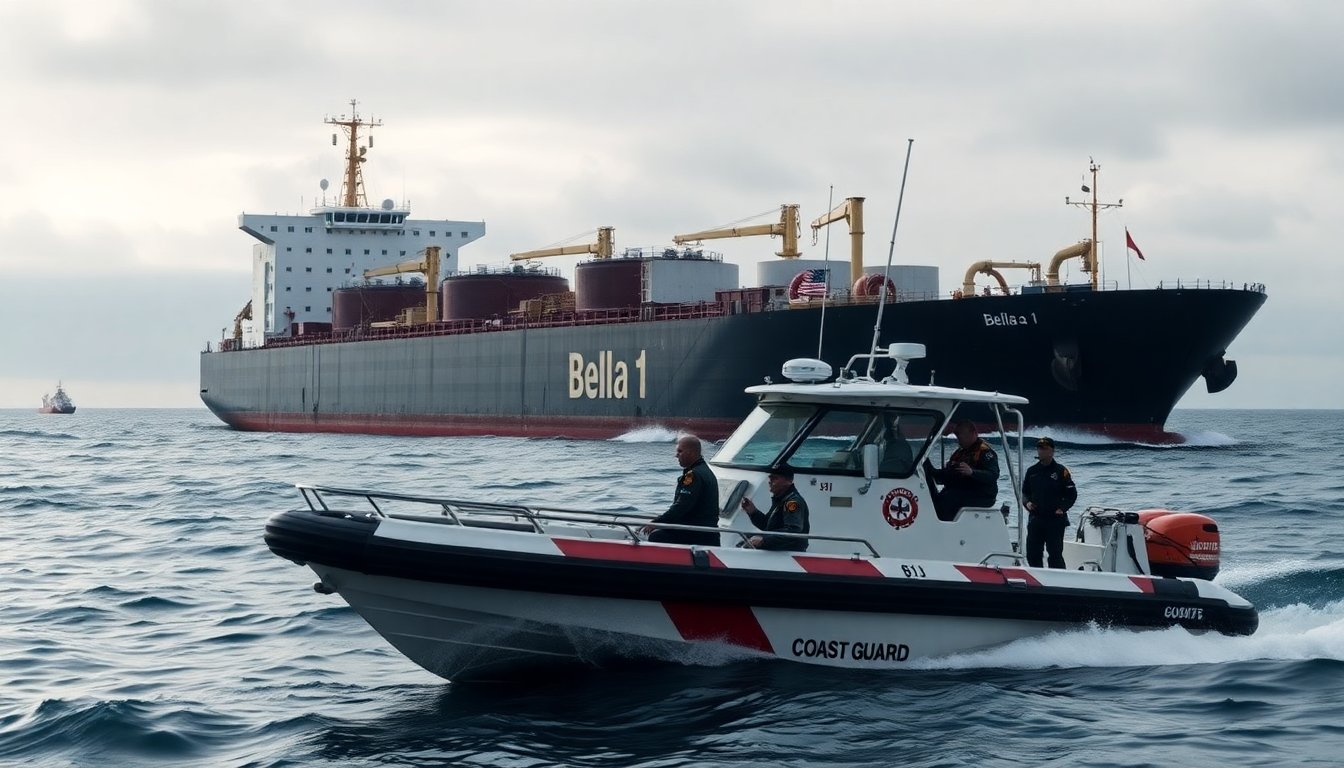
The United States Coast Guard has intensified its operations to intercept the Bella 1, an oil tanker linked to both Iran and Venezuela. This initiative forms part of a broader strategy to reinforce sanctions against the Venezuelan oil sector, which has faced significant restrictions from the U.S. government. As the coast guard monitors the vessel in international waters, tensions are rising, underscoring the ongoing geopolitical conflicts in the area.
Coast Guard’s active pursuit of sanctioned vessels
The Bella 1, linked to Venezuela’s so-called dark fleet, is evading U.S. sanctions aimed at disrupting the country’s oil exports. Recent reports indicate that the Coast Guard is on high alert, actively chasing this tanker to enforce sanctions against the Maduro administration.
U.S. officials describe the Bella 1 as operating under a false flag, suggesting an effort to conceal its identity and avoid detection. The vessel was reportedly empty when it neared Venezuelan waters, underscoring its role in the intricate logistics of regional oil transportation. The U.S. Treasury Department has previously sanctioned this ship due to its links to Iranian crude oil shipments.
Legal and operational challenges
The coast guard possesses clear legal authority to board and seize vessels that are under sanctions. However, they face significant operational challenges that impede their efforts. Reports indicate that the coast guard lacks adequate ships and boarding teams to effectively intercept the Bella 1. In light of the urgency of the situation, the government is contemplating deploying highly trained Maritime Security Response Teams that can conduct helicopter boardings; however, these teams are not yet ready to act.
President Trump has made a public commitment to seizing the Bella 1 as part of a broader strategy aimed at imposing a blockade on Venezuelan oil exports. This operation follows the recent seizure of two other oil tankers, the Skipper and the Centuries, which were found to be transporting sanctioned Venezuelan crude oil.
U.S. military actions and their implications
The increased military presence in the region reflects a comprehensive strategy aimed at addressing both oil and drug trafficking associated with Venezuela. Critics of U.S. actions warn that this strategy could potentially trigger military conflict. Lawmakers, including Senator Rand Paul, have raised alarms about the risks of escalation, labeling the military maneuvers as provocations and advocating for a more restrained approach to U.S. military involvement abroad.
In response, the Venezuelan government has denounced these seizures as acts of international piracy, claiming that the U.S. seeks to dominate the country’s extensive oil reserves. Despite ongoing tensions, analysts highlight that trade persists between the U.S. and Venezuela, with a notable volume of Venezuelan oil still being delivered to markets, particularly in China.
The ongoing economic context
The economic landscape surrounding these events is intricate. The Venezuelan economy is heavily dependent on oil exports, and many transactions persist despite sanctions. The seizure of tankers has raised questions about the United States’ true intentions and the legality of its actions, particularly given the absence of formal warrants for some operations. This situation underscores the delicate balance between enforcing sanctions and managing international relations.
While the White House asserts that these seizures will not affect oil prices in the United States, the international community remains concerned about the potential consequences of escalating military actions. The ongoing challenges in Venezuela and its oil sector are not isolated incidents; they form part of a broader narrative of geopolitical conflict and economic survival.