
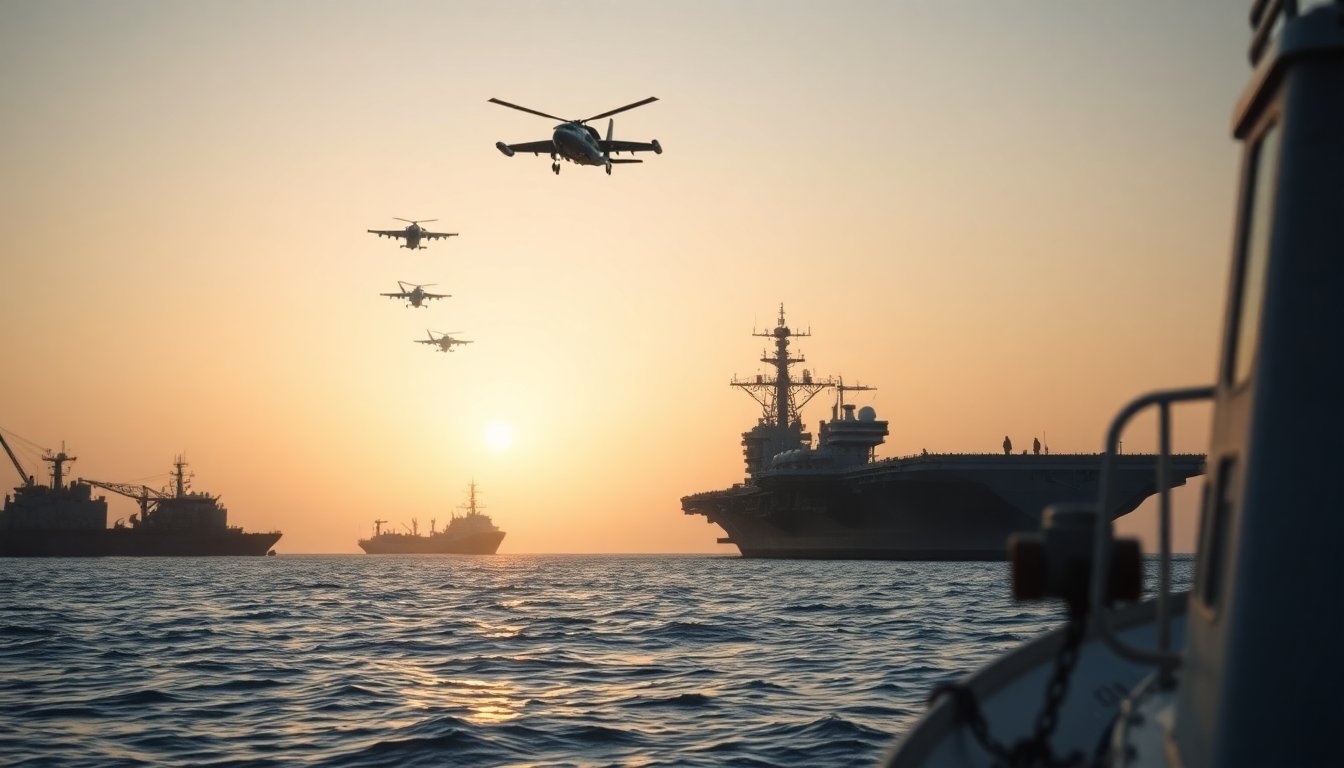
Financial lead: Recent market and open-source tracking point to a clear uptick in U.S. military activity around the Middle East — and investors are taking notice. A mix of carrier, surface and air deployments has increased demand for fuel, airlift and forward-basing services while lifting risk premia for energy, shipping and defense-related sectors. Below is a concise, readable synthesis of what’s been observed, why it matters, and how markets are reacting.
What’s happening on the ground (and at sea and in the air)
– Visible repositioning: Multiple U.S. naval groups and a broad array of aircraft have been moved closer to regional theaters while indirect diplomacy with Iran continues. Satellite imagery, AIS feeds and flight-trackers have confirmed recurring movements through the Arabian Sea, Red Sea and approaches to the Strait of Hormuz.
– Naval picture: At least two carrier strike groups have been linked to the buildup. The USS Abraham Lincoln and its escorts were tracked in the Arabian Sea after shifting from the Indo‑Pacific. The USS Gerald R. Ford has also been reported en route, and destroyers and other surface combatants have been recorded near critical chokepoints. That concentration increases forward naval options and strengthens sea-control and strike capabilities.
– Air and logistics: Recurrent sorties by P-8 maritime patrol aircraft, RC-135 signals platforms, tankers and strategic airlifters were recorded routing through hubs such as Ramstein, Crete, Spain and Bulgaria. Regional bases — notably Al Udeid (Qatar) and Muwaffaq Salti (Jordan) — have shown higher densities of combat, tanker and ISR platforms. Unmanned systems and Rivet Joint-style collectors also register increased presence.
A few numbers to anchor the picture
– Zones of activity: Open-source imagery and tracking indicate meaningful activity in three maritime zones — Arabian Sea, Red Sea and approaches to the Strait of Hormuz — with at least two carrier strike groups and multiple escort vessels active within range of Iran.
– Sortie and sortie-support trends: Flight-tracker and satellite analysis show a measurable increase in tanker, transport and surveillance sorties versus recent baselines; ISR hours and sortie intensity have risen in tracked periods.
– Logistical footprint: Strategic airlift and tanker movements have pushed greater volumes of personnel, fuel and materiel into Bahrain, Kuwait, Qatar and Saudi Arabia, implying sustained supply flows rather than isolated surges.
Why markets care
– Immediate cost channels: Surge operations boost demand for aviation fuel, spare parts, port services and base support — a near-term lift to revenues for defense logistics firms and regional contractors. At the same time, shipping insurers have raised premiums for transits through exposed corridors, and freight rates can spike if vessels reroute.
– Risk pricing and sentiment: Investor attention has tilted toward defense-related exposures. Short-term energy spreads and shipping-cost indicators have shown widening tails, and correlations between geopolitical-risk signals and asset flows have increased. Market participants are pricing a higher probability of episodic disruption to nearby trade routes.
– Broader macro links: While central banks and sovereign balance sheets aren’t direct victims, higher risk premia can feed into funding costs for regional issuers and amplify volatility in commodity and logistics markets during an already fragile demand recovery.
Key variables to watch
– Diplomatic trajectory: Outcomes from indirect talks with Iran are a major determinant — progress would likely ease pressure; stalemate or breakdown could maintain or intensify the posture.
– Operational tempo: Continued carrier transits, ISR persistence and aerial logistics keep logistical demand elevated. Tanker availability, basing permissions and underway replenishment capacity will cap how long high-intensity operations can be sustained.
– Tactical and environmental factors: Rules of engagement, communications between regional navies and squadrons, satellite coverage windows, and weather all influence sortie patterns and the clarity of open-source verification.
– Uncertainty/fat tails: Miscalculation in congested chokepoints or an unanticipated incident could rapidly widen insurance spreads and force more aggressive commercial rerouting.
Sector-level impacts
– Defense and logistics providers: Likely beneficiaries in the near term — higher utilization for maintenance, refueling, ISR sustainment and contracted base services can boost revenues.
– Shipping and energy companies: Face higher short-term costs from insurance hikes and rerouting, plus wider energy spreads when tail risks concentrate near major maritime lanes.
– Local hosts and contractors: Allied bases see higher throughput, with opportunities for local firms but also pressure on infrastructure and labor that may require additional investment.
– Financial markets: Cyclically exposed equities and short-dated sovereign instruments are most sensitive; safe-haven flows can increase during spikes in operational activity.
Outlook and what to monitor
– If diplomacy yields de‑escalation, expect sold-off insurance premiums and a gradual easing of logistical demand. If talks stall, current posture — and the market sensitivity around it — could persist.
– Practical indicators to track: satellite imagery refreshes, flight-tracker sortie rates (tankers, P‑8s, RC‑135s, strategic airlift), AIS patterns for carrier groups and escort vessels, and insurance/freight-price movements for routes through the Red Sea and Strait of Hormuz.
– Market guidance: Prepare for episodic volatility. Traders and risk managers should monitor operational signals as leading indicators of shifting risk premia, while portfolio managers may want to reassess exposure to shipping, energy and defense-service suppliers.
S. naval and air redeployments have tangible knock‑on effects for logistics demand and risk pricing in regional markets. Whether those effects fade or harden into a protracted premium depends largely on diplomatic developments and how long the operational tempo remains elevated.