
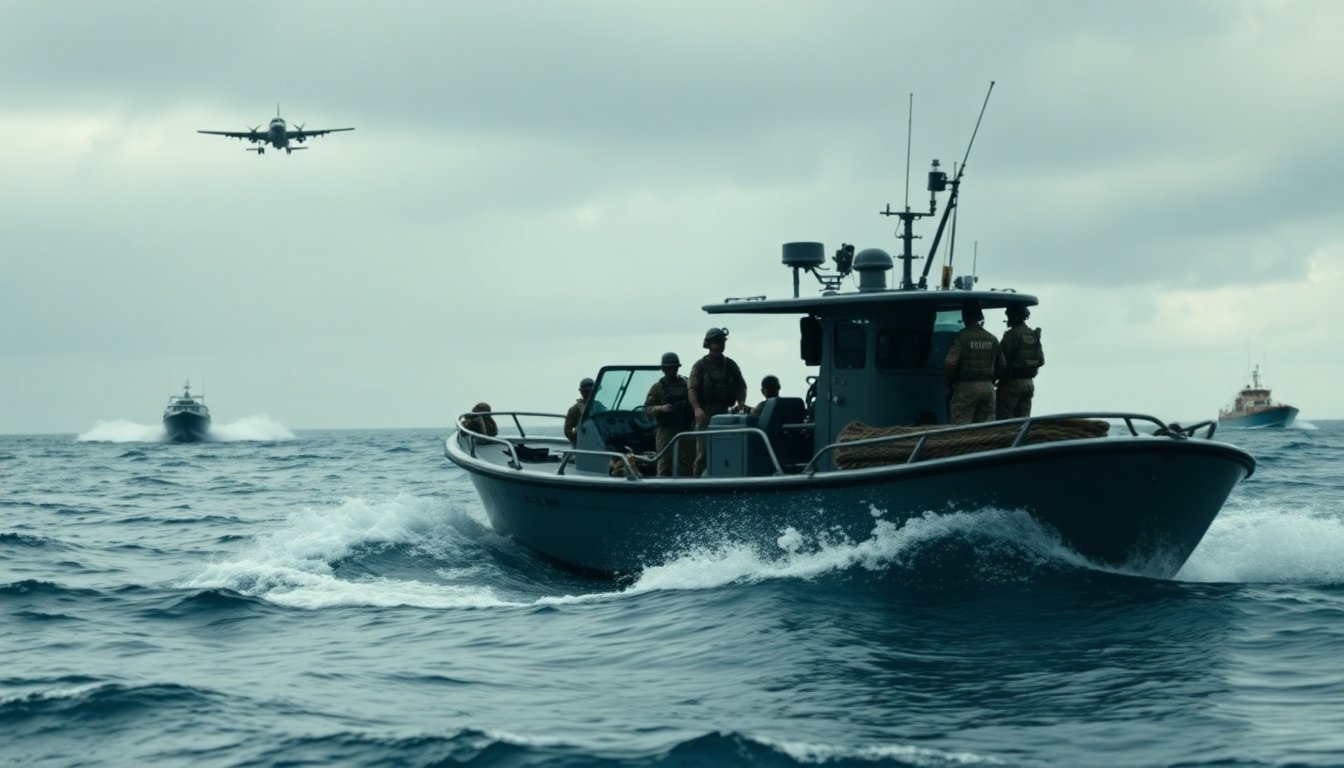
In a decisive move against drug trafficking activities, U.S. military forces executed a lethal operation on a vessel linked to a recognized terrorist organization. The news broke at this operation, which took place on Thursday, resulting in the deaths of two individuals identified as suspected narco-terrorists. This strike underscores the ongoing battle against drug trafficking in the Eastern Pacific region.
The facts
The U.S. Southern Command (USSOUTHCOM) confirmed that the targeted vessel was traversing established narco-trafficking routes when the strike was executed. Intelligence assessments indicated the vessel was actively involved in illicit drug operations, prompting the military response. This operation marks the second strike of its kind this year, with a previous mission resulting in the death of two additional suspected narco-traffickers.
The consequences
The Eastern Pacific has long been recognized as a critical route for drug trafficking organizations. These groups exploit international waters to transport illegal substances, impacting not only the United States but also neighboring countries. By targeting these organizations, U.S. military actions aim to disrupt their operations and curb the flow of narcotics.
While these military strikes are intended to enhance security, they raise critical questions about the implications of using lethal force against suspected terrorists. The U.S. government has increasingly employed military action in counter-terrorism efforts, prompting debate about the legality and morality of such operations. The designation of individuals as terrorists can lead to extrajudicial actions, often scrutinized for their criteria.
As the U.S. intensifies its military operations against narco-terrorism, the focus remains on dismantling the infrastructure supporting these criminal organizations. The strikes are part of a comprehensive strategy that includes intelligence gathering, international cooperation, and law enforcement collaboration. Efforts to combat narco-terrorism also involve addressing the root causes of drug trafficking.
Military and intelligence collaboration is essential for real-time assessments and quick decision-making. The successful execution of the strike demonstrates the effectiveness of such coordinated efforts in addressing the narco-terrorism threat. The situation continues to evolve as U.S. actions aim to neutralize threats in the region.