
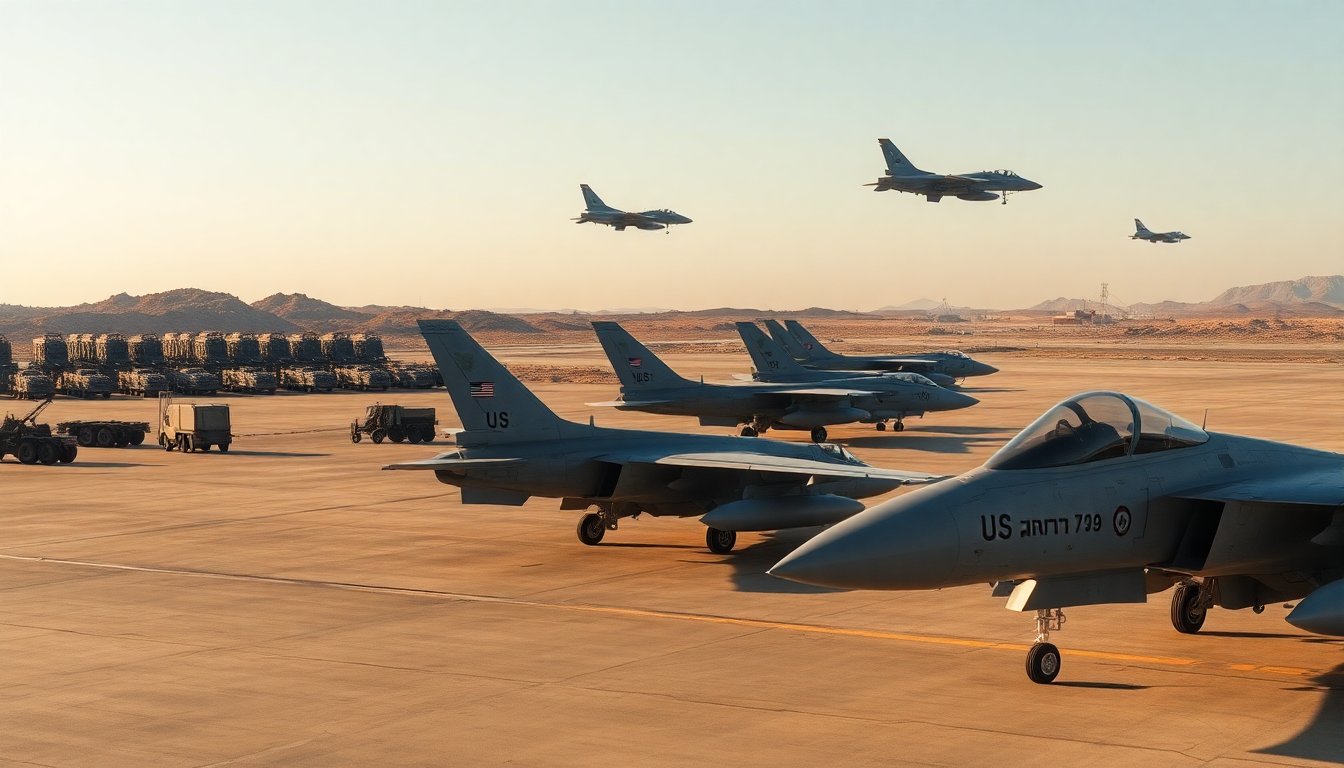
U.S. combat jets operating from Israeli bases mark a clear shift in Washington’s posture across the Middle East. Beyond the visual of American aircraft stationed closer to the front lines, the deployment tightens battlefield cooperation with Israel and—according to officials—positions forces to respond quickly to contingencies involving Iran. It arrives amid rising regional tensions and a heated debate in Washington over whether to lean harder on military deterrence or pursue diplomatic pressure instead.
What the move means in practice
– Who and where: U.S. and Israeli personnel working from Israeli airfields and nearby airspace.
– What and why: forward-basing combat aircraft to cut response times and strengthen deterrence, with Iran specifically identified as a potential flashpoint.
– When: part of recent shifts in force posture and asset movements across the region.
Forward placement changes the operational math. Shorter transit times boost sortie rates, make time-sensitive targets more reachable, and let planners thread intelligence and surveillance more tightly into strike plans. Those are exactly the kinds of advantages commanders request when they argue for a heavier presence.
But proximity has a flip side. Concentrating aircraft and support infrastructure near contested zones makes them more attractive targets and raises the stakes of any exchange. Logistics and base defense become more demanding, airspace deconfliction grows more delicate, and the potential for miscalculation rises during fast-moving crises. Policymakers and military leaders therefore face a trade-off: enhanced readiness against higher political and escalation risks.
This air deployment is one element of a broader U.S. recalibration. Naval groups have shifted, intelligence sharing has stepped up, and diplomats are working multiple tracks—sometimes publicly at odds over strategy. Collectively, these moves expand the menu of options available to U.S. decision-makers: deterrent signaling, defensive operations, selective strikes, and sustained diplomatic pressure all remain on the table. The challenge is choosing when to use each tool without sending mixed messages that could widen the conflict.
The deployments are also entwined with larger regional dynamics. Washington’s positioning coincides with intermittent diplomacy with Tehran over nuclear matters and persistent worries about Iran’s relationships with nonstate actors linked to Gaza. Growing logistical and political ties between Iran and groups such as Hamas and Hezbollah complicate deconfliction and raise the stakes of any mistaken strike or misread signal.
Finally, the domestic and international debate over this posture is intense. Some view the Israel–Gaza situation and Iran-related activity as interconnected fronts in a broader contest over regional influence; they argue that constraining Tehran’s reach is essential for long-term stability. Others warn that aggressive strategies risk wide-scale escalation and severe humanitarian fallout. Those arguments shape not only the rhetoric in capitals but the practical choices military planners make on the ground.
The coming weeks will test whether closer U.S.–Israeli integration improves crisis management or simply escalates tensions. Precise communication, carefully calibrated force posture, and clear contingency plans will be crucial if leaders hope to deter aggression without being drawn into a larger conflagration.