
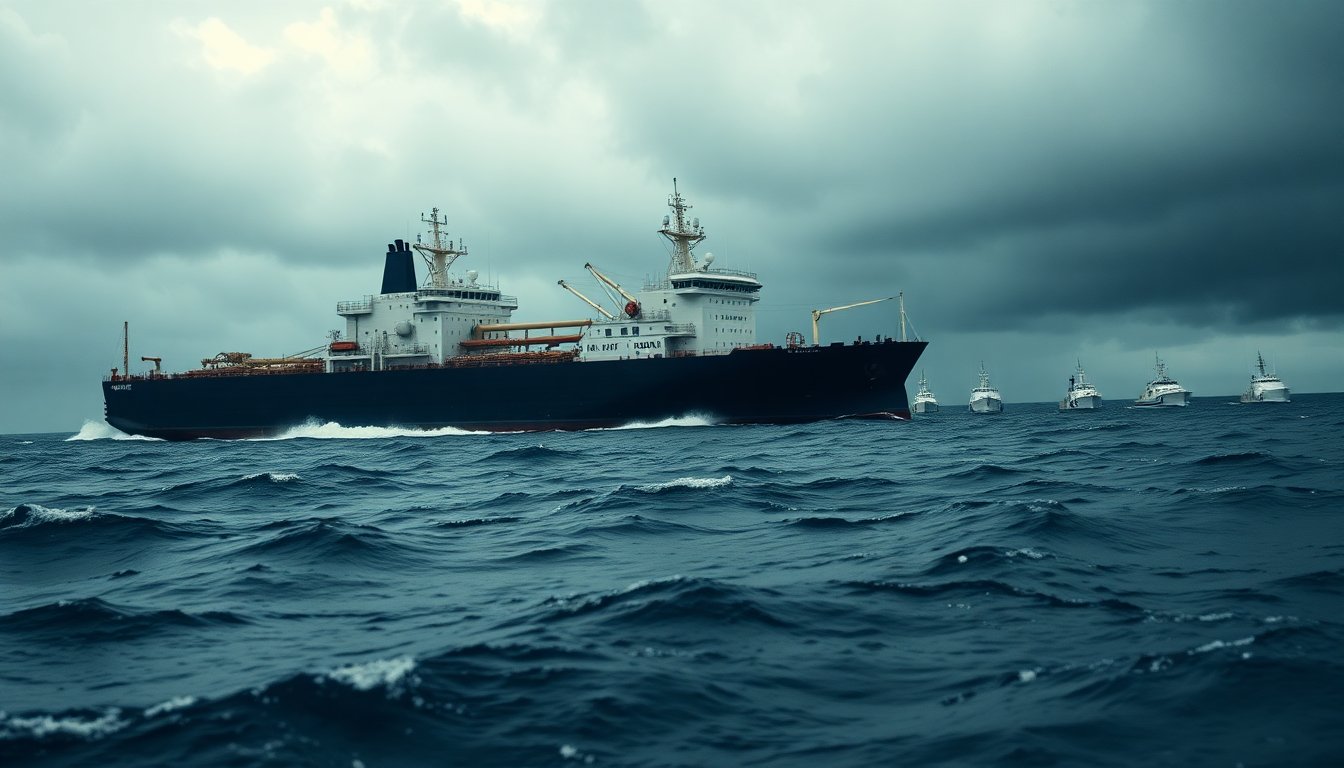
In a significant move signaling rising tensions, the United States has seized a large oil tanker off the coast of Venezuela. This action is viewed as a critical escalation in Washington’s campaign to pressure President Nicolás Maduro and undermine the nation’s oil-dependent economy. The seizure reflects the U.S.’s commitment to its foreign policy objectives and highlights the complexities of international relations regarding Venezuela’s oil resources.
Understanding the context of the seizure
The Venezuelan economy has been in crisis for several years, largely due to its heavy reliance on oil exports. This dependency has rendered the country vulnerable to external pressures, particularly from the United States, which has implemented sanctions aimed at destabilizing Maduro’s hold on power. The tanker seizure exemplifies the lengths to which the U.S. is willing to go to influence Venezuela’s political landscape.
The implications of U.S. actions
This seizure is part of a broader strategy to weaken Maduro’s regime economically. The U.S. government has consistently targeted Venezuela’s oil industry, a vital source of revenue for the country. By cutting off access to international markets, the U.S. aims to foster an environment conducive to political change within Venezuela.
Additionally, the seizure raises important questions about international maritime law and the rights of nations to protect their interests at sea. The U.S. claims the tanker was involved in transporting oil that had been illegally exported from Venezuela, justifying its actions. However, some international observers express skepticism, warning against overreach in maritime enforcement.
The global ramifications of the seizure
The repercussions of this seizure extend beyond U.S.-Venezuela relations. Increased tensions could arise with other nations invested in Venezuelan oil, particularly Russia and China, which have historically supported Maduro. As the geopolitical landscape evolves, further escalations may lead to a more profound conflict that surpasses regional boundaries.
Potential responses from Venezuela and allies
In response to this aggressive U.S. action, Venezuela is likely to strengthen its ties with allies such as Russia and China, who may offer economic and military support. Maduro has portrayed the U.S. as an aggressor, galvanizing national sentiment against what he describes as imperialistic interventions. Such narratives may unify domestic support and divert attention from internal challenges.
Moreover, the potential for retaliatory measures should not be overlooked. Venezuela might seek alternative avenues for oil exports or attempt to disrupt U.S. interests in the region. This could involve enhanced cooperation with nations opposing U.S. sanctions or even escalating military posturing in the Caribbean.
The path ahead for U.S.-Venezuela relations
The seizure of the oil tanker off Venezuela’s coast illustrates the deteriorating relationship between the U.S. and Venezuela. As both nations navigate this complex environment, the implications of these actions will likely resonate throughout the international community. The future of U.S.-Venezuela relations remains uncertain, as both sides brace for potential confrontations that could reshape the geopolitical balance.
Ultimately, the U.S. strategy to weaken Maduro through economic means may produce mixed results. While it could create immediate challenges for the Venezuelan economy, the long-term effectiveness of such tactics in achieving regime change remains debatable. Observers will closely monitor the situation, anticipating further developments that could redefine the region’s political dynamics.


