
Table of Contents
In a decisive move, the U.S. military executed airstrikes against multiple Islamic State (ISIS) targets in Syria, responding to a recent incident that claimed the lives of American personnel. This operation, marked by a swift and overwhelming show of force, underscores the ongoing conflict in the region and the persistent threat posed by ISIS.
The airstrikes followed a tragic event in which two U.S. soldiers and a civilian interpreter lost their lives in an attack in Palmyra. This incident, attributed to a suspected ISIS member, prompted a vow of retaliation from President Donald Trump, who reaffirmed the U.S. commitment to combating terrorism in the region.
Operation Hawkeye Strike: A show of force
Named Operation Hawkeye Strike, the recent military actions were confirmed by U.S. Defense Secretary Pete Hegseth. He stated that the objective was to target ISIS fighters, their crucial infrastructure, and weaponry. In his remarks, he emphasized that this was not the start of a new war but rather a clear declaration of vengeance. “Today, we hunted and we killed our enemies. Lots of them. And we will continue,” Hegseth declared, signaling an aggressive stance towards ISIS.
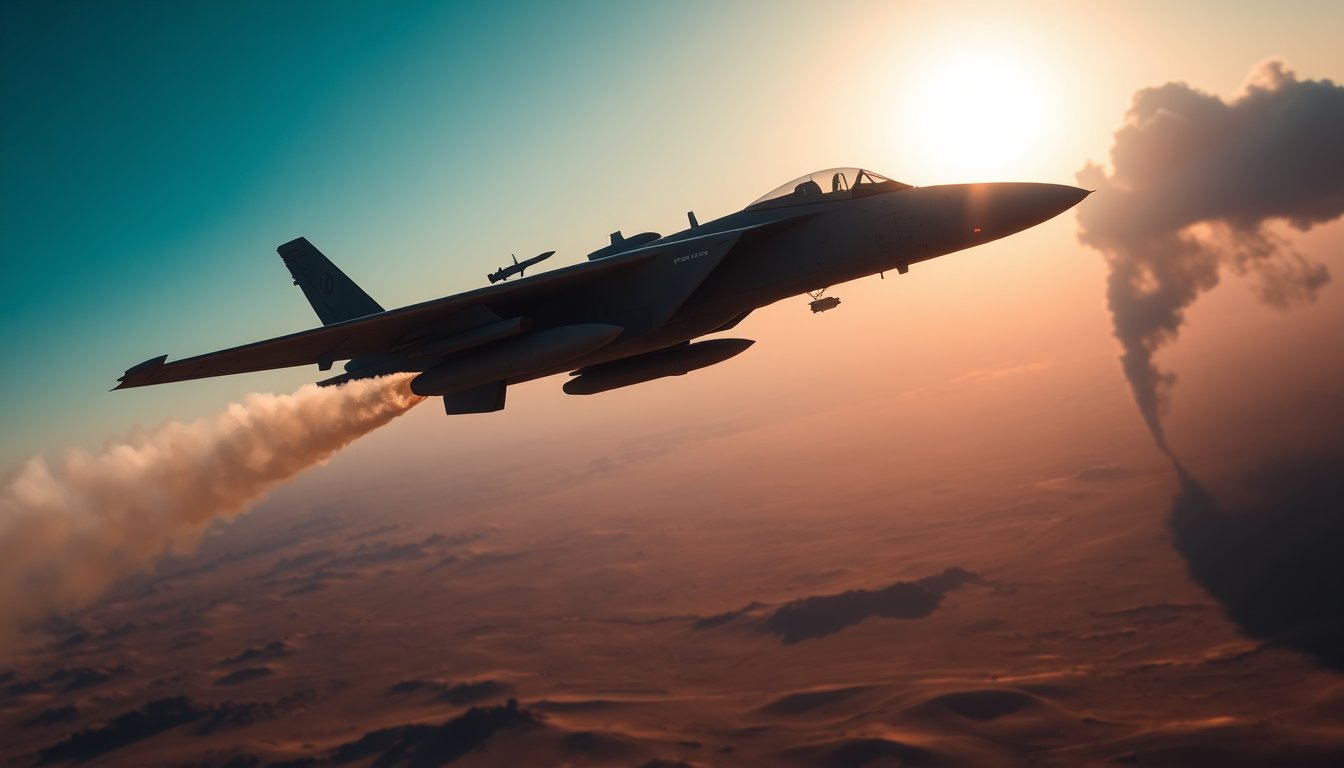
The strikes were coordinated and involved advanced military assets, including F-15 and A-10 fighter jets, Apache helicopters, and HIMARS rocket systems. Reports indicated that over 70 targets were struck across central Syria, demonstrating the scale and precision of the operation. This coordinated attack was further bolstered by the support of Jordanian fighter jets, illustrating a collaborative effort against the extremist group.
Collaboration with Syrian forces
The Syrian government expressed its support for the U.S.-led airstrikes, highlighting a complex relationship amid the ongoing conflict. The Syrian foreign ministry reiterated its commitment to eradicating ISIS, ensuring that the group has no refuge on Syrian soil. This cooperation follows a recent agreement reached between the U.S. and Syrian authorities, signaling a shift in dynamics following a prolonged civil war.
Despite the apparent collaboration, the situation remains fraught with challenges. The U.S. maintains approximately 1,000 troops on the ground in Syria, working alongside local security forces to mitigate the threat of ISIS. The Syrian Interior Ministry identified the attacker in the Palmyra incident as a member of its security forces suspected of having sympathies for ISIS, complicating the landscape of loyalty and allegiance.
The ongoing threat of ISIS
ISIS remains a formidable adversary in the region, with its ambitions to establish a caliphate still evident. The group’s operations have persistently threatened both local and foreign entities, necessitating a robust military response from the U.S. and its allies. This recent wave of airstrikes is part of a broader strategy to dismantle ISIS’s operational capabilities and prevent further destabilization of the region.
As the conflict evolves, the U.S. is committed to pursuing those who pose a threat to American forces and interests. “We will continue to relentlessly pursue terrorists who seek to harm Americans and our partners across the region,” stated Admiral Brad Cooper of U.S. Central Command, reinforcing the message that U.S. military operations will remain focused and unyielding.
The U.S. airstrikes against ISIS targets in Syria represent a critical moment in the ongoing battle against terrorism. These actions not only serve as retaliation for recent attacks but also signify a broader commitment to ensuring stability in a region plagued by conflict and extremism. As the U.S. navigates its role amidst shifting alliances and ongoing threats, the fight against ISIS remains a priority.