
Table of Contents
In a significant escalation, the United States military has launched a series of airstrikes against the Islamic State in Syria. This operation follows a brutal ambush that resulted in the deaths of two American soldiers and their civilian interpreter. U.S. officials stress their determination to retaliate against those who threaten American lives.
Details of the recent airstrikes
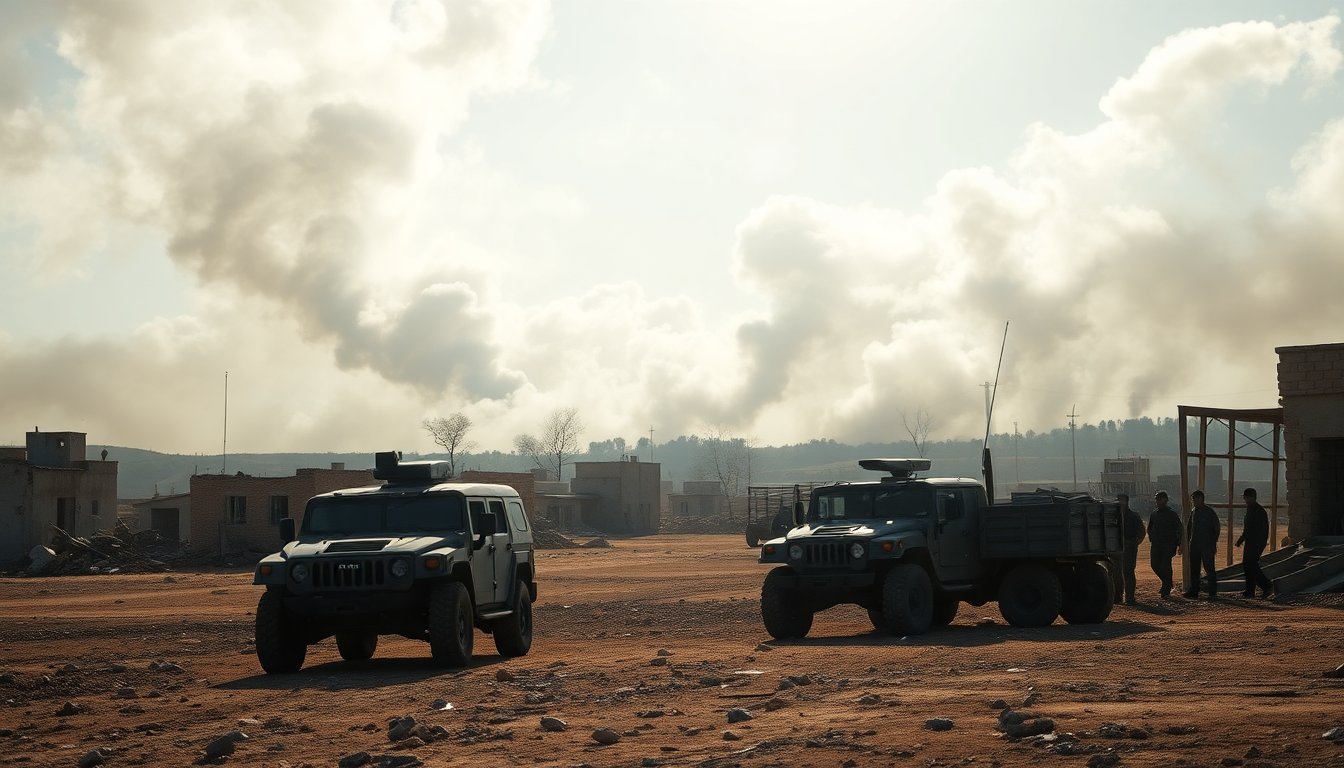
On January 10, 2026, the Pentagon confirmed the initiation of large-scale airstrikes, starting around 12:30 p.m. ET. These operations, conducted in coordination with allied forces, targeted multiple locations in Syria linked to the Islamic State. This offensive forms part of a broader initiative known as Operation Hawkeye Strike, aimed at dismantling the capabilities of the terrorist group.
Background of the ambush
Recent military actions follow an ambush in Palmyra, which resulted in the deaths of two members of the Iowa National Guard, Sgt. Edgar Brian Torres-Tovar and Sgt. William Nathaniel Howard. Also killed was Ayad Mansoor Sakat, an American civilian interpreter. The Pentagon stated unequivocally that any harm to American personnel will not go unanswered.
U.S. military strategy and partnerships
The recent operation signifies a notable transformation in U.S. military strategy in Syria. Traditionally, the Kurdish-led Syrian Democratic Forces have served as the primary American allies in the fight against ISIS. However, with the removal of former Syrian President Bashar Assad in December, the U.S. has increasingly turned its focus toward collaborating with the central government in Damascus. This shift highlights the complexities of the Syrian conflict and the necessity for adaptable strategies amid changing power dynamics.
International and domestic implications
The escalation of the U.S. military response has significant implications that extend beyond immediate combat situations. The Trump administration faces increased scrutiny regarding its foreign policy decisions, particularly following the airstrikes in Syria. This action raises critical questions about the long-term strategic objectives in the region. Additionally, Syria’s recent alignment with the global coalition against ISIS suggests a potential shift in alliances that could influence future military operations.
In response to the airstrikes, Syrian officials announced the arrest of a key military leader responsible for overseeing ISIS operations in the Levant. This development indicates that both U.S. and local forces are actively working to combat the terrorist organization. The collaborative efforts aim to enhance regional security and dismantle ISIS infrastructure effectively.
U.S. airstrikes in Syria signal ongoing military commitment
The recent U.S. airstrikes in Syria underscore the persistent battle against the Islamic State and the complexities of international military operations. The loss of American lives in a recent ambush has prompted a decisive military response from the Pentagon, demonstrating its commitment to safeguarding U.S. personnel overseas. As the situation develops, the U.S. and its allies face the dual challenge of countering ISIS while striving to establish stability in a region affected by prolonged conflict.