
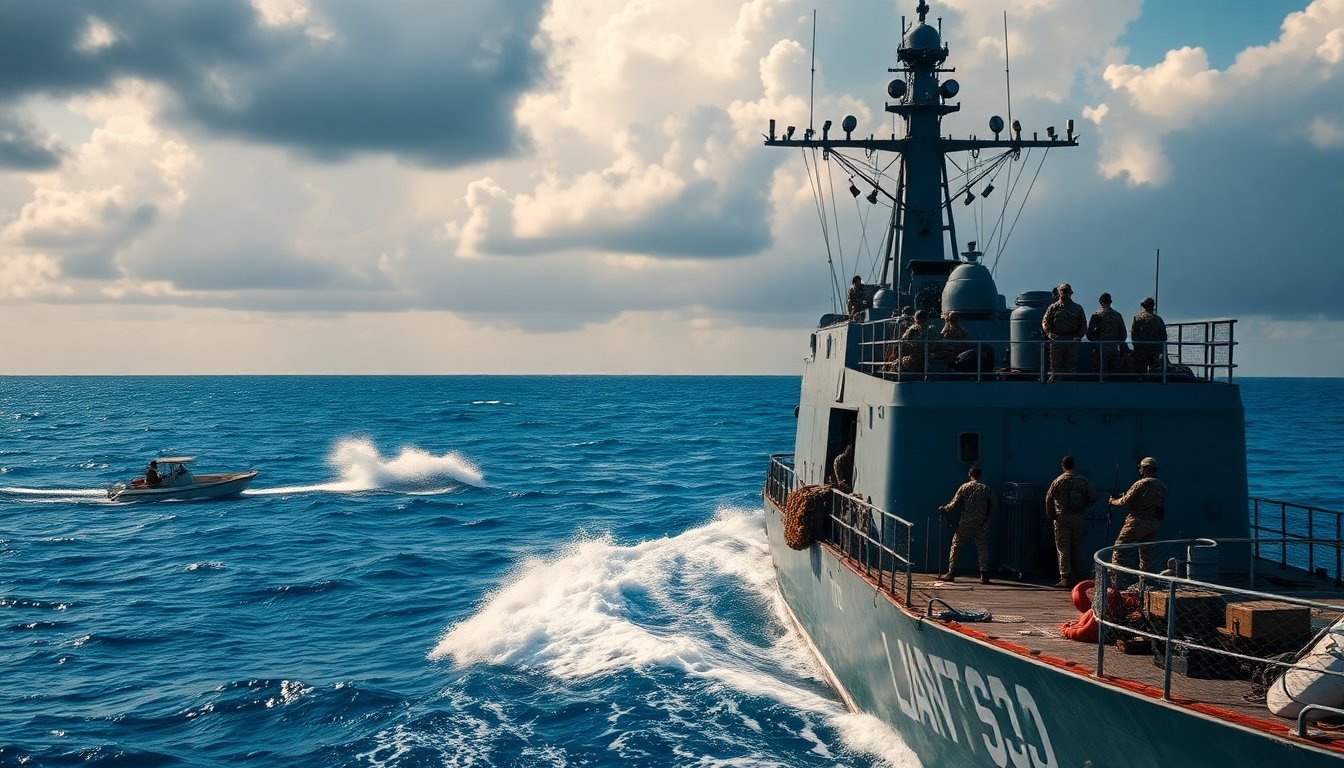
In a decisive action reflecting rising tensions in the Caribbean, the United States has increased its military presence in the region by launching targeted strikes against boats suspected of drug smuggling. This escalation in military operations is highlighted by a recent memo from the Trump administration, which designates drug cartels as unlawful combatants and asserts that the U.S. is engaged in a non-international armed conflict.
Recent military actions and their implications
Following a strategic buildup of maritime forces, the U.S. military conducted three operations last month against vessels believed to be involved in drug trafficking, two of which reportedly originated from Venezuela. These strikes have prompted discussions about the effectiveness and potential ramifications of U.S. intervention in the ongoing struggle against these criminal organizations.
Designation of drug cartels as terrorist organizations
The Pentagon has officially informed Congress about a pivotal designation that will reshape the approach to drug trafficking. A memo indicates that the president has classified these cartels as non-state armed groups, designating them as terrorist organizations. This classification suggests that their operations are not solely criminal; they represent an armed assault against the interests of the United States, which may require a military response.
Context of U.S. military operations
The designation of drug cartels as unlawful combatants reflects an increasing awareness of their transnational operations and the threats they pose across the Western Hemisphere. The memo emphasizes that, despite the considerable efforts made by allied nations to combat these groups—often resulting in significant loss of life—drug cartels have transformed into complex networks capable of executing organized attacks that cross international borders.
Challenges faced by the U.S. and partner nations
The challenges in dismantling transnational drug trafficking networks are significant, even with new strategies in place. A recent memo highlights how these cartels operate across multiple countries, complicating efforts by the U.S. and its allies. As these organizations continue to adapt, the military’s role may shift from direct action to implementing broader strategies aimed at disrupting their operations.
The future of U.S. military engagement in drug-related conflicts
The United States faces a complex situation in addressing drug-related conflicts. Recent military actions against drug cartels indicate a shift towards a more assertive stance against organized crime. This decision could significantly influence not only U.S. foreign policy but also alter international relations across the region.
The recent military strikes and the new classifications of drug cartels mark a pivotal moment in the U.S. strategy to combat drug trafficking. As the situation evolves, global observers will closely monitor how these developments will impact U.S. military engagement and the ongoing battle against organized crime.


