
Washington has opened a new chapter of tense, closely timed diplomacy and military muscle-flexing with Iran. As of February 20, 2026, U.S. policymakers are trying to thread a narrow needle: push for a negotiated outcome in public while quietly positioning substantial naval and air forces that could sustain operations for weeks. That simultaneity—talks on one hand, warships and combat aircraft on the other—has left analysts and foreign capitals puzzling over American intent. Is diplomacy the genuine priority, or is it a lever to increase pressure on Tehran and extract concessions, or even to catalyze political change?
The answer matters because visible power shifts the bargaining table. Observers point to the speed and scale of recent deployments and to Washington’s past behavior in the region when parsing White House signals. Rhetoric still matters, but so do the assets floating in nearby seas and patrolling the skies. When hard power and diplomacy run in parallel, strategic calculus becomes less straightforward: each public statement is read against the backdrop of what military commanders are actually preparing to do.
What’s in the build-up
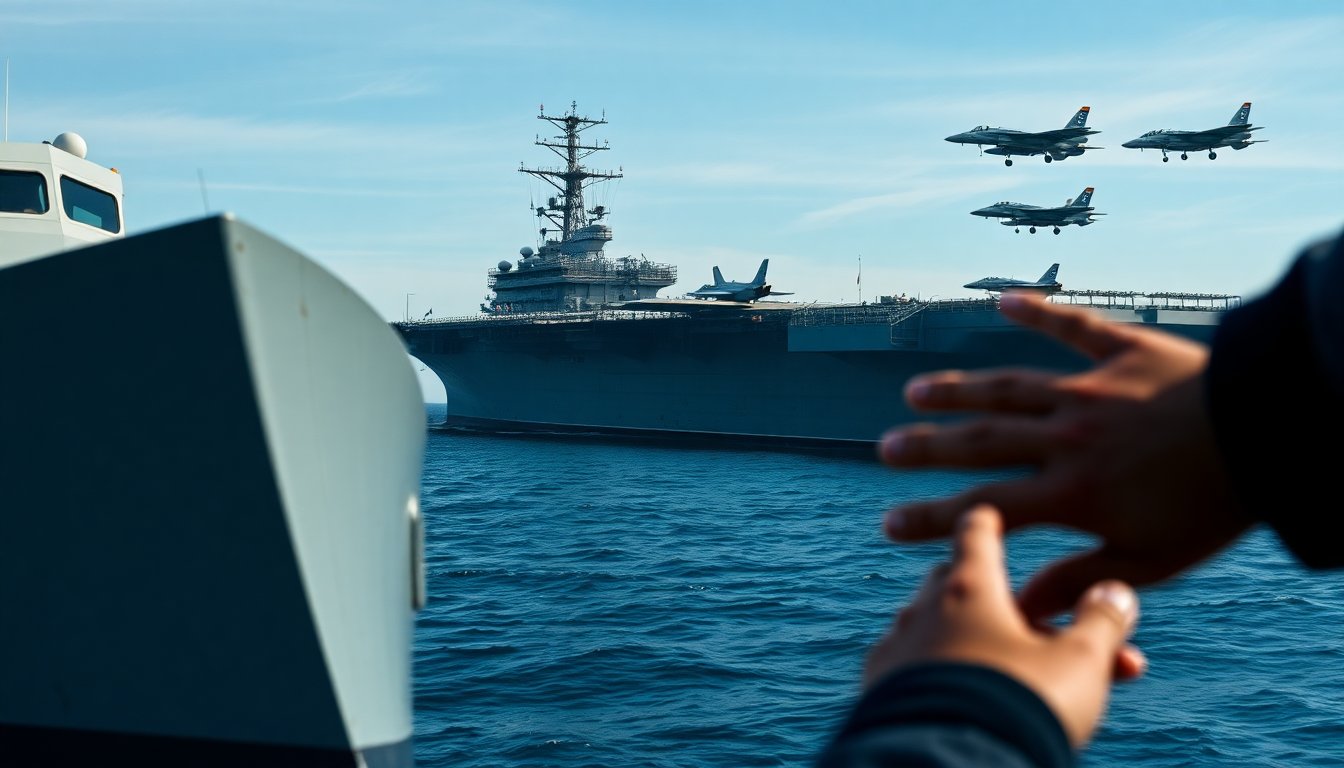
In the past days, U.S. naval and air assets have concentrated in the eastern Mediterranean, the Arabian Sea and adjacent waters. Reported elements include carrier strike groups centered on the USS Gerald R. Ford and USS Abraham Lincoln, squadrons of stealth fighters such as F-35s and F-22s, AWACS surveillance aircraft, and ballistic-missile defense batteries. Taken together, these capabilities can support daily strike sorties and round-the-clock surveillance across key maritime approaches.
Analysts say the concentration approaches the heft of the U.S. presence at its peak in the 2000s. Carrier strike groups bring more than just offensive punch: they provide layered command-and-control, logistics, and replenishment that keep operations running for extended periods. In other words, this is not a transient show of force; it could underpin a sustained campaign against military targets and critical infrastructure if political leaders choose that path.
Why logistics matter
The often-overlooked reality is that logistics set the tempo of any campaign. Guided-missile destroyers with Tomahawks, long-range bombers, aerial refueling tankers and forward air-defense units create overlapping offensive and protective layers—but only if the supply chains keep up. Fuel, munitions, spare parts, maintenance cycles and continuous tanker flights all determine how far and how long forces can operate.
The logistical picture now—resupply convoys, tanker tasking and spare-part pipelines—suggests planners are preparing more than a one-off strike option. That footprint raises the political and operational costs of backing down: once sorties are scheduled and supply lines are moving, a rapid retreat becomes harder without reciprocal de-escalation steps.
Diplomacy with a deadline—and mixed signals
Publicly, the administration has given Tehran a 10-to-15-day window to meet U.S. demands. Yet official messaging has not been consistent. Some briefings contend that previous operations “effectively neutralized” certain Iranian facilities, while others warn of continuing threats that could justify additional action. Mixed signals like these complicate the legal and political case for force. To justify a strike as purely defensive, leaders need a clear, coherent narrative and compelling evidence of imminent danger; absent that clarity, both domestic audiences and international partners will demand explanations.
Tight deadlines can be useful leverage, but they cut both ways. If the threats behind those timelines lack credibility or are delivered inconsistently, they can erode negotiating leverage and stoke mistrust rather than compel compliance. Markets and allies crave predictability; opaque or uneven signaling tends to raise risk premiums and narrow policymakers’ room for maneuver.
How this changes bargaining
Large-scale deployments alter bargaining dynamics in subtle ways. High-readiness postures raise the political and logistical price of walking back threats, shrinking the space for delicate diplomatic moves unless paired with explicit steps to de-escalate. In negotiation terms, visible hard power can be a carrot or a stick: it may convince an adversary to take talks seriously, or it may harden resolve and create a spiral of countermeasures.
That tension is at the heart of the current debate. Some see the buildup as a prudent hedge—keeping options open while seeking a diplomatic solution. Others read it as coercive diplomacy, where pressure is applied to force a favorable outcome. Both readings have precedents in recent U.S. history, which is why regional capitals are watching closely and why Tehran’s response in the coming days will be so consequential. That combination sharpens leverage but also tightens constraints: logistics, legal narratives and credibility all matter as much as statements from podiums. How Washington pairs pressure with transparent diplomatic steps will determine whether this week’s maneuvering produces a breakthrough—or an escalation that becomes harder to unwind.