
Table of Contents
“`html
U.S. military actions escalate in international oil trade
The landscape of international oil trade is undergoing a turbulent shift as the U.S. military takes decisive actions against vessels linked to Venezuelan oil shipments. Recent operations resulted in the seizure of two tankers, a significant escalation in the enforcement of sanctions aimed at curtailing Venezuela’s oil exports. These measures are designed to cripple the Venezuelan economy and diminish its global influence. The actions have drawn sharp criticisms from Moscow, further straining U.S.-Russia relations.
Details of the seizures
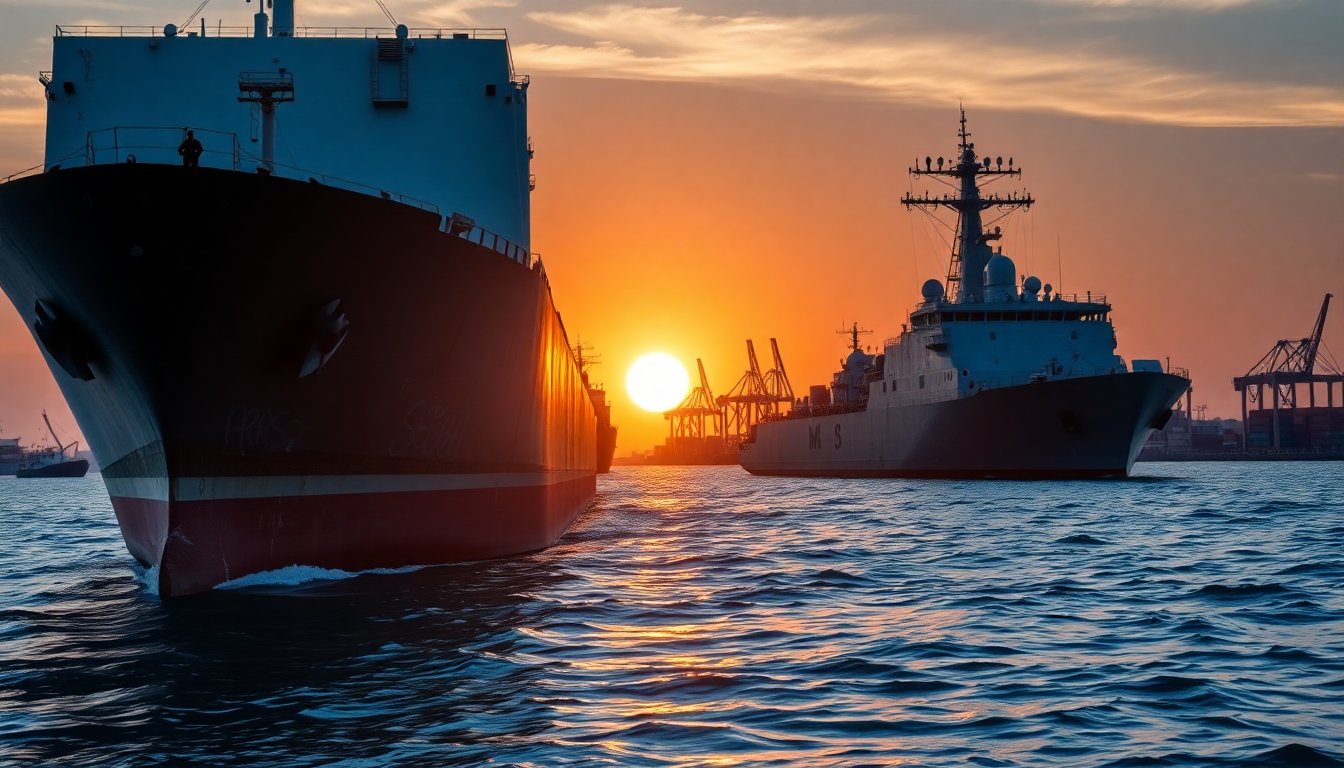
U.S. special forces successfully boarded a tanker named Marinera after it had evaded capture for over two weeks while navigating the Atlantic Ocean. This operation highlights the increased vigilance of U.S. forces in monitoring and intercepting ships suspected of illegal oil trade. U.S. officials stated that the operation received support from British military assets, demonstrating a collaborative effort between the two nations.
International forces take action
The U.S. Coast Guard recently played a critical role in the seizure of the M/T Sophia. This vessel, which was operating without a flag, was captured in international waters of the Caribbean due to its suspected involvement in illicit activities linked to the Venezuelan oil trade. The Department of Defense and the Department of Homeland Security coordinated their efforts to enforce the sanctions against Venezuela, demonstrating a unified approach to address the ongoing issues posed by its oil exports.
Geopolitical repercussions
The actions of the United States have drawn the attention of global powers, notably Russia. Following the seizure of the Marinera, Russia’s Ministry of Foreign Affairs issued a condemnation of the boarding, citing it as a breach of the United Nations Convention on the Law of the Sea. Russia is demanding the immediate return of the Russian crew members aboard the vessel, underscoring the complex international laws that govern maritime activities. This incident further escalates the already strained relations between Washington and Moscow, particularly regarding their competing interests in Latin America.
U.S. position on Venezuelan oil
U.S. Secretary of State Marco Rubio has commented on the Venezuelan government’s cooperation regarding the seized tankers. He emphasized that the U.S. aims to ensure that the oil on board is integrated into a broader agreement addressing sanctions. The U.S. considers limiting Venezuela’s capacity to export oil essential for maintaining stability in the Western Hemisphere. With military support from allies such as the UK, operations targeting Venezuelan oil shipments are expected to persist.
Future implications
The United States is tightening its blockade on Venezuelan oil exports, raising the likelihood of increased conflict in the region. The recent seizure of oil tankers is not just a tactical move; it is part of a broader strategy aimed at weakening the Venezuelan economy and its alliances with countries such as Russia and Iran. This strategy underscores the U.S. commitment to a foreign policy that emphasizes national security and economic stability.
Additionally, the involvement of the U.S. military in these operations highlights a shifting doctrine that combines economic sanctions with military readiness. The stance is unequivocal: the U.S. will not permit vessels that contribute to the illicit oil trade, and it will take decisive action to enforce its regulations.
The recent seizures of the Marinera and M/T Sophia represent a significant development in the ongoing conflict over Venezuelan oil. These actions are expected to have far-reaching consequences, potentially shaping future relations between the United States and other global powers.
“`