
Table of Contents
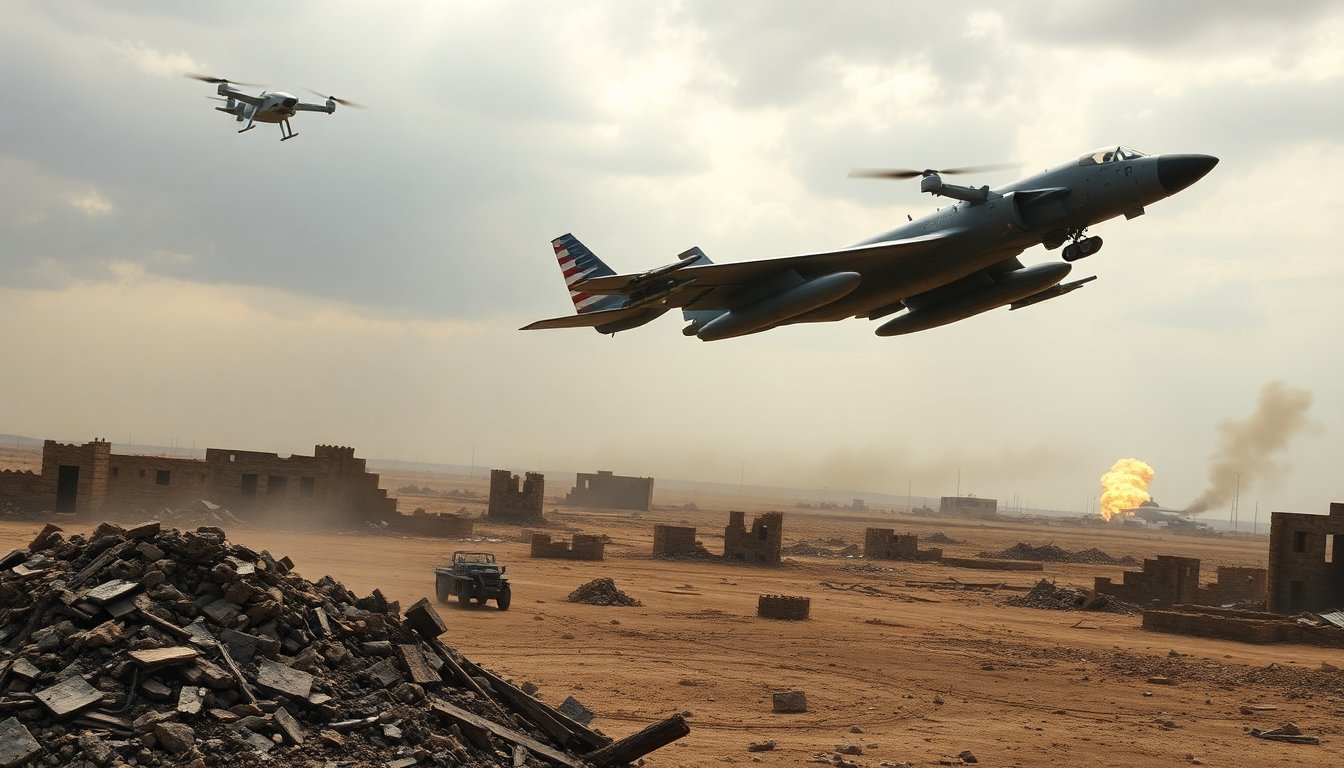
On a recent Saturday, the Pentagon reported a significant escalation in military operations against ISIS in Syria. U.S. warplanes and drones conducted a series of airstrikes that collectively dropped over 90 bombs on nearly three dozen ISIS targets.
Overview of the airstrikes
This coordinated military action involved multiple aircraft and drones, marking a pivotal moment in the ongoing struggle against the terrorist organization. The strikes aimed to dismantle key infrastructure and operational capabilities of ISIS, which remains a persistent threat in the region.
Strategic objectives
The primary goal of these airstrikes is to disrupt the operational capacity of ISIS and prevent further attacks. By targeting significant locations, U.S. forces aim to weaken the group’s hold on territory and resources. Such operations are critical for ensuring the safety of both U.S. personnel and allies in the region.
Context of the military action
The recent military actions are part of a broader strategy to combat terrorism and maintain stability in the Middle East. The Pentagon has emphasized the need for a robust response to threats posed by extremist groups like ISIS, which continue to adapt and evolve despite previous setbacks.
International implications
These strikes may also have wider implications for U.S. foreign policy and military strategy in the region. As the fight against ISIS intensifies, there is potential for increased collaboration with allied nations that share a common goal of eradicating terrorism.
Moreover, the strikes serve as a message to both adversaries and allies about the U.S. commitment to combating terrorism and maintaining security. As the situation develops, the focus will remain on monitoring the effectiveness of these operations and their impact on the broader geopolitical landscape.