
Table of Contents
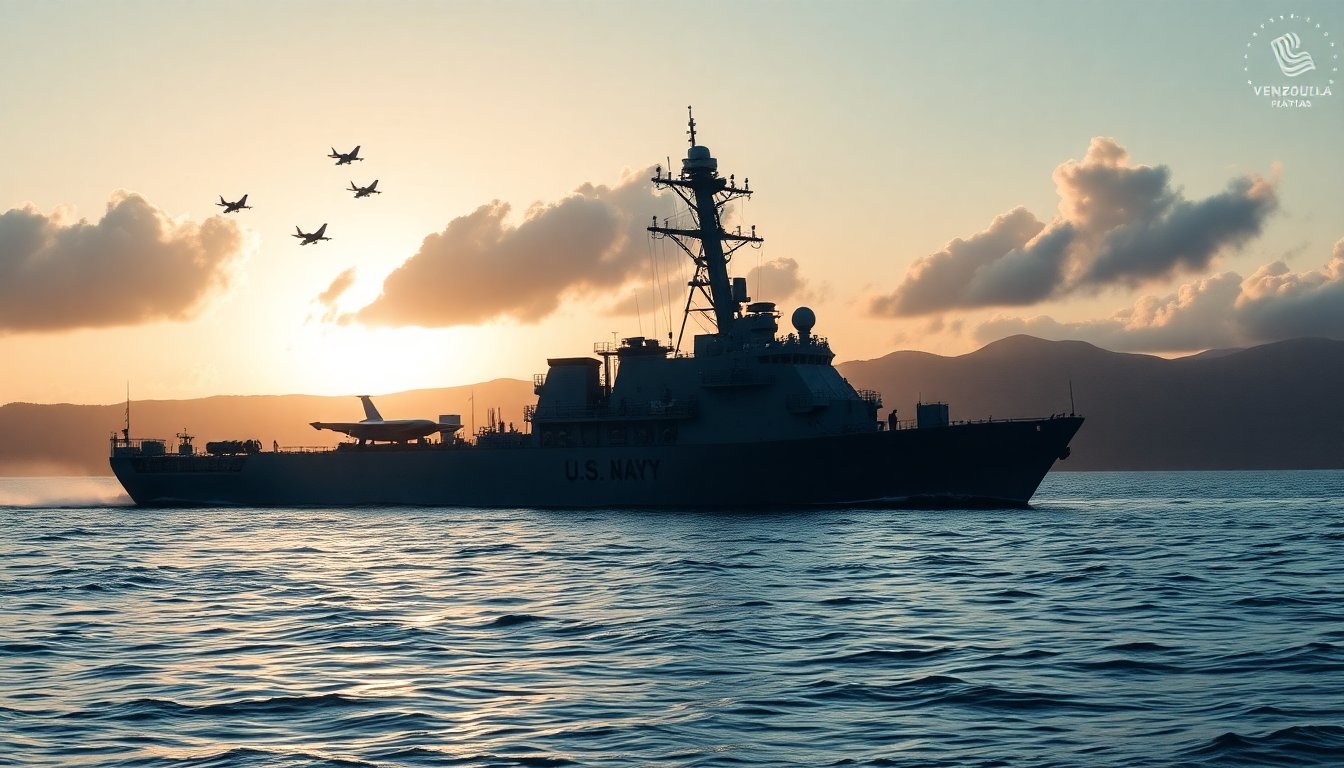
In a bold demonstration of military resolve, the United States has intensified its operations near Venezuela, coinciding with heightened tensions between Washington and Caracas. This increase in military presence follows the discreet extraction of Venezuela’s opposition leader from the country, marking a pivotal moment in U.S.-Venezuela relations.
Operation Southern Spear, initiated by the U.S. Southern Command, is not solely aimed at controlling oil resources, as frequently alleged by the Venezuelan government. Instead, it is primarily focused on disrupting drug trafficking activities and countering the influence of nations like Russia and Iran within the region.
Understanding the motivations behind U.S. actions
In recent weeks, officials from the Cuban and Venezuelan governments have ramped up their accusations against the U.S., claiming that the ultimate goal of these military operations is to seize Venezuela’s vast oil reserves. Cuban leaders, including Bruno Rodríguez Parrilla and Miguel Díaz-Canel, have portrayed the U.S. as an imperialist aggressor intent on overthrowing the legitimate government of Nicolás Maduro.
Debunking the imperialism narrative
However, a closer examination of the U.S. strategy reveals a different narrative. The U.S. State Department has articulated a comprehensive plan focusing on the restoration of democratic governance, support for civil society, and the promotion of human rights within Venezuela. The recent Integrated Country Strategy for Venezuela emphasizes the need to combat organized crime and drug trafficking.
Moreover, the U.S. has been subjecting the Maduro regime to stringent sanctions since 2017, effectively preventing American companies from conducting business with the Venezuelan government or its state-owned oil enterprise, Petróleos de Venezuela S.A. (PDVSA). This approach indicates that the U.S. is not interested in profiting from Venezuelan oil as long as the nation remains under authoritarian leadership.
The reality of Venezuela’s oil industry
The notion that the U.S. is engaging in an ‘oil heist’ overlooks a crucial reality: Venezuela’s oil industry is in a state of disarray. Due to a combination of factors including corruption, lack of maintenance, and international sanctions, oil production has plummeted to unprecedented lows. Consequently, much of Venezuela’s oil is traded through clandestine channels with countries like Iran and China, often yielding little benefit for the Venezuelan populace.
The geopolitical stakes
From a geopolitical perspective, the United States views the presence of Russian and Iranian influence in Venezuela as a direct threat to its national security interests. Recent statements from U.S. officials have reaffirmed that Venezuela is not merely an economic target but rather a geopolitical battleground. The U.S. aims to prevent the consolidation of authoritarian regimes in its backyard, where countries like Cuba and Venezuela operate under increasingly authoritarian rule.
Furthermore, the U.S. is actively collaborating with democratic nations in the region, such as Colombia and Panama, to strengthen security measures and intercept drug trafficking routes. This collaborative effort emphasizes Washington’s commitment to regional stability and humanitarian support for the Venezuelan people.
Conclusion: The implications for Venezuela
As the situation in Venezuela continues to unfold, it is crucial to understand the complexities behind the U.S. military’s actions. Far from an imperialist agenda, Washington’s strategy prioritizes the stabilization of the region and the promotion of democratic values over direct economic interests. The rhetoric of ‘Yankee imperialism’ often serves as a diversion for the internal crises faced by both Cuba and Venezuela, where economic hardships and social unrest are prevalent.
Ultimately, the U.S. is not aiming to seize Venezuelan oil but rather to counter the influence of authoritarian regimes, combat drug trafficking, and support the Venezuelan people’s aspirations for a democratic future. The narrative of American ‘oil imperialism’ fails to hold up against the realities of the geopolitics at play in the region.