
Table of Contents
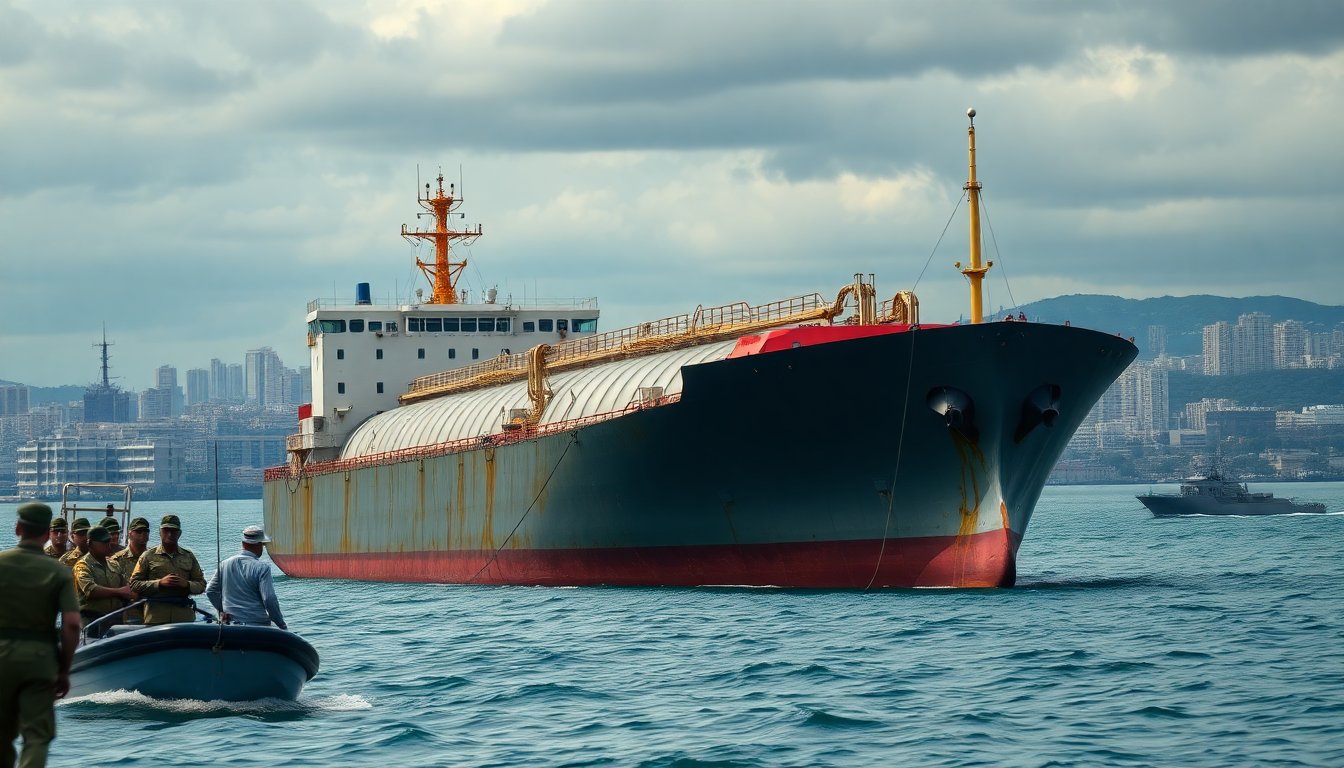
Recent events highlight the escalating tensions between the United States and Venezuela, particularly during the Trump administration. In a notable development, President Trump announced the seizure of a large oil tanker off the Venezuelan coast. This action occurs against a backdrop of serious accusations against President Nicolás Maduro for narcoterrorism. The tanker incident represents the latest effort to apply pressure on the Maduro regime.
Operation Southern Spear: A new military initiative
In November, the U.S. government launched Operation Southern Spear, marking one of the most significant military campaigns in the Caribbean in decades. Initially hinted at earlier in the year, the operation’s primary goal was to combat drug trafficking. However, it quickly expanded into a broader military engagement. U.S. Secretary of Defense Pete Hegseth stated that the operation aims to enhance maritime surveillance and increase military presence in response to actions taken by the Venezuelan government.
Drug trafficking versus political objectives
The U.S. administration has characterized the recent military buildup as a response to drug trafficking. However, analysts question the underlying motivations for such a considerable deployment. Experts highlight that the volume of drugs entering the United States from Venezuela is minimal compared to those arriving from Colombia via various other routes. This discrepancy raises doubts about whether the military force’s true purpose is more extensive than merely combating drug-related issues.
Concerns have emerged that the scale of this operation may be politically motivated. It is suggested that the effort could aim to destabilize the Maduro government or secure a strategic presence to access Venezuela’s substantial oil reserves. The deployment of advanced naval assets, including the USS Gerald R. Ford aircraft carrier and a fleet of fighter jets, indicates a strategic agenda designed to exert pressure on Maduro’s regime.
Legal and diplomatic implications
The military actions have raised significant legal and constitutional questions within the United States. The Trump administration has conducted military operations without explicit Congressional approval, resulting in a clash between the executive and legislative branches. While the administration contends that these actions do not amount to traditional hostilities, critics argue that this position undermines democratic oversight and establishes a concerning precedent.
Shifting diplomatic channels
The diplomatic relationship between Washington and Caracas has significantly deteriorated. In early October, the U.S. administration ordered a cessation of all diplomatic communications with Venezuela. This decision abruptly ended the engagement initiated by Richard Grenell, the special envoy to President Nicolás Maduro. The timing of this shift coincided with a military buildup, suggesting a preference for coercive measures over negotiation.
The United States has historically maintained a complex relationship with Venezuela, once heavily reliant on its oil exports. However, the rise of Hugo Chávez and his successor, Maduro, has altered this dynamic. Under Chávez, Venezuela moved away from U.S. influence, forming alliances with nations that share anti-American sentiments. Since that shift, U.S. foreign policy has centered on destabilizing the Maduro government, primarily through sanctions and military pressure.
The implications of military presence
The evolving situation regarding the U.S. military presence in the Caribbean raises questions about the underlying intentions behind this strategy. Analysts have proposed various theories, with some suggesting that the deployment aims to pressure Venezuelan President Nicolás Maduro to resign voluntarily. Others, however, speculate about the possibility of a more confrontational stance, including direct military actions against Venezuelan assets or personnel.
Despite these discussions, a large-scale military invasion seems unlikely. The administration of former President Donald Trump has favored rapid and decisive military actions over prolonged engagements, as seen in Iraq and Afghanistan. The focus appears to be on using overwhelming force to prompt a change in leadership rather than establishing a prolonged occupation.
Future developments
The developments surrounding the U.S. military deployment near Venezuela underscore a pivotal moment in U.S. foreign policy. As tensions escalate, the ramifications for regional stability and U.S.-Venezuela relations remain uncertain. The deployment of military resources, coupled with a noted absence of diplomatic efforts, presents significant challenges ahead. Observers are left questioning the potential next steps for both nations in this complex geopolitical landscape.