
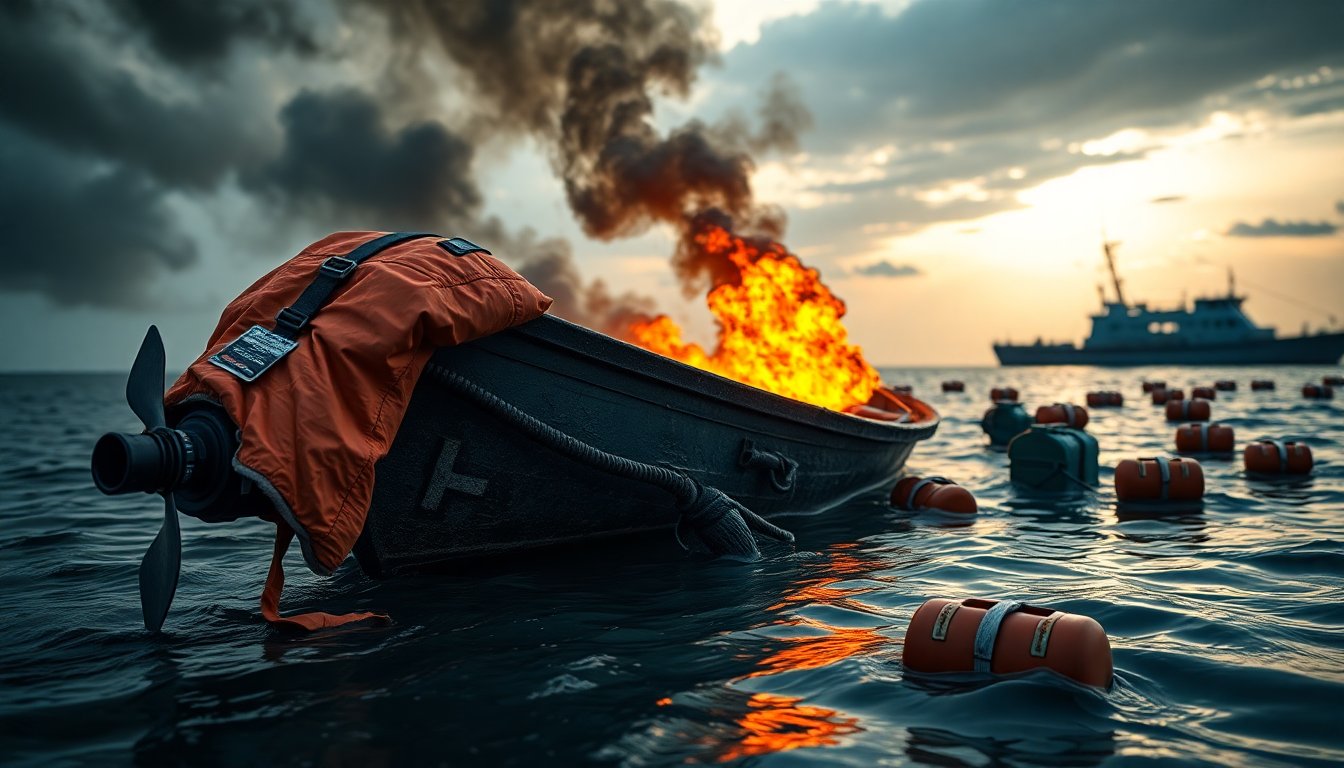
The US military announced another deadly operation in the eastern Pacific, saying four people were killed after a vessel was struck by a projectile. Official statements posted by US Southern Command (SOUTHCOM) included aerial footage that appears to show a boat with outboard engines being hit and erupting in flames. SOUTHCOM described the target as traveling along known narco-trafficking routes and asserted it was involved in illicit drug operations, using the term designated terrorist organizations in its account while not releasing the supporting evidence publicly.
This operation was reported as the fourth lethal strike on vessels in as many days, bringing a running toll that US officials place at 175 deaths since the campaign began in early September. Command messages and short videos have been shared on social platforms, but the sparse information has prompted close scrutiny from international legal experts, rights groups, and some regional governments, who argue that the strikes raise serious questions about the use of force in international waters and the criteria for lethal action.
What happened and how the military described it
According to military posts, the most recent strike targeted a small boat moving through the eastern Pacific shipping lanes. The released clip shows a vessel stationary on the surface before an explosion engulfs it. SOUTHCOM said the people killed were narco-terrorists and justified the attack by citing intelligence indicating the craft was engaged in narcotics trafficking. This incident followed strikes earlier in the weekend that reportedly killed two people on Monday and five people in separate actions on Saturday, with the US Coast Guard later suspending a search for one survivor from the Saturday incidents.
Claims, evidence and public release
The military has repeatedly claimed that the targeted boats were operating as part of organized trafficking networks and that their actions fit within a broader effort to stop drugs flowing to the United States. Yet officials have not published the intelligence that led to these specific engagements, and independent verification of the targets’ identities or cargo has not been made public. Observers note that labeling groups as narco-terrorists or designated terrorist organizations carries legal and political weight but requires transparent supporting evidence that has not been released in these cases.
Legal and human rights concerns
International legal scholars and rights organizations have described the pattern of strikes as amounting to potential extrajudicial killings, particularly because several affected boats are alleged to be small fishing craft rather than obvious military or organized-smuggling platforms. Experts stress that where suspects may have engaged in trafficking, the preferred course under international law is arrest and legal process rather than summary lethal force, especially in international waters. The absence of public legal justification for each strike has intensified calls for accountability and independent investigation.
Impact on civilians and maritime norms
Critics worry that the campaign could put ordinary seafarers at risk and erode established maritime norms. If small coastal fishing vessels are misidentified as trafficking boats, the human cost can be high. Rights groups also argue that widespread use of force without transparent oversight could set a precedent for other states to conduct cross-border or maritime strikes with limited accountability, undermining long-standing rules governing naval operations and the protection of noncombatants at sea.
Strategic questions about effectiveness
Beyond legality, analysts question whether the strikes will meaningfully disrupt the flow of drugs to the United States. Much of the fentanyl implicated in US overdose deaths typically moves overland through Mexico after being manufactured with precursors imported from countries such as China and India. Critics point out that maritime strikes in the Pacific may not address the dominant supply chains, and that lethal force alone may not dismantle complex trafficking networks. Even senior US leaders framing the campaign as an “armed conflict” with cartels faces skepticism about long-term results.
Observers note the campaign began months prior to high-profile actions elsewhere in the region, including a January operation that led to the capture of Venezuelan political leader Nicolás Maduro and his transfer to the United States on drug charges. That arrest and the maritime strikes form part of a broader, contested approach to disrupting narcotics flows, but the lack of clear metrics for success and limited disclosure of evidence continues to fuel debate about policy, proportionality, and regional stability.
What to watch next
Watchers will be looking for any release of corroborating intelligence, independent investigations, or regional responses from Latin American states and international bodies. Further transparency about target identification and post-strike assessments could help address legal and humanitarian concerns. For now, the series of strikes remains a contentious element of US counter-narcotics policy, touching on maritime law, human rights, and the operational limits of military engagement in transnational criminal networks.


