
Table of Contents
The Pentagon has recently shifted forces into the Middle East in response to Iran’s rejection of a proposed ceasefire, a move intended to preserve a spectrum of operational options without indicating a commitment to a large occupation. These deployments include elements that are ground-capable and tailored for rapid employment, notably airborne units and Marine expeditionary forces, designed to act quickly if commanders choose to execute short, focused missions. The White House frames the repositioning as prudent contingency planning: maintaining flexibility while political and diplomatic avenues remain uncertain, and ensuring the commander in chief has tangible alternatives for crisis response.
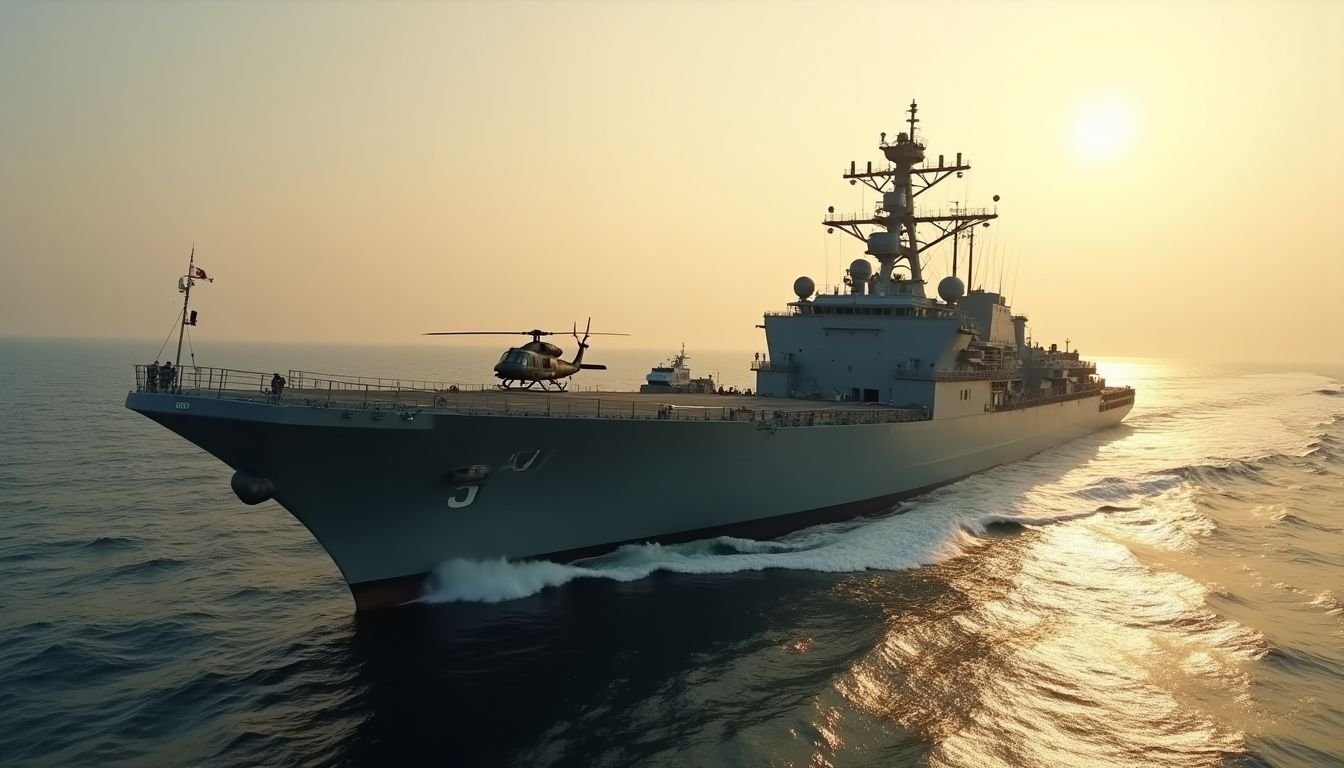
The forces arriving or repositioned are not small symbolic gestures; they include well-known rapid-reaction formations and supporting logistics. Among them are paratroopers from the 82nd Airborne Division, components of the Immediate Response Force such as the 1st Brigade Combat Team that can deploy on short notice, and Marine elements from an Amphibious Ready Group including the 31st Marine Expeditionary Unit embarked aboard amphibious ships like the Tripoli. Transport aircraft such as C-17 and C-130 airlifters have been active, moving personnel and equipment into theater to lay the logistical groundwork for potential short-duration operations, sustainment, or contingency evacuation tasks.
What has moved and why it matters
The deployment pattern points toward a limited set of capabilities rather than preparations for an all-out invasion: units trained for swift insertion, seizing specific objectives, and extracting rapidly, rather than large formations intended to hold extensive territory. Military analysts emphasize that these forces enable targeted missions — actions aimed at degrading particular Iranian capabilities or seizing specific sites — rather than a ground campaign to topple a regime. Those options gain prominence when diplomatic exit ramps narrow, since decision makers often prefer calibrated military measures that can be completed quickly and that offer deniability or low-visibility impact when necessary.
What limited ground options could look like
Operations on Iranian soil, if ordered, would most likely concentrate on defined objectives that provide immediate operational leverage rather than occupying broad swaths of land. One persistent theme among strategists is the criticality of maritime chokepoints: securing positions near the Strait of Hormuz or key coastal facilities could protect shipping lanes and limit Iran’s ability to threaten commercial transit. Such coastal footholds could serve as bases for monitoring, interdiction, and support for naval convoys, but would be expensive to defend and vulnerable to long-range missile and unmanned attacks if sustained.
Coastal footholds and the Strait of Hormuz
The Strait of Hormuz is a focal point because it handles a large share of global seaborne energy shipments; control or denial there would have immediate economic and strategic effects. Establishing a temporary beachhead or securing nearby Iranian coastal assets could facilitate naval escorts for commercial vessels, disrupt launch sites for anti-ship attacks, and reduce immediate threats to maritime traffic. However, planners caution that even short-term coastal operations face a dense threat environment: Iranian missiles, drones, and sea mines create complex risks that can rapidly escalate costs and casualties for forces in fixed positions.
Targeted raids and nuclear infrastructure
Another feasible use of these forces would be brief, precise strikes by special operations teams or assault elements against military infrastructure, radar networks, missile launchers, or sensitive nuclear facilities. Experts emphasize that some nuclear-related objectives are difficult or impossible to neutralize from the air alone, and that securing or disabling certain materials or systems can require boots on the ground. Yet such tasks would need a permissive environment or carefully negotiated access; attempting them under heavy active fire would be extraordinarily risky and politically fraught, and would likely demand extensive reconnaissance and support from air and naval assets.
Constraints, risks and strategic limits
Senior analysts insist Washington is unlikely to pursue grand territorial seizures because the strategic payoff is unclear and the costs are high. Occupying key Iranian infrastructure like major oil export hubs would create fixed targets for retaliation and require sustained resupply and defense under the threat of missiles and drones, a vulnerability that military planners generally seek to avoid. Instead, the current posture appears calibrated to enable short-duration missions that degrade capability, protect maritime traffic, and create leverage while minimizing the footprint of U.S. forces and the political burden of prolonged occupation.
Why a full-scale invasion is improbable
Analysts note that Iran is larger and more populous than past theaters where the U.S. deployed ground forces at scale, and that a conventional occupation would demand a far greater commitment of manpower, logistics, and political capital than the current deployments suggest. The practical reality of defending any seized territory under constant asymmetric attack makes long-term occupation strategically unattractive. Consequently, the United States appears to be preparing for a set of high-risk but constrained options — capable of striking or seizing defined targets, supporting naval operations, and responding to urgent contingencies — while avoiding the open-ended responsibilities of nationwide control.