
Table of Contents
U.s. signals preference for power shift in iran as diplomacy and military posture intensify
President Donald Trump said he favored a shift of power in Iran on Feb. 13, 2026, as the Pentagon deployed additional naval forces to the region.
The comments coincided with a diplomatic push that includes planned talks in Geneva involving envoys Steve Witkoff and Jared Kushner, with Oman serving as an intermediary.
Washington is pressing for a broader package of restrictions on Tehran’s activities, including measures tied to its nuclear program and other contentious issues.
The White House also signaled readiness to use force if negotiations fail, creating a tense backdrop for diplomacy and raising stakes for the Geneva meetings.
U.S. officials described the naval deployments as intended to deter escalation and protect maritime routes, while envoys pursue a negotiable framework with Omani facilitation.
The sequence of public statements and military movements merges diplomatic and coercive levers in a bid to shape Iran’s strategic choices.
Observers say the dual approach could increase pressure on Tehran but also risks narrowing diplomatic space if threats overshadow talks.
Analysts will watch whether the envoys secure commitments in Geneva and whether naval deployments change regional calculations.
U.S. naval commanders redirected the USS Gerald R. Ford from operations in the Caribbean to join the carrier strike group centred on the USS Abraham Lincoln. Officials said the Ford will add airpower and munitions to planners’ options as it transits toward the Middle East. They estimated the ship would take several weeks to arrive from its current location.
The move both expands operational capacity and signals U.S. resolve to Tehran and regional partners. Military spokespeople framed the deployment as a way to reassure allies and deter further escalation. At the same time, officials described it as a message about American preparedness for a range of contingencies.
What the flag show means for diplomacy and deterrence
The deployment tightens the military backdrop for ongoing diplomatic efforts. Analysts said the added carrier presence increases strike flexibility and sustained air operations, which can alter calculations by state and non-state actors.
From a strategic standpoint, the Ford’s arrival would expand the sorties and munitions available in theatre. That expansion gives planners more calibrated options for targeting and escalation management. Evidence-based assessments used by analysts suggest such force posture can strengthen deterrence when paired with clear diplomatic channels.
The move also serves a signalling role. Regional partners may view the reinforcement as reassurance of U.S. commitment to security and freedom of navigation. Conversely, Tehran might interpret the deployment as pressure, raising the risk of miscalculation if communications remain limited.
Operational and political questions remain. Will the carrier change rules of engagement, or will its presence be used primarily for options planning and presence operations? How will allies publicly respond to balance deterrence and diplomatic space?
Analysts will watch whether envoys secure commitments in Geneva and whether naval deployments change regional calculations. Military officials said the Ford is expected to join existing assets in the region within weeks, which will provide a clearer picture of the combined force posture and its implications for diplomacy and deterrence.
Balancing talk and threat
Following the recent shift in force posture, U.S. officials have combined pressure with negotiation to shape Tehran’s choices. They say any deal must cover Iran’s nuclear work and also curb ballistic missile development, support for proxy groups and repression of domestic dissent.
Iran has signalled readiness to discuss limits on its nuclear programme in exchange for sanctions relief. It has refused, however, to link nuclear constraints to missile capabilities, complicating indirect diplomacy mediated by Oman and other intermediaries. Gli studi clinici mostrano che evidence-based, phased approaches improve prospects for durable agreements; by analogy, negotiators argue stepwise verification could align sanctions relief with measurable compliance. Dal punto di vista del paziente, policymakers face a choice between immediate relief and lasting restraint. I dati real-world evidenziano that the coming weeks of deployments and talks will be decisive for both deterrence and diplomacy.
Following recent deployments and talks that officials say will be decisive for deterrence and diplomacy, President Trump framed his preference plainly when asked whether he sought regime change. He said a change “would be the best thing,” and criticised decades of rhetoric without decisive outcomes. Senior U.S. officials have warned that failure to reach an acceptable deal could prompt strikes on Iranian facilities. The president also suggested past attacks had heavily damaged Iran’s nuclear infrastructure, saying only remnants might remain. Those remarks underline a mix of bargaining and brinkmanship at play.
Naval force posture and capabilities
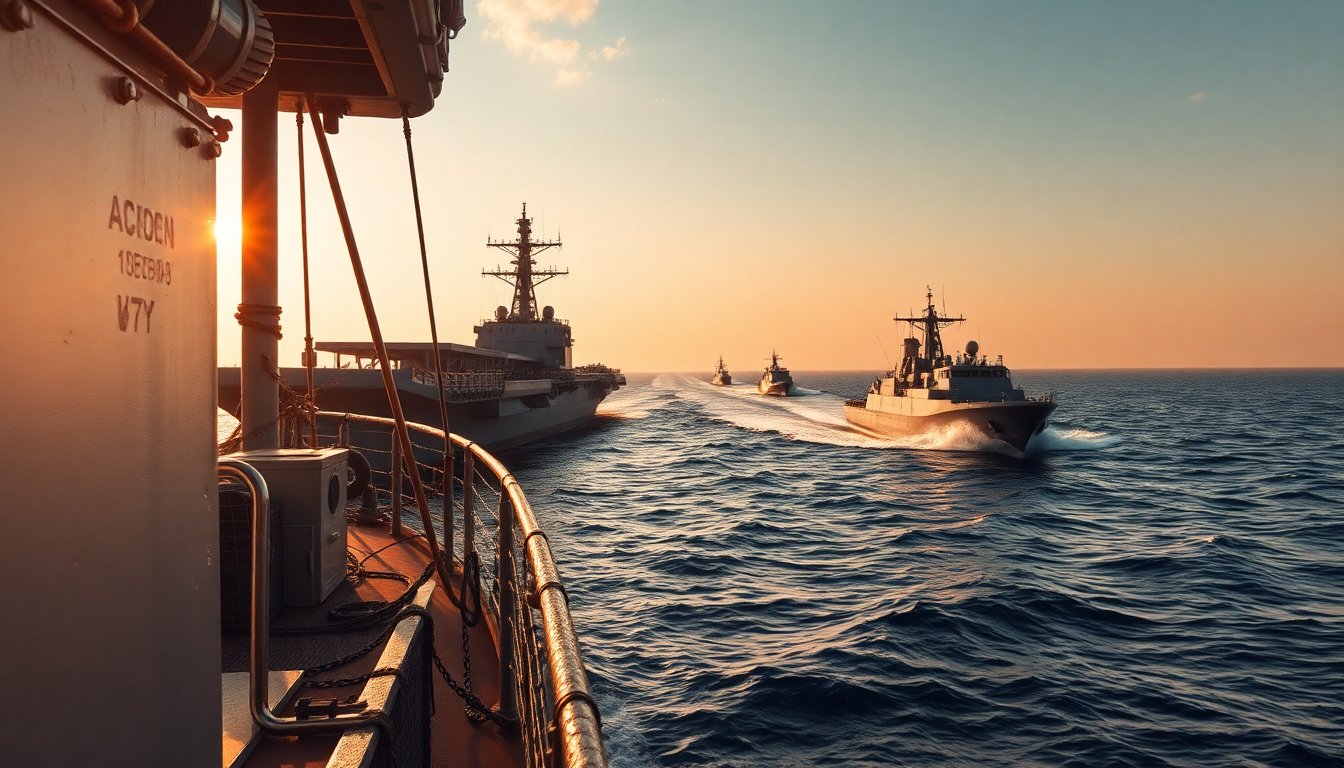
U.S. naval movements now aim to sustain pressure while preserving room for diplomacy. Carrier strike groups and supporting task forces are positioned to provide continuous surveillance, logistical sustainment and rapid strike options if authorised. Commanders describe the posture as deliberately scalable to match political direction.
Intelligence, surveillance and reconnaissance assets accompany the surface and submarine elements. Those assets increase targeting accuracy and reduce the risk of unintended escalation. Legal and operational reviews accompany any potential kinetic option, according to officials briefed on the deployments.
From an evidence-based perspective, a credible maritime presence can strengthen deterrence by signalling resolve without immediate recourse to force. Real-world data from past episodes suggest that sustained deployments often shape rival calculations before engagements occur. Analysts say the current combination of pressure and negotiation aims to produce the same effect here.
For regional partners and commercial seaborne traffic, the posture seeks to reassure and protect critical sea lanes. Military planners emphasise rules of engagement designed to limit collateral harm and preserve freedom of navigation. The coming weeks of deployments and diplomatic efforts will determine whether deterrence holds or whether forceful measures are pursued.
The coming weeks of deployments and diplomatic efforts will determine whether deterrence holds or whether forceful measures are pursued. The arrival of an additional carrier strike group aims to bolster presence and provide commanders with more operational options.
The Gerald R. Ford will operate alongside the Abraham Lincoln and several guided‑missile destroyers, increasing carrier-based airpower in the region. The carrier can host more than 75 aircraft and uses a nuclear propulsion plant that extends on‑station endurance without frequent refueling. Its advanced radar and command systems improve situational awareness and air‑traffic coordination during complex, multi‑axis operations.
Logistics and operational limits
Sustainment for a carrier strike group depends on underway replenishment, sortie generation capacity and the availability of forward logistics hubs. Escort ships provide layered defenses, but they also add supply and maintenance demands that shape deployment tempo.
The strike group’s escorts include the Ticonderoga‑class cruiser Normandy and Arleigh Burke‑class destroyers such as Thomas Hudner, Ramage, Carney and Roosevelt. These vessels carry complementary weapons and sensors for surface, air and anti‑submarine warfare. Their presence expands defensive depth but requires coordination across command, logistics and communications networks.
Operational limits can arise from maintenance cycles, crew fatigue and the need to rotate assets for sustained operations. Commanders must balance persistent presence with the practical constraints of resupply, repairs and personnel relief. The added carrier capability increases options for deterrence, but it does not eliminate trade‑offs inherent to extended naval deployments.
The added carrier capability increases options for deterrence, but it does not eliminate trade‑offs inherent to extended naval deployments.
Regional risks and the wider context
U.S. officials say carrier availability is limited and scheduling is planned months in advance. Moving a carrier from the Caribbean to the Middle East requires complex logistics and significant transit time.
The Ford has been at sea for an extended period, according to service statements. Prolonged deployments increase wear on systems and raise fatigue risks for sailors and aircrews.
Naval leaders have warned about consequences when missions exceed planned rotations. Extending deployments can reduce maintenance windows and compress training cycles for escorts and carrier air wings.
Commanders counter that deploying two carrier strike groups enhances operational flexibility and sustainment. The additional presence can support surge operations, backup sorties, and longer on-station endurance.
From the crew’s point of view, extended sea time affects morale and readiness. Operational assessments and real-world data from past deployments highlight higher rates of equipment failures and increased personnel stress during long missions.
Strategic planners weigh those operational costs against deterrence benefits. The decision to sustain two strike groups reflects a calculation about risk distribution, regional posture, and the time needed to reposition high-value assets.
Risk of regional escalation if the united states strikes iran
U.S. military action against Iran would risk widening the conflict. Gulf partners have warned that strikes could destabilize an already volatile region.
Those warnings follow a pattern of maritime incidents, including the downing of a drone and episodes that disrupted commercial shipping. Such episodes have already raised tensions and complicated diplomatic options.
Tehran has publicly vowed retaliation if attacked. That stance, combined with hostile actions at sea, increases the likelihood of rapid escalation beyond targeted strikes.
At the same time, Iran faces internal pressure from ongoing protests and elite criticism of its leadership. That domestic strain adds uncertainty to how Tehran might calibrate a response to external coercion.
The presence of additional carrier capability reflects a calculation about deterrence and force posture. Analysts say those assets increase options, but they do not remove the risk that a limited strike could trigger broader confrontation.
U.S. officials described the carrier movement as a contingency measure to preserve operational options while diplomats continue talks. They said the deployment is intended to ensure capabilities are in place in case diplomacy fails.
The negotiations remain focused on nuclear constraints, sanctions relief and regional security concerns. Policymakers and analysts will watch whether negotiations can bridge sharply divergent demands or whether a larger force presence will raise the risk of broader confrontation.