
A federal pause on several East Coast offshore wind projects has thrown the region’s fledgling industry into disarray — and opened an unexpected door for Atlantic Canada. What began as a series of national-security and procedural reviews has rippled across supply chains, dockyards and boardrooms, forcing developers, financiers and governments on both sides of the border to reassess timelines and priorities.
The orders halted work on a number of headline projects, including the 65-turbine Revolution Wind (roughly 704 MW), a development once billed as capable of powering about 350,000 homes and supporting some 1,200 construction and maintenance jobs. In some cases courts later permitted limited restarts after sifting through classified and unclassified materials, but many projects remain tangled in legal uncertainty.
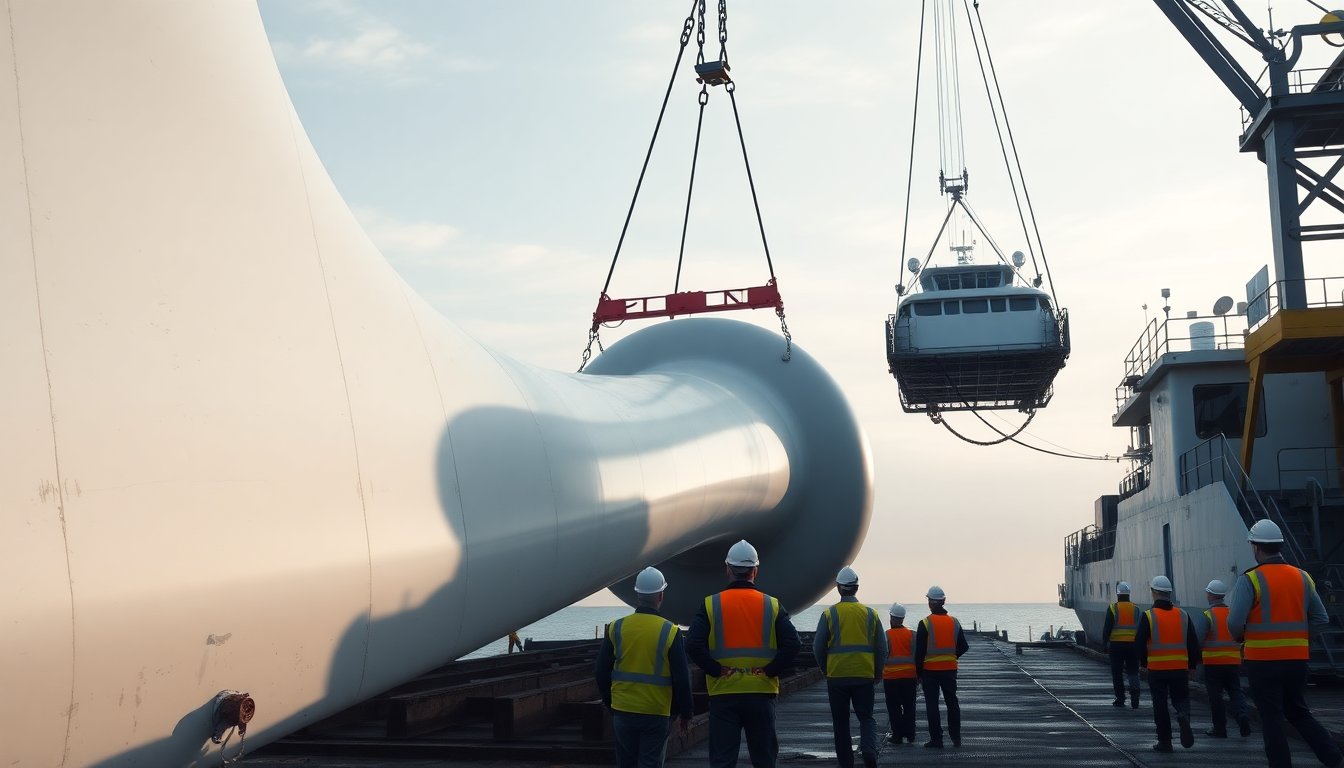
The immediate fallout has been concrete and painful. Construction firms lost weeks and months of scheduled work; ports that had converted berths for staging now shelter oversized towers and blades with no firm shipping dates. Suppliers and shipyards saw orders delayed or canceled. Crews face intermittent employment, municipalities are revising revenue forecasts, and developers are swallowing rising carrying costs as capital and equipment sit idle.
Those near-term hits are only part of the story. The pause has shifted strategy across the sector. Lenders tightened terms, insurers demanded higher premiums, and investors shortened commitments or added protective clauses. Developers and contractors now price projects with the real possibility of intermittent legal or regulatory interruptions — a mindset that raises the cost and complexity of large-scale deployment even where work continues.
Legal decisions have shaped, but not settled, the situation. Judges issued injunctions after reviewing government security assessments, often balancing the risk of national-security concerns against the potential for irreparable economic harm. That calculus allowed some jobsites to reopen, yet it also left lingering questions about final approvals and long-term project viability. The industry’s intricate logistics network — built to move massive components — is strained by uncertain schedules: vessel charters are deferred, hiring plans paused, and component makers have reduced output as orders went tentative.
Political debate has only heightened the instability. Plaintiffs have pushed for stricter environmental and permitting scrutiny, critics framed the litigation as necessary oversight, and proponents call the delays avoidable and costly. Analysts and industry voices have pointed out a disconnect between the administration’s recent security rationale and earlier, multi-year reviews that cleared many of the same projects.
Atlantic Canada has moved quickly to make the most of this disruption. Provincial officials are promoting deepwater ports, a skilled maritime workforce, and incentives aimed at luring fabrication, staging and servicing work that might be redirected. Nova Scotia, among others, has been especially vocal about its readiness to capture manufacturing and logistics jobs.
Still, enthusiasm meets reality. A recent government-commissioned engineering study trimmed near-term realistic potential for Atlantic Canada to about 9–16 GW — well short of some breathless headlines — and flagged transmission and grid-integration costs as major obstacles. In plain terms: ports and workers matter, but without new transmission lines, financing mechanisms and federal support, even eager regions will struggle to absorb large-scale buildouts.
The pause has exposed how fragile and interconnected this industry is: a few legal rulings can stall fleets of ships, fleets of workers and billions in investment. For U.S. project owners it’s a cautionary tale about political and regulatory risk; for Atlantic Canada it’s a chance to attract business — if the hard work of building transmission, securing capital and offering regulatory clarity follows the rhetoric.