
Headline: Did China Detonate a Secret Nuclear Device at Lop Nur? What the Public Evidence — and the Gaps — Really Show
Subhead: A U.S. official accuses China of a low-yield test. Open-source sleuths say they can’t confirm it. Here’s what we actually know, and why it matters.
Lead: On June 22, 2026, a senior U.S. official publicly accused China of conducting a clandestine nuclear detonation at the Lop Nur test site. The allegation has stirred a fierce debate in Washington about whether the United States should resume explosive nuclear testing — a move President Donald Trump has signaled he would consider, alarming arms-control experts and foreign diplomats. Yet public data and independent analysts have not been able to corroborate the claim. Below is a clear, readable breakdown of the evidence, the limits of open sources, and the broader stakes.
What investigators can and can’t see from space and sensors
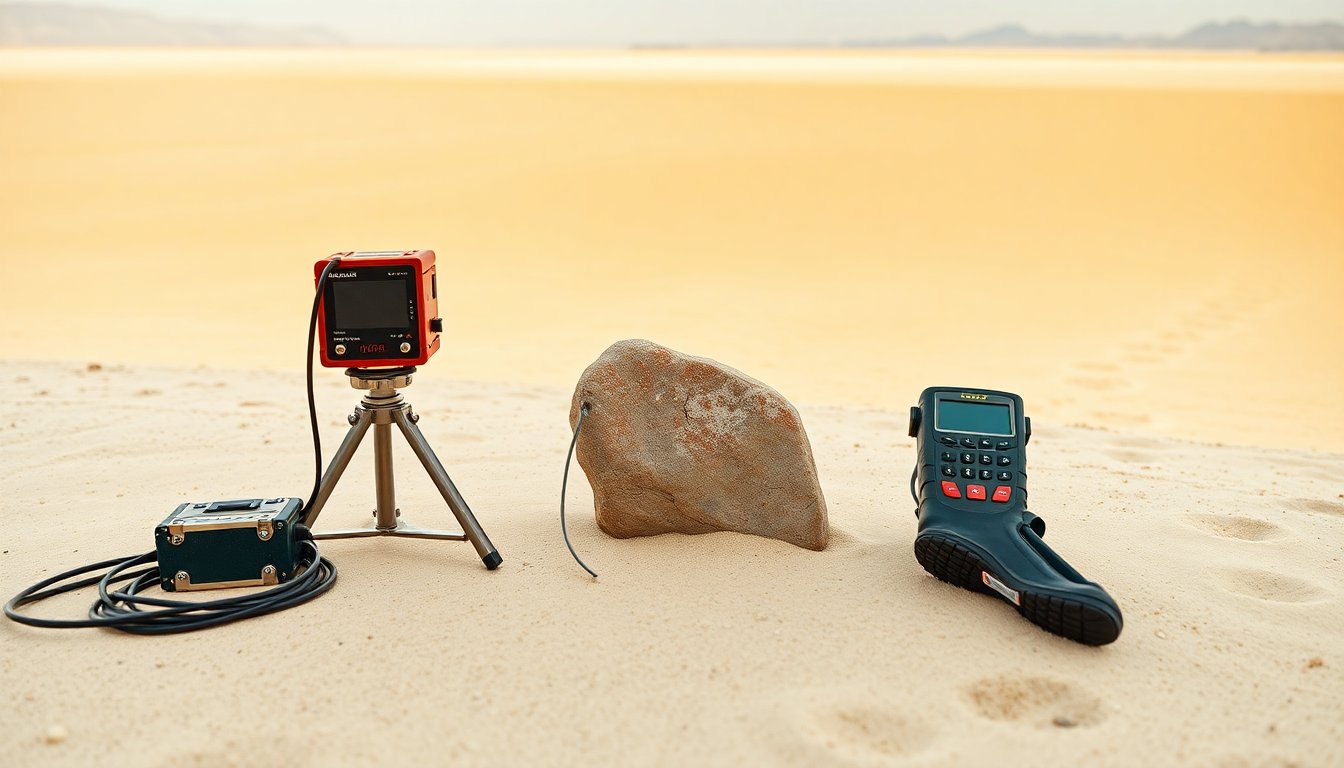
High-resolution satellite imagery and seismographs are powerful: satellite photos can reveal disturbed soil, new construction, or altered infrastructure; seismic stations can detect underground blasts. But those tools aren’t foolproof. Routine construction, mining, or deliberate earth-moving can mimic the visual fingerprints of a test site. Low-yield detonations, or ones engineered to hide their seismic signature, may slip under the radar of public monitoring networks. In short: open-source tools can point to red flags, but they don’t always provide definitive proof.
What independent analysts actually checked
Researchers at the Center for Strategic and International Studies (CSIS) compared commercial satellite images from March 26 and June 25, 2026, focused on the northern tunnel complex at Lop Nur (including Tunnel 5). They reported no clear visual changes between those dates. Public seismic catalogs were also searched for events centered on Lop Nur for June 22; none showed signals consistent with a local underground nuclear explosion. The Comprehensive Nuclear-Test-Ban Treaty Organization (CTBTO) has likewise said that the open seismic record does not display indicators of a nearby underground detonation.
Why public and classified conclusions may diverge
The heart of the dispute isn’t just data — it’s access. Classified sensors, on-site measurements, specialized hydroacoustic and infrasound arrays, and human intelligence can pick up subtleties that public systems miss. When intelligence agencies draw a firm conclusion based on such sources, open datasets may still look empty. That mismatch creates a hard choice for policymakers: act on secret assessments that the international community can’t verify, or wait for public confirmation and risk strategic surprise.
Possible technical and strategic motives for a low-yield test
Experts suggest why a state might quietly carry out a very low-yield detonation. Technically, a small explosion can validate models, test one-point safety of a warhead, or reduce uncertainties in materials behavior — all useful for life-extension programs and incremental design improvements. Strategically, a limited test can signal capability without provoking full-blown international backlash. It can also serve as a probe of global monitoring — testing what signatures are detectable and which methods of concealment work.
How even a tiny blast could change military balances
Even a narrowly focused experiment can ripple across deterrence and verification landscapes. Better design knowledge can enable more controllable yields or help with warhead miniaturization, affecting the feasibility of concepts like MIRVs. At the same time, any move to obscure seismic or radiological signs makes attribution harder and weakens verification regimes that depend on fixed detection thresholds.
U.S. moves and the arms-control ripple effect
The United States conducted conventional-explosive tests in 2026 to better understand low-yield signatures — research that helps analysts interpret ambiguous events worldwide. The practical lesson for governments and organizations tracking proliferation is clear: blend open-source sleuthing with classified collection, cross-validate signals, and prepare to respond quickly when multiple lines of evidence converge.
Why the debate matters beyond headlines
Accusations based mainly on classified evidence are difficult to adjudicate publicly, which fuels diplomatic tension and mistrust. Conversely, ignoring classified warnings risks underestimating real technical advances. The Lop Nur episode highlights the trade-off between secrecy and accountability in modern arms control: transparency builds trust, but too much secrecy can leave the public and allies in the dark. That doesn’t categorically refute the U.S. official’s claim — classified data may tell a different story. What’s certain is that this gap between open and classified information complicates diplomacy, verification, and strategic decision-making.
Subhead: A U.S. official accuses China of a low-yield test. Open-source sleuths say they can’t confirm it. Here’s what we actually know, and why it matters.0