
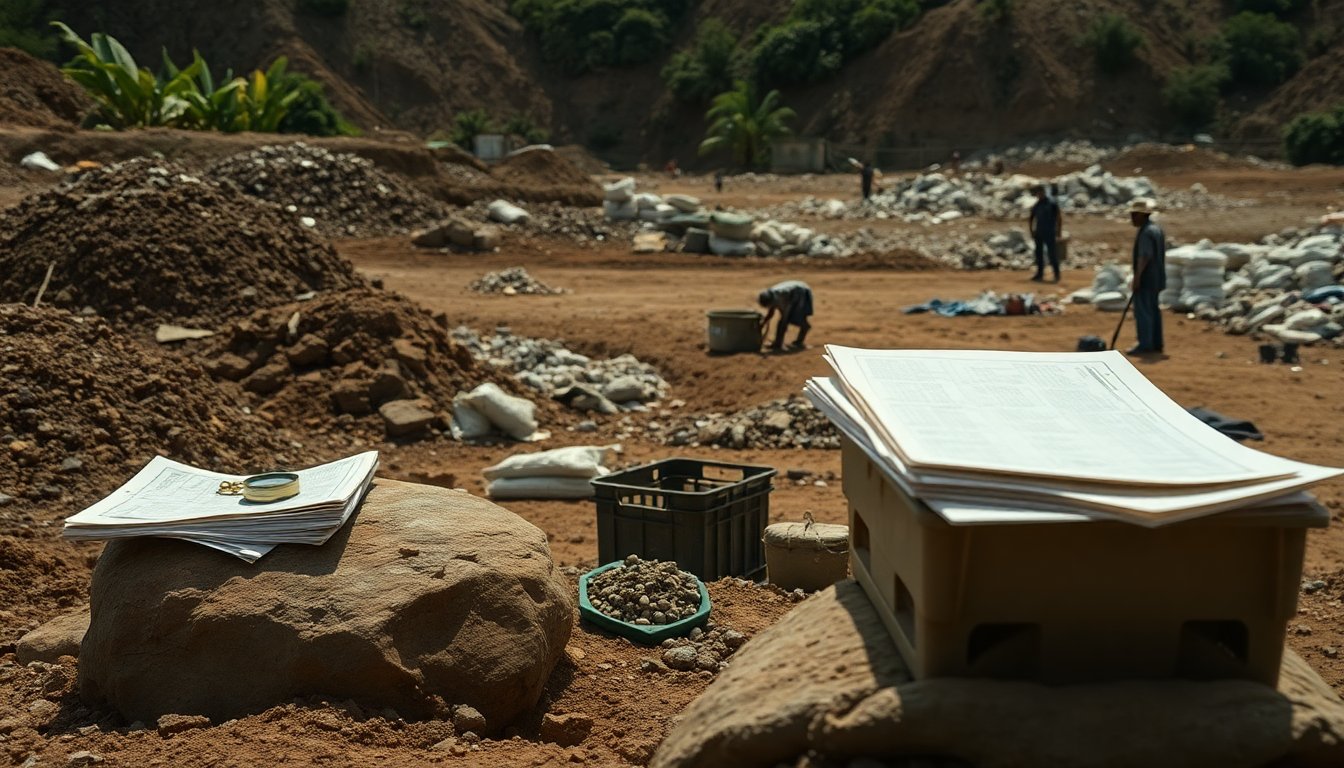
U.S. officials are quietly pushing American companies to take a second look at Venezuela’s mining sector. On June 3, 2026, Interior Secretary Doug Burgum urged firms to evaluate projects in Venezuela’s largely informal extraction zones — a sign that diplomatic thawing is shifting from symbolic gestures to concrete economic outreach.
That shift matters because the ask is no longer about immediate contracts but about careful reconnaissance. Officials are encouraging thorough assessments: risk mapping, environmental and social due diligence, and supply-chain tracing. The underlying pitch is strategic as much as commercial — Venezuela’s gold and critical-minerals deposits could help diversify supplies for batteries, renewable-energy technologies and advanced manufacturing, priorities aligned with current U.S. industrial policy.
Yet the reality on the ground is messy. Much of Venezuela’s extractive activity is artisanal and informal, concentrated in remote areas where state presence is limited. Those conditions foster pollution, heavy-metal exposure, and a range of health problems — respiratory and cardiovascular illnesses, contaminated water, and long-term ecological damage that undermines agriculture and livelihoods. Social consequences follow: displacement, stress-related mental-health issues, and spikes in infectious disease are well documented across Latin America where safeguards are weak.
Past experience shows that short-lived booms often leave enduring costs. But mitigation is possible. Practical steps include pollution controls, continuous environmental monitoring, independent health-impact studies, and accessible grievance mechanisms for communities. Crucially, these measures require not only technical funding but political commitment — without steady enforcement, even the best plans can fail.
Security and governance add further complications. Mining corridors in Venezuela can involve artisanal miners, armed groups and tangled local power dynamics, creating operational risks and reputational exposure for companies. Supply chains that begin in poorly governed sites are hard to certify; for firms that must demonstrate responsible sourcing to investors and customers, that opacity is a serious obstacle.
Because of these obstacles, any U.S.-linked engagement will carry strict conditions. Expect exhaustive vetting, rigorous human-rights and anti-corruption compliance, and carefully negotiated security arrangements. Independent audits, on-the-ground traceability systems and transparent community engagement plans will likely be prerequisites for financing, insurance and regulatory approval.
Regulators and investors will demand credible, peer-reviewed environmental and social impact assessments before signing off. International norms around human rights, environmental protection and anti-corruption are increasingly shaping what counts as acceptable practice. Meaningful local consultation, independent oversight and enforceable grievance procedures not only reduce conflict but also improve project outcomes — and they help satisfy regulators in major markets.
For Washington, private investment is being framed as a lever of foreign policy. Thoughtfully structured projects could open channels of influence, foster economic ties that incentivize better governance, and offer a counterweight to other external actors in the region. But diplomatic signaling won’t suffice on its own; firms and policymakers will need clear legal frameworks, investor protections, coordinated multilateral engagement and enforceable safeguards for affected communities.
When managed well, the upside is real. Responsible projects could create jobs, generate public revenues and spur infrastructure improvements in underserved regions. Critical minerals sourced from Venezuela could feed battery and renewable-energy supply chains, helping meet industrial goals. History teaches, however, that whether resource wealth becomes a catalyst for development or a source of entrenched problems depends on governance quality, contract transparency and revenue management.
Decisions about moving forward should rest on evidence: rigorous environmental and social studies guiding licensing and oversight, independent monitoring to maintain investor confidence, and transparent reporting to preserve public legitimacy. With careful planning, strong safeguards and sustained oversight, engagement in Venezuela’s mining sector could offer tangible benefits — but without those guardrails, the risks to communities, ecosystems and reputations are substantial.