
Table of Contents
In a notable development amid rising geopolitical tensions, the United States has imposed sanctions on a Venezuelan company linked to the acquisition of drones manufactured by Iran. This decision underscores the increasing strain between Washington, Tehran, and Caracas as the US aims to counter what it terms a reckless proliferation of military technology.
Details of the sanctions
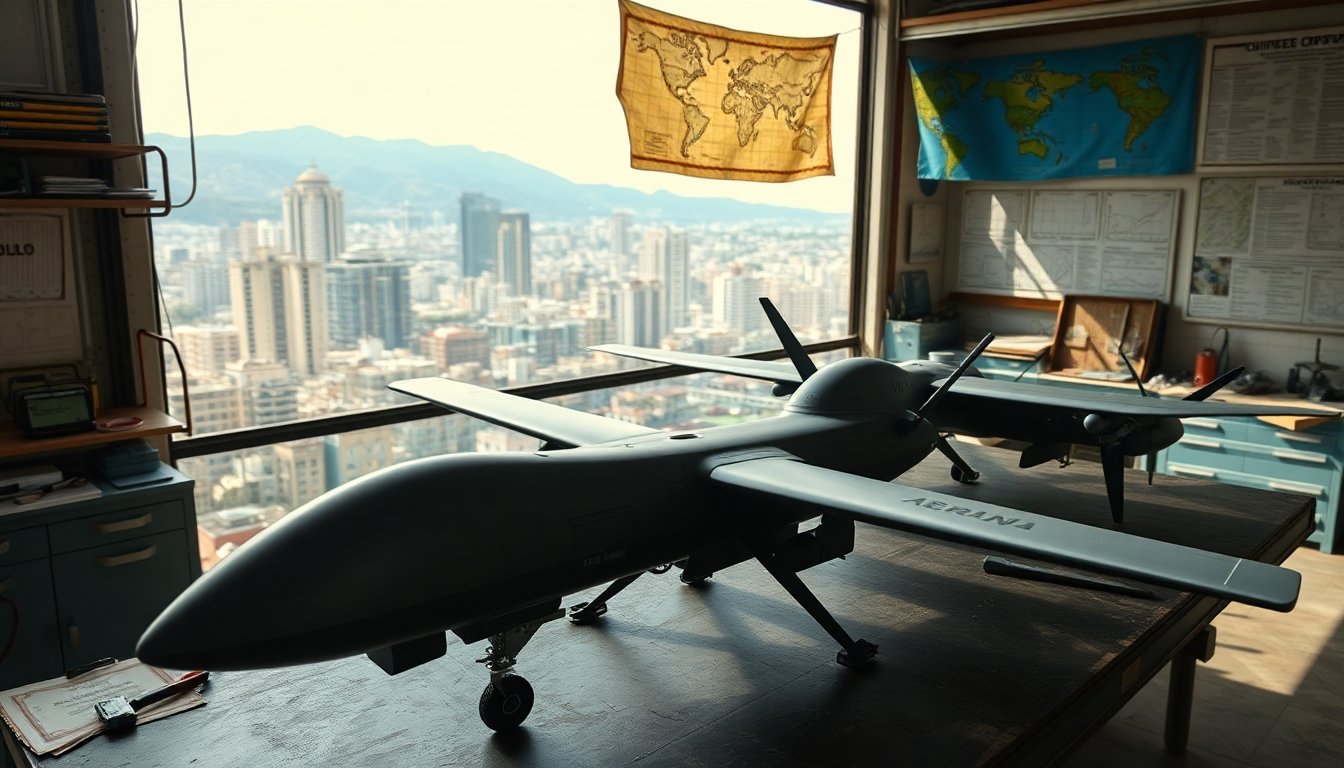
The U.S. Treasury Department has imposed sanctions on Empresa Aeronautica Nacional SA (EANSA), a Venezuelan company linked to the assembly of Iranian drones. U.S. officials assert that EANSA works closely with Iran’s Qods Aviation Industries, which is already under U.S. sanctions for its arms manufacturing activities.
The sanctions also target EANSA’s chairman, Jose Jesus Urdaneta Gonzalez, who is accused of facilitating collaboration between the Venezuelan armed forces and Iran in the production of unmanned aerial vehicles (UAVs). According to U.S. Treasury spokesperson John Hurley, both nations are being held accountable for their contributions to the global arms race.
Implications for financial transactions
The recent sanctions carry significant implications for financial transactions involving designated individuals and companies. Assets located within US jurisdiction are frozen, and American citizens are barred from engaging in any financial activities with the sanctioned entities. This action seeks to limit Iran’s military-industrial complex from accessing the US financial system.
The US asserts that since 2006, there has been a coordinated effort between Iran and Venezuela to supply drones to the South American nation. The Iranian Ministry of Defence has been under US sanctions since due to its involvement in the procurement and sale of military weapons.
Escalating military tensions
The recent sanctions follow increased military threats from President Donald Trump, who has warned of potential strikes against Iran if it attempts to revive its missile capabilities or nuclear program. In a press conference alongside Israeli Prime Minister Benjamin Netanyahu, Trump stated, “If Iran is attempting to rebuild its military capabilities, we will have to take decisive action against them.” This rhetoric highlights the urgent threats facing both nations.
In response, Iranian officials have issued stern warnings, asserting that any act of aggression will be met with a stringent and regrettable response. Iranian President Masoud Pezeshkian emphasized that the Islamic Republic will not tolerate oppression from external forces.
The Venezuelan context
In Venezuela, President Trump has adopted a confrontational approach, indicating that the United States has identified specific locations linked to drug trafficking. Although the details of these military actions remain unclear, the US administration has accused President Nicolas Maduro of leading a drug trafficking organization, yet has not provided substantial evidence to support these claims.
Additionally, the Trump administration has increased military operations in the Caribbean, intercepting vessels suspected of drug trafficking. Legal experts have raised concerns about these actions, arguing that they could violate both US and international law, comparing them to extrajudicial killings.
US sanctions against Venezuela and Iran: implications and future developments
Recent sanctions imposed on Venezuela and Iran signify a notable shift in the United States’ strategy towards international relations in this unstable region. The US military presence in the Caribbean has increased, raising concerns about potential military action. As both nations firmly reject the sanctions, describing them as acts of piracy and aggression, the power dynamics in Venezuela and Iran remain volatile.
With the geopolitical landscape continuously changing, the effects of these sanctions on the arms trade and military cooperation between Iran and Venezuela are yet to be determined. Additionally, the broader implications for US foreign policy will likely become clearer with time.