
Table of Contents
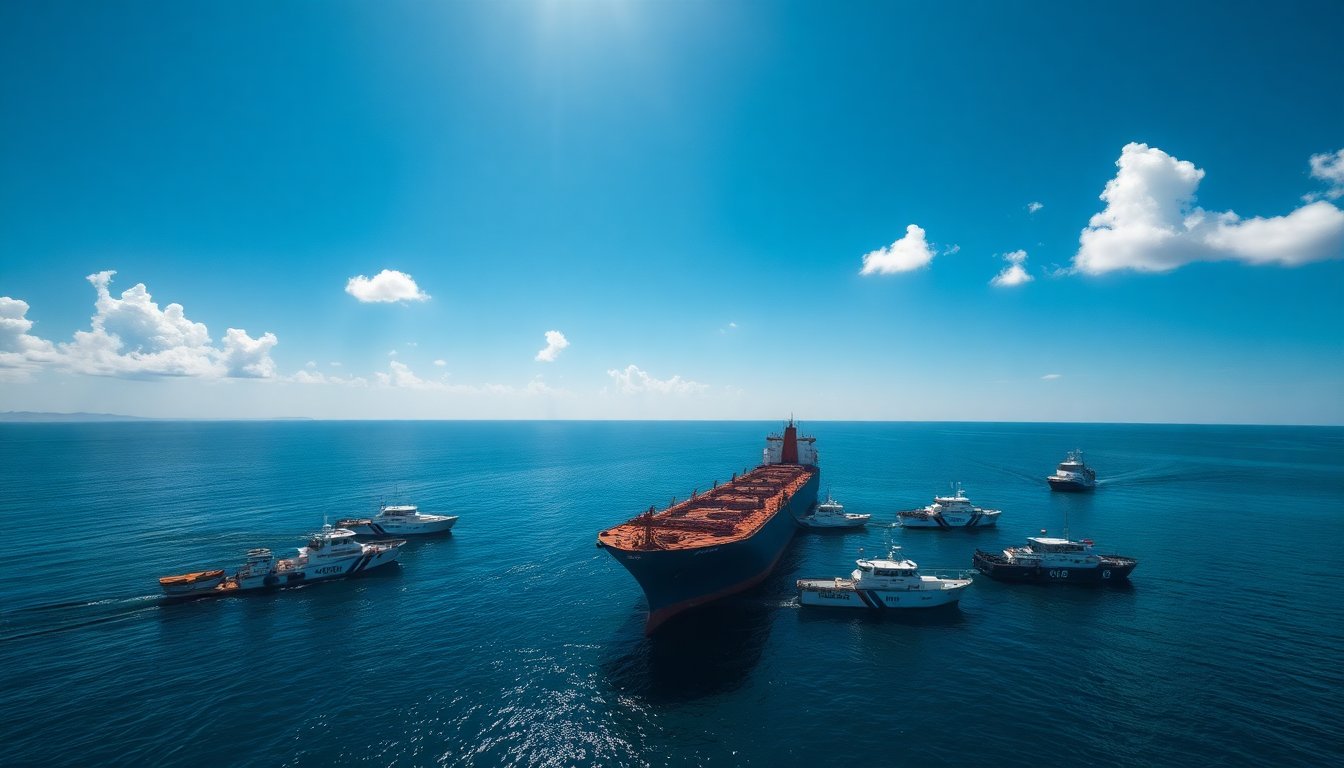
In a significant development, the U.S. Coast Guard has captured an oil tanker in international waters off the coast of Venezuela. This operation was confirmed by Homeland Security Secretary Kristi Noem, following an announcement from President Donald Trump regarding a comprehensive blockade aimed at all sanctioned oil tankers associated with Venezuela.
This marks the second instance of a tanker being apprehended in the vicinity of Venezuela in recent weeks, coinciding with a notable increase in U.S. military presence in the region.
Details of the seizure
According to Noem, this particular vessel had previously docked in Venezuela. She stated, “The United States will continue to pursue the illicit movement of sanctioned oil that is used to fund narco-terrorism in the region. We will find you, and we will stop you.” This firm stance illustrates the U.S. commitment to its policy against oil-related crimes.
Details surrounding the incident indicate that the tanker, identified as the Centuries, is Panama-flagged and was intercepted east of Barbados in the Caribbean Sea. This vessel, according to maritime risk management firm Vanguard, was not previously sanctioned by the U.S., raising questions about the legality of its seizure.
Legal implications and expert opinions
Jeremy Paner, a partner at the law firm Hughes Hubbard & Reed LLP, remarked that the detention of a non-sanctioned vessel signals a potential escalation in the U.S.’s efforts to exert pressure on the Venezuelan government. He emphasized that this action diverges from Trump’s earlier declaration of a blockade exclusively targeting sanctioned tankers.
In his recent remarks, Trump had emphasized a total blockade of all oil tankers tied to Venezuela, underscoring his administration’s aggressive stance against the country’s oil exports.
Impact on Venezuelan oil exports
Following the U.S. seizure of a sanctioned tanker just days prior, the Venezuelan oil export landscape has dramatically shifted. Many vessels believed to be transporting oil from Venezuela have opted to remain in national waters, avoiding the risk of being intercepted by U.S. forces. This has resulted in a significant decline in Venezuelan crude exports.
While numerous vessels involved in oil transport from Venezuela are under U.S. sanctions, there are still entities, such as the American energy company Chemron, that engage in oil transportation using their authorized ships.
Global implications of the embargo
China continues to be the primary buyer of Venezuelan crude oil, accounting for approximately 4% of its total imports. Reports indicate that December shipments may average over 600,000 barrels per day, signifying the importance of Venezuelan oil in the global market.
Currently, the oil market remains adequately supplied, with numerous tankers off the coast of China awaiting to offload their cargo. Should the U.S. embargo persist, the impact of losing nearly a million barrels daily could potentially drive oil prices upward.
The emergence of the shadow fleet
This marks the second instance of a tanker being apprehended in the vicinity of Venezuela in recent weeks, coinciding with a notable increase in U.S. military presence in the region.0
This marks the second instance of a tanker being apprehended in the vicinity of Venezuela in recent weeks, coinciding with a notable increase in U.S. military presence in the region.1
This marks the second instance of a tanker being apprehended in the vicinity of Venezuela in recent weeks, coinciding with a notable increase in U.S. military presence in the region.2
Political ramifications
This marks the second instance of a tanker being apprehended in the vicinity of Venezuela in recent weeks, coinciding with a notable increase in U.S. military presence in the region.3