
Table of Contents
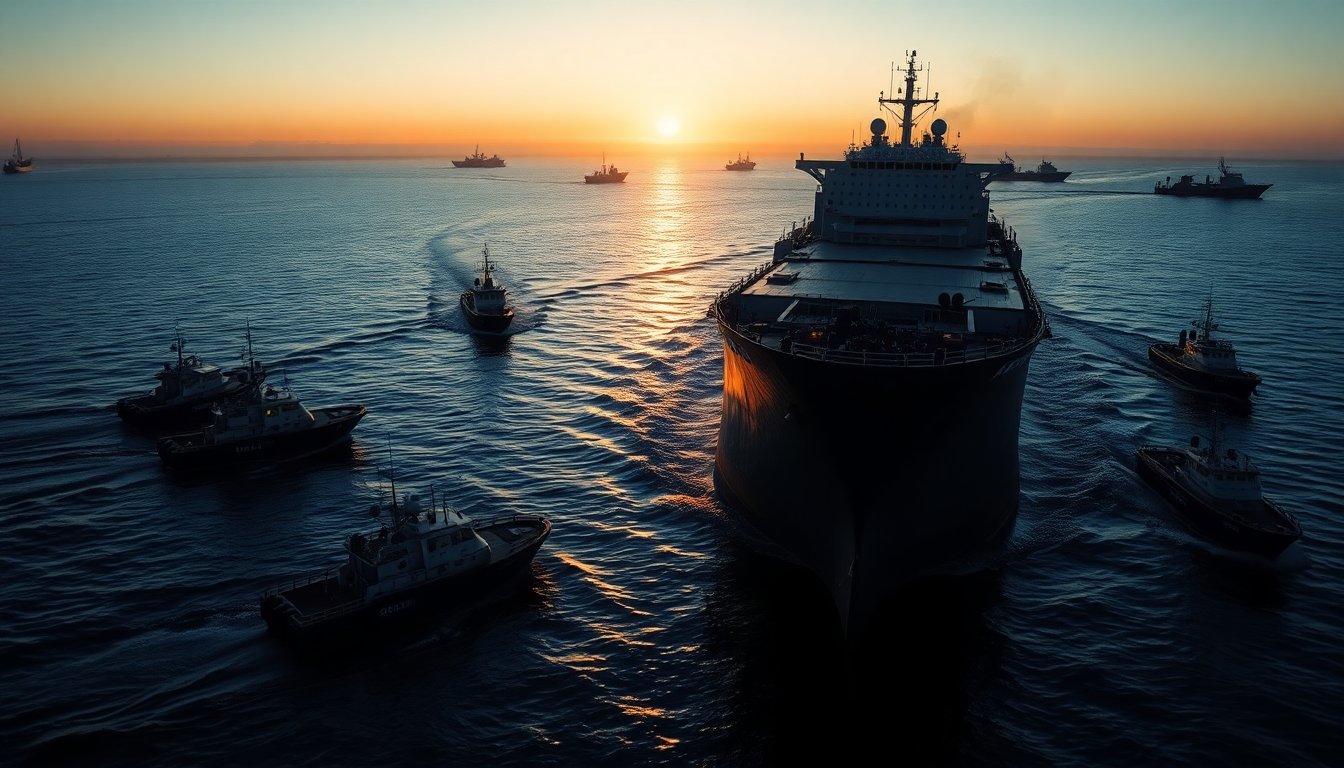
In a significant move, the United States seized an oil tanker that had been docked in Venezuela. This operation was announced by the Secretary of Homeland Security, Kristi Noem, via a post on the social media platform X. Noem emphasized that the U.S. is committed to combating the unauthorized movement of oil that finances narco-terrorism in the region.
Before dawn, the U.S. Coast Guard, supported by the Pentagon, successfully apprehended the vessel. This operation follows the recent seizure of another sanctioned oil tanker near Venezuela’s coast, illustrating a growing pattern of U.S. enforcement actions against illegal oil exports connected to the Maduro regime.
Military presence and sanctions against Venezuela
The context of this seizure is further complicated by the ongoing military buildup in the region. U.S. President Donald Trump has frequently hinted at potential military intervention in Venezuela, aiming to exert pressure on the Venezuelan leader, Nicolás Maduro. This comes amid rising tensions over the country’s management of its vast oil resources.
In light of these developments, various military operations targeting vessels suspected of drug trafficking have led to heightened scrutiny and concern among legal experts and lawmakers. Many argue that the aggressive stance taken by the U.S. could potentially destabilize the region even further.
Maduro’s response to U.S. actions
In response to the U.S. military presence and recent actions, Maduro has accused the United States of attempting to orchestrate a coup against his government, aiming to take control of Venezuela’s oil reserves. He views these military maneuvers as a direct threat to the sovereignty of Venezuela.
Targeting the Maduro regime’s financial networks
In a parallel effort to curb the influence of the Maduro administration, the U.S. Department of the Treasury’s Office of Foreign Assets Control (OFAC) announced new sanctions targeting members of Maduro’s inner circle. This move aims to dismantle the financial structures that sustain his regime, particularly those linked to drug trafficking and corruption.
On December 11, OFAC sanctioned Carlos Erik Malpica Flores, a prominent figure associated with the state-run oil company, Petróleos de Venezuela, S.A. (PDVSA). Malpica Flores, a nephew of Maduro’s wife, Cilia Flores, has been implicated in various corrupt activities. The sanctions extend to his immediate family, aiming to disrupt the familial networks that support the Maduro regime.
Implications of the sanctions
The recent sanctions imposed by OFAC restrict any property and interests linked to the designated individuals from being accessed or utilized by U.S. entities. This includes a ban on transactions involving any assets owned by these individuals. The intent behind these sanctions is clear: to hinder the operations of Maduro’s regime by targeting those who play a significant role in its financial underpinnings.
Furthermore, any U.S. person or entity engaging in transactions with these sanctioned individuals may face severe penalties. The Treasury’s actions are designed not merely as punitive measures but as strategic steps to encourage a change in behavior from those involved in the Venezuelan government.
A multifaceted approach to combatting narco-trafficking
The U.S. government continues to implement a multifaceted strategy that combines military action, economic sanctions, and diplomatic pressure in its efforts to address the challenges posed by drug trafficking in the Americas. As the situation evolves, the consequences of these strategies will likely have significant ramifications for both U.S.-Venezuela relations and the broader geopolitical landscape in Latin America.