
Table of Contents
The geopolitical landscape in South America has shifted dramatically as the U.S. government confirmed the seizure of an oil tanker off the coast of Venezuela. This operation aligns with the Trump administration’s strategy to challenge President Nicolás Maduro and has sparked fierce controversy and accusations of international wrongdoing.
In response, the Venezuelan government has denounced the U.S. actions as piracy and a blatant act of theft. The ramifications of this seizure extend beyond diplomatic rhetoric and may reshape energy dynamics in the region.
Details of the seizure operation
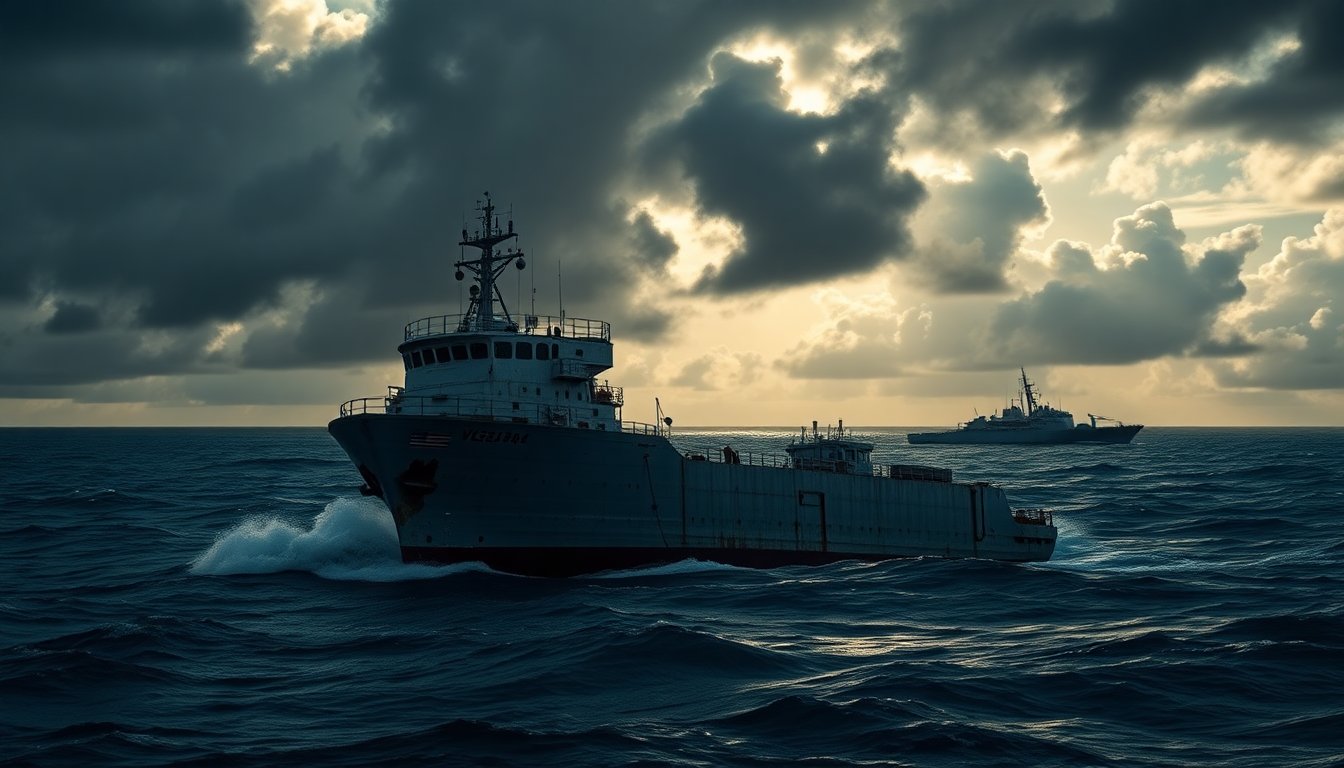
President Trump announced the operation, referring to the captured vessel as the largest tanker ever seized by the U.S. military. The tanker was intercepted through a coordinated effort involving the U.S. Coast Guard, special forces, and aerial support, demonstrating a significant military presence in the Caribbean.
U.S. justification for the action
U.S. Attorney General Pam Bondi affirmed that the vessel had been transporting oil from Venezuela and Iran, both under U.S. sanctions. This tanker, identified as the Skipper, was linked to an illicit oil shipping network allegedly supporting foreign terrorist organizations. The operation was framed as a necessary step to protect national security interests.
Bondi further emphasized that the seizure was executed under a legal warrant, ensuring compliance with U.S. law. The Venezuelan government countered this narrative, asserting that U.S. motives are driven by a desire to control its natural resources, particularly its oil reserves.
Venezuelan government response
Venezuelan leadership, including President Maduro, condemned the U.S. action, framing it as an assault on national sovereignty. Maduro urged Venezuelans to unite against what he termed imperial aggression and called for increased enlistment in local militias to resist U.S. influence.
Accusations of U.S. imperialism
The Venezuelan government contends that the U.S. narrative surrounding drug trafficking and democracy promotion serves as a smokescreen for its true intentions—seizing control of the nation’s oil resources. They argue that recent military maneuvers are more about undermining the Venezuelan state than preventing crime. Diosdado Cabello, a prominent Venezuelan official, denounced the U.S. as “murderers, thieves, and pirates,” intensifying the rhetoric as the conflict deepens.
The potential for further escalation
This incident is not isolated; it is part of a broader trend of increasing U.S. military activity in the Caribbean since Trump resumed office. The deployment of naval forces to the region, including the USS Gerald Ford aircraft carrier, underscores the administration’s determination to exert pressure on Venezuela.
Experts suggest that continued U.S. actions could lead to a full-scale naval blockade, further crippling Venezuela’s economy, which heavily relies on oil exports. As the U.S. tightens its grip, the potential for a humanitarian crisis grows, exacerbated by Venezuela’s already struggling economy.
Global implications and local consequences
The seizure of the oil tanker has already affected global oil prices, with an uptick observed following the announcement. As Venezuela’s oil industry grapples with sanctions and mismanagement, foreign partners like Chevron continue operations under the shadow of U.S. restrictions. The situation raises concerns about the potential for broader conflict and implications for energy markets worldwide.
In response, the Venezuelan government has denounced the U.S. actions as piracy and a blatant act of theft. The ramifications of this seizure extend beyond diplomatic rhetoric and may reshape energy dynamics in the region.0