
Table of Contents
U.s. submarine strike sinks iranian frigate off galle, sri lanka
Who: A U.S. submarine and the Iranian frigate IRIS Dena.
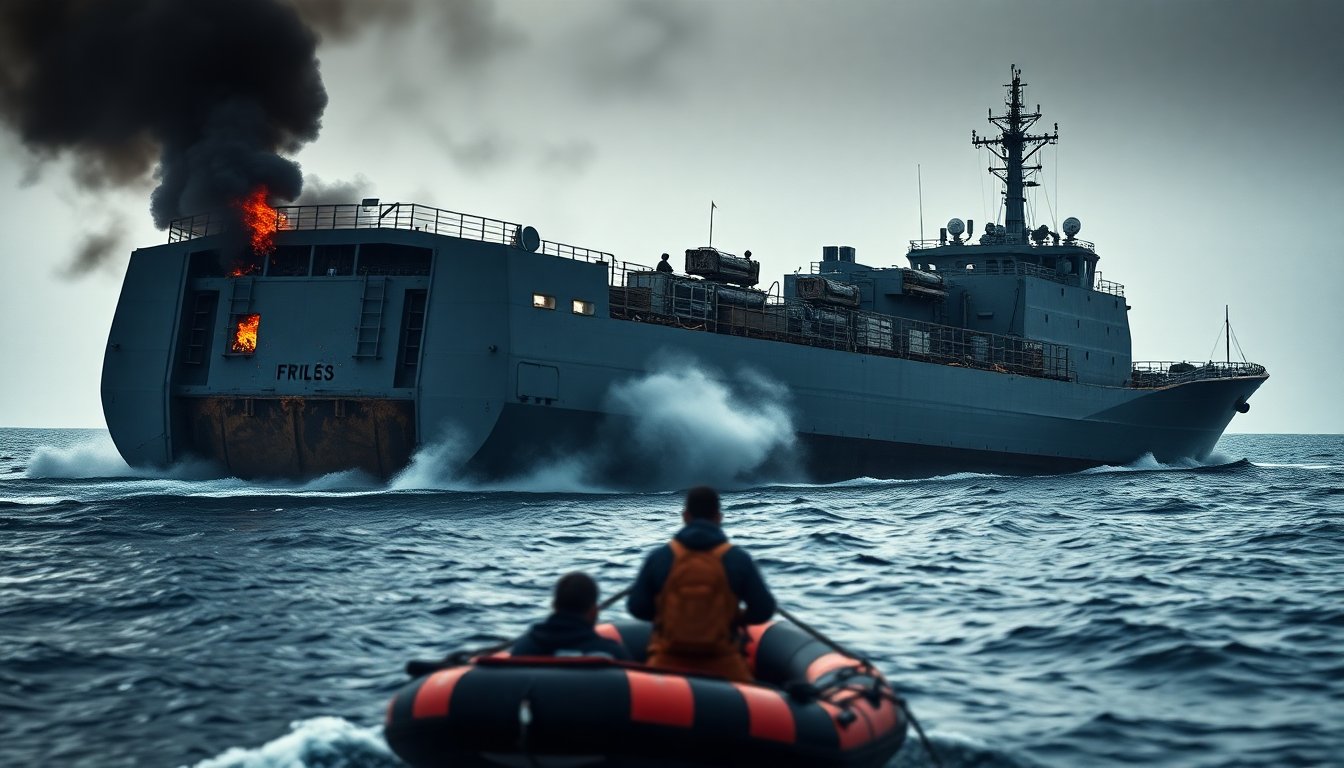
What: A torpedo fired from the submarine detonated against the frigate, which sank while returning from a foreign port.
When: The incident was confirmed publicly on March 4, 2026.
Where: Waters off the southern Sri Lankan port of Galle, in the Indian Ocean.
Why it matters: Sri Lankan authorities said Colombo launched a search-and-rescue response after receiving a distress signal. The strike extends U.S. military action beyond the Persian Gulf into the wider Indian Ocean, raising strategic and diplomatic questions for regional states.
Emerging trends show naval confrontations are expanding along vital sea lanes. The future arrives faster than expected: kinetic strikes are now reported farther from traditional theaters of operation, complicating maritime security and rescue coordination.
Casualties, footage and search efforts after blast
Hospital officials in Galle reported 87 bodies recovered and 32 survivors admitted for treatment.
Officials said roughly 60 crew members remained unaccounted for from an estimated complement of 180 on board.
Pentagon sources circulated video showing a massive explosion at the ship’s stern, followed by rapid flooding.
Independent verification of the footage’s provenance and timing remains limited.
Emerging trends show kinetic strikes are now reported farther from traditional theaters, complicating maritime security and rescue coordination.
Search and identification operations are ongoing as authorities work to confirm the ship’s fate and establish a clear timeline of events.
What happened near Galle
Search and identification operations are ongoing as authorities work to confirm the ship’s fate and establish a clear timeline of events. Sri Lankan naval spokespeople said rescue teams reached the reported incident location just outside the country’s territorial sea and found life rafts and victims floating in the water.
Rescuers transferred survivors and recovered bodies to facilities in the seaside city of Galle. Emergency staff treated the wounded and mortuary teams processed the dead. Officials emphasized a sustained humanitarian response despite the attack occurring beyond the maritime boundary.
Emerging trends show regional navies increasingly respond to incidents near their waters, even when jurisdiction is ambiguous. Sri Lanka’s actions signal a commitment to assist survivors regardless of the vessel’s nationality, while search teams continue to piece together what happened and who remains missing.
Who the vessel was and its recent movements
The vessel involved was identified by Sri Lankan officials as a Moudge-class frigate of the Iranian navy. It had been operating in regional waters and took part in a multinational exercise in the Bay of Bengal in late February.
The ship was returning to Iran from an eastern Indian port when it was struck. U.S. and allied authorities have previously placed sanctions on several Iranian naval vessels, and this frigate has featured in international port visits, underscoring its visibility within Tehran’s blue-water naval presence.
Emerging trends show longer deployments and more distant port calls by Iranian surface forces, a pattern that has attracted scrutiny from regional navies. The future arrives faster than expected: such deployments increase both operational exposure and diplomatic friction in busy sea lanes.
Capabilities and significance
Emerging trends show that the Moudge-class frigate is a multi-mission surface combatant equipped for anti-ship, anti-air and surface-to-surface roles.
The ship typically embarks a helicopter and carries missile systems, naval guns and torpedo launchers. These systems extend its detection, strike and area-denial reach.
The future arrives faster than expected: the loss of one such platform lowers national surface fleet capacity and degrades local task-group resilience.
Operationally, the removal of firepower and sensors creates gaps in patrol coverage, escort capability and sea-control posture. Diplomatically, the incident signals vulnerability and can amplify regional friction over contested sea lanes.
Logistically, replacing specialized weapons, aviation detachment readiness and trained crews will take time and resources. Intelligence and maritime partners must adjust patrol patterns and contingency plans accordingly.
Strategic implications include a potential shift in coalition deployments and increased demand for forward logistics hubs. Expect continued scrutiny of naval transit routes and accelerated efforts to harden critical assets.
Statements from military and political leaders
U.S. Defense Secretary Pete Hegseth addressed reporters at a Pentagon briefing. He said: “An American submarine sank an Iranian warship that thought it was safe in international waters.”
U.S. military officials described the action as part of sustained pressure on Iranian maritime forces. The chairman of the U.S. Joint Chiefs of Staff characterized the strike as evidence of the U.S. capacity to locate and neutralize distant naval targets. Regional commanders reported multiple recent strikes that, they said, have degraded Iranian naval assets.
Emerging trends show a shift toward longer-range maritime engagement and layered surveillance. According to MIT data, advances in maritime surveillance and long-range targeting have accelerated detection and strike capabilities. The future arrives faster than expected: naval operations now blend undersea, surface and sensor networks at greater range and precision.
The U.S. framing emphasizes deterrence and freedom of navigation. Officials say the strikes aim to constrain seaborne threats and signal operational reach. Observers note increased diplomatic fallout and possible escalation risks for nearby commercial routes.
Expect continued scrutiny of naval transit routes and accelerated efforts to harden critical assets. Regional navies are expected to increase escort operations and deploy enhanced electronic countermeasures to protect shipping and key infrastructure.
Regional context and escalation
Emerging trends show the confrontation has moved beyond the Persian Gulf and entered broader maritime routes. The strike near Sri Lanka illustrated that exchanges now affect shipping lanes and coastal states far from the conflict’s original theatre.
U.S. Central Command reported operations targeting Iranian maritime assets and said several Iranian vessels had been struck or sunk as tensions intensified. Such actions have drawn additional navies into escort duties and prompted coastal states to reassess port and harbor security.
The future arrives faster than expected: commercial carriers and insurers are already revising transit routes and risk assessments for the wider Indian Ocean region. Ports, shipping companies and regional navies are coordinating more closely to protect commerce and critical infrastructure.
Analysts warn that the expanded geographic footprint increases the risk of miscalculation and unintended clashes at sea. Expect continued escalation in maritime countermeasures and more persistent international naval presence along key trade corridors.
Humanitarian response and investigation
Emerging trends show greater naval presence along trade corridors after the latest incident. Sri Lankan authorities led search-and-rescue operations and transferred survivors and casualties to Galle hospitals. Medical teams reported several patients in critical condition. Local officials managed security and reception sites as bodies arrived.
Investigators are examining satellite imagery, ship logs and witness statements to reconstruct the sequence of events. A video released by the Pentagon offers one visual account, but independent verification of the clip’s date and precise subject remains part of the inquiry. Forensic analysis and cross-referencing of multiple sources are under way.
Diplomatic repercussions are likely because the sinking raises questions about conduct in international waters and regional responsibilities during naval engagements. Sri Lanka has stressed the incident occurred outside its territorial waters while saying it will continue to assist survivors and cooperate with international inquiries.
The future arrives faster than expected: expect continued scrutiny of maritime rules of engagement and expanded monitoring of commercial and military traffic near key sealanes. Analysts say closer coordination between coastal states, flag states and international bodies will shape next steps.
Analysts say closer coordination between coastal states, flag states and international bodies will shape next steps.
As nations process the incident, attention will focus on casualty counts, the identity of any missing personnel, and potential follow-on military or diplomatic actions.
The strike’s ripple effects may alter naval deployments, affect coalition coordination, and prompt wider discussion in international forums about conduct at sea during armed conflicts.
Emerging trends show increased emphasis on rapid information sharing and joint search-and-rescue protocols. The future arrives faster than expected: states and institutions are already weighing operational and legal responses, and that coordination will determine immediate maritime posture and diplomatic outreach.