
Table of Contents
Recent developments in South America have marked a significant turning point for guerrilla factions operating along the Colombia-Venezuela border. Following a U.S. military operation targeting Venezuela, concerns have risen regarding possible betrayals among local regime officials and the potential for a broader conflict. Security analysts express growing apprehension about the risks involved if U.S. troops were to establish a presence in Venezuela.
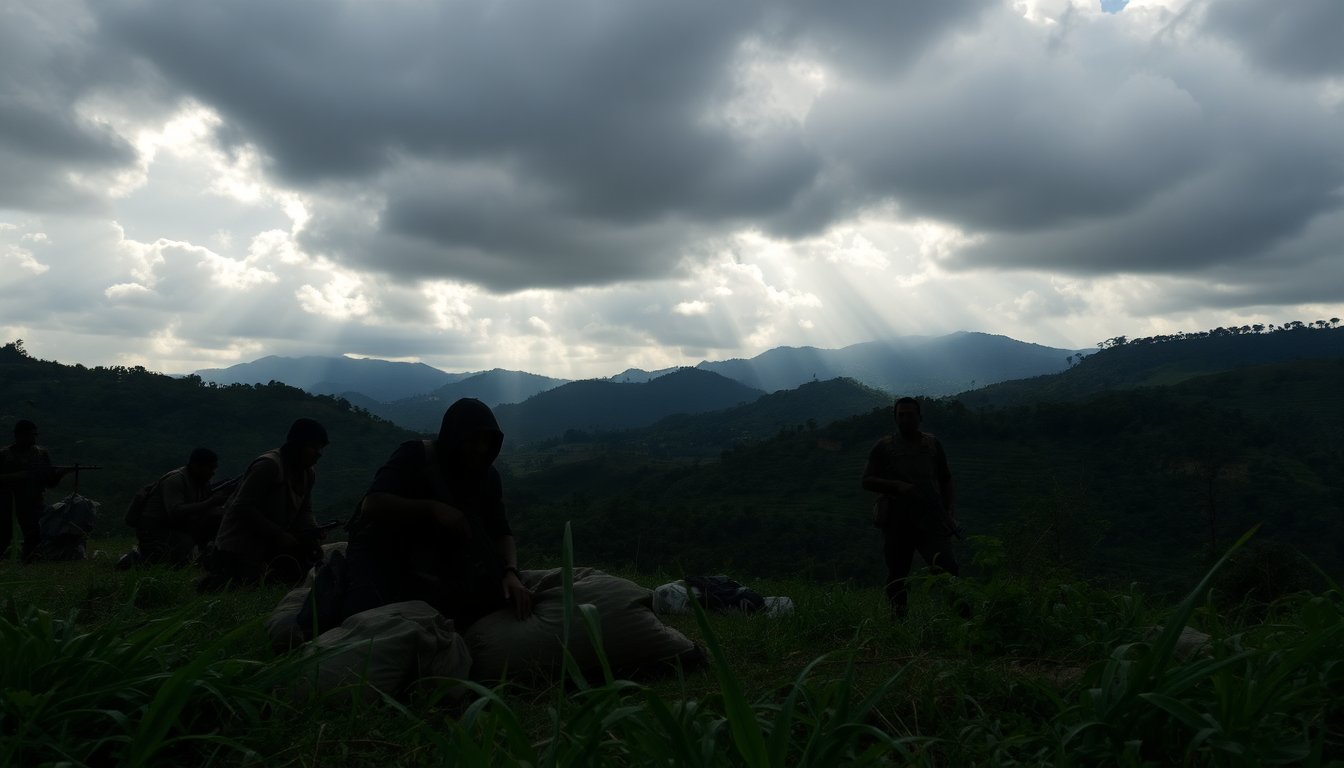
The National Liberation Army (ELN), a prominent guerrilla group, has called for unity among armed factions to resist what they describe as U.S. aggression in their territory. These developments have led to increased mobility and adjustments in strategies among various armed groups operating in the region.
The implications of U.S. military actions
The military operation by the U.S. on January 3, 2026, has prompted the ELN to reevaluate their strategies and security measures within Venezuela. Reports indicate that the ELN has temporarily closed several camps, fearing that their locations could be compromised by Venezuelan officials cooperating with U.S. forces. Jorge Mantilla, a security expert based in Bogotá, emphasizes that the ELN is actively reconfiguring its operational protocols to mitigate risks associated with potential betrayals.
Additionally, the group has halted its training sessions and plans to establish a special forces unit in collaboration with the Venezuelan military. Mantilla observes a heightened sense of uncertainty among armed factions as the dynamics in the region shift dramatically.
Historical context and the ELN’s strategy
Historically, the ELN has anticipated U.S. military involvement in Venezuela, drawing strategic insights from past interactions with the Venezuelan regime. In a September interview, Pablo Beltrán, a senior ELN negotiator, hinted at the potential for U.S. engagement over Venezuela’s vast resources. An intercepted letter sent to President Nicolás Maduro in 2019 warned of internal traitors within the military, showcasing the ELN’s awareness of the precarious political landscape.
Should the U.S. establish a military foothold in Venezuela or if the Maduro regime were to fracture, the ELN might seize this opportunity to grow into a continental guerrilla force. Mantilla suggests that this scenario aligns with the ELN’s aspirations to become a symbol of resistance across Latin America, not just in Colombia or Venezuela.
Calls for unity among guerrilla factions
In response to the escalating tensions, Ivan Mordisco, the leader of a faction that split from the Revolutionary Armed Forces of Colombia (FARC), has released a video urging all guerrilla groups to unite against perceived U.S. hostility. He emphasizes that despite their internal differences, these factions must recognize their common adversary. However, analysts like Gerson Arias express skepticism regarding Mordisco’s call for collaboration, noting that his controversial reputation may hinder trust among rival groups.
Moreover, significant divisions persist within the armed movements, as the ELN, with its operational strength of approximately 6,000 to 8,000 fighters, sees little incentive to collaborate with factions like Mordisco’s, which have faced increasing scrutiny and pressure from Colombian authorities.
Historical ties between the ELN and the Venezuelan regime
The relationship between the ELN and Venezuela has deep historical roots, tracing back to the presidency of Hugo Chávez in 1998. The ELN has leveraged Venezuelan territory as a refuge from Colombian military operations, with its presence confirmed in numerous municipalities across the country. This alliance has enabled the ELN to thrive on the illegal mining and drug trade that flourishes in resource-rich areas of Venezuela. Consequently, the ELN views its role as a defender of the Bolivarian Revolution, aligning ideologically with the Venezuelan government.
In a recent discussion between U.S. President Donald Trump and Colombian President Gustavo Petro, the two leaders agreed to intensify their efforts to combat the ELN. However, activists like Eliana Paola Zafra argue that military solutions have historically failed to bring about lasting peace. Zafra advocates for a holistic approach, emphasizing the need to empower local communities to safeguard their rights and promote sustainable peace.
The National Liberation Army (ELN), a prominent guerrilla group, has called for unity among armed factions to resist what they describe as U.S. aggression in their territory. These developments have led to increased mobility and adjustments in strategies among various armed groups operating in the region.0