
Table of Contents
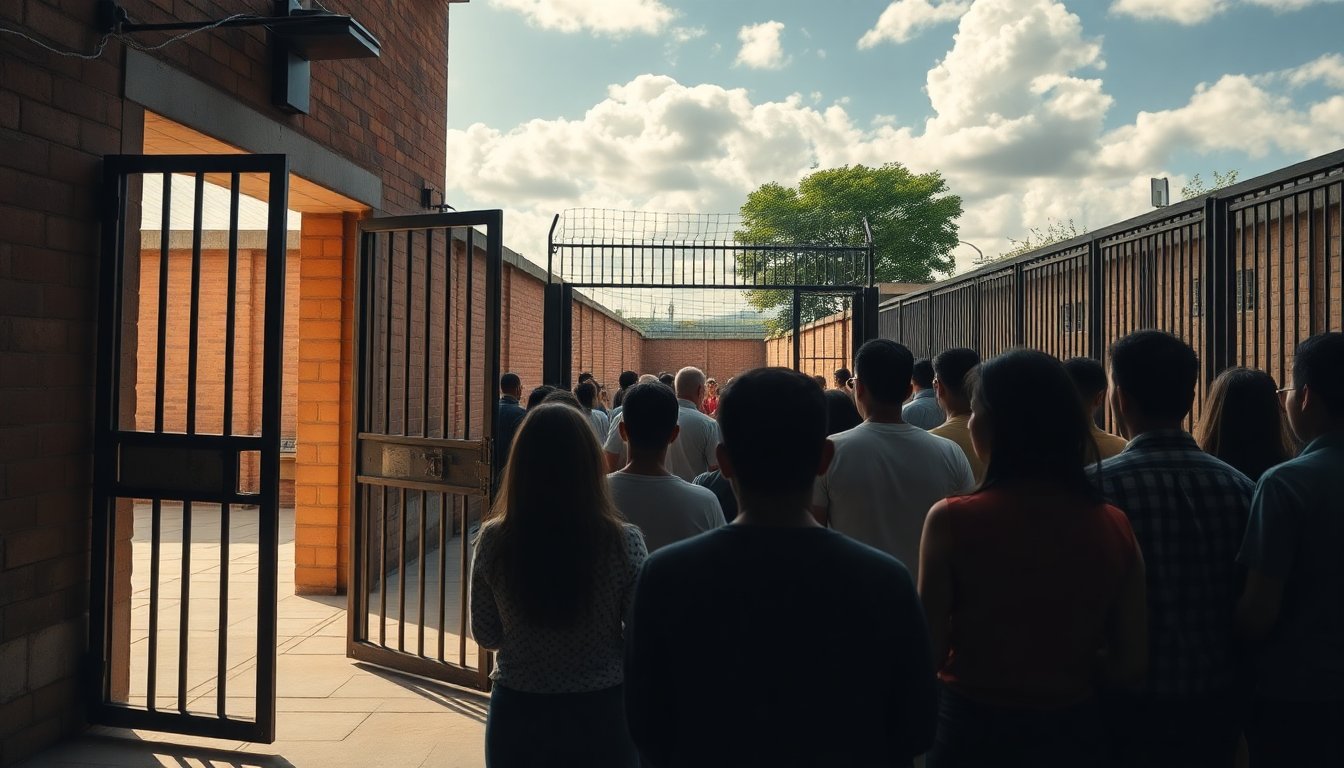
In a notable development, Venezuela has taken steps toward political reform by announcing the release of several political prisoners. This move, which includes the liberation of five Spanish nationals, reflects a changing political atmosphere in the country. According to Anna Kelly, the deputy White House press secretary, President Trump is exerting maximum pressure to ensure justice for both American and Venezuelan citizens.
Political prisoners released
The Venezuelan government’s decision to grant freedom to a group of political prisoners signifies a potential thaw in the nation’s political climate. This action comes at a crucial time, as international scrutiny on Venezuela’s human rights record has intensified. The release of prisoners, particularly those who were detained for their political beliefs, is being perceived as a gesture of goodwill by the government, possibly aimed at improving diplomatic relations with other countries.
International reactions
As news of the prisoners’ release spread, various international leaders and organizations have expressed their views. Many see this as a positive step towards rectifying past injustices and fostering dialogue within the country. The freeing of these individuals not only has implications for Venezuela’s internal politics but also affects its relationships with foreign governments and non-governmental organizations that advocate for human rights.
Trump’s influence on Venezuelan politics
President Trump has been vocal about the situation in Venezuela, often using strong rhetoric to emphasize the need for reforms in the country. His administration has been involved in applying pressure on the Venezuelan government, highlighting the importance of political prisoners’ release as a part of broader negotiations for peace and stability in the region. Trump’s strategy appears to be a blend of diplomacy and economic sanctions aimed at promoting democratic values.
Analyzing the numbers: Trump’s approach to statistics
In public addresses, President Trump frequently references numerical statistics to bolster his arguments, particularly regarding issues like drug trafficking and healthcare reforms. For instance, he has made sweeping claims about the reduction of drug entries into the U.S. from Venezuela, citing figures that often appear to lack substantial evidence. Critics, including fact-checkers, argue that his numerical assertions can sometimes be misleading or exaggerated.
Moreover, Trump’s approach to statistics extends beyond drug-related issues. His claims about lowering prescription drug prices have also raised eyebrows, with him suggesting reductions of up to 1,500%. Such statements prompt scrutiny, as they defy basic mathematical logic. The discourse around these numbers highlights a broader trend in politics where the manipulation of data can shape public perception.
Marco Rubio’s controversial political history
Marco Rubio, a prominent senator and Secretary of State, has also played a significant role in shaping U.S. foreign policy towards Latin America, particularly regarding Venezuela. His political biography has been marred by allegations of dishonesty and corruption. Critics often label him as a mythomaniac, pointing to inconsistencies in his narrative about his family’s immigration history from Cuba. Such accusations raise questions about the integrity of politicians and their influence on public trust.
Connections to drug trafficking
Rubio’s ties to the drug trade have also drawn attention. His family connections to individuals involved in narcotics have been scrutinized, with some labeling him as ‘Narco Rubio.’ This nickname stems from a past involving his brother-in-law’s drug trafficking activities. Such associations complicate his political stance against drug-related crimes and highlight the intersection of personal history and public service.
In a broader context, Rubio’s actions, including his push for sanctions against Venezuela, can be seen as part of a political strategy aimed at portraying himself as a defender of democratic ideals while navigating the complexities of his personal connections and political ambitions.
Conclusion
The release of political prisoners in Venezuela marks a pivotal moment in the nation’s ongoing transformation. It raises questions about the future of political engagement in the country and the potential for meaningful dialogue with international partners. As leaders like Trump and Rubio continue to influence the narrative surrounding Venezuela, the dynamics of power and reform remain in a delicate balance, pushing the nation towards a new chapter in its political history.