
Table of Contents
The announcement that Russia intends to reactivate its national presence at the Venice Biennale has reopened a contentious conversation about art, diplomacy and accountability. After a period of limited activity following the 2026 invasion of Ukraine, Moscow’s plan for a multi-artist sound programme has drawn criticism from dissidents, diplomats and cultural figures who see the move as an exercise in soft power.
Organisers and state representatives argue participation follows the event’s rules, while protest groups and several European governments say the Biennale should refuse the platform. The debate revolves not only around this single pavilion but also the structural realities of the Biennale, where national spaces are owned and managed by governments and thus can function as instruments of national policy.
What is planned and why it troubles critics
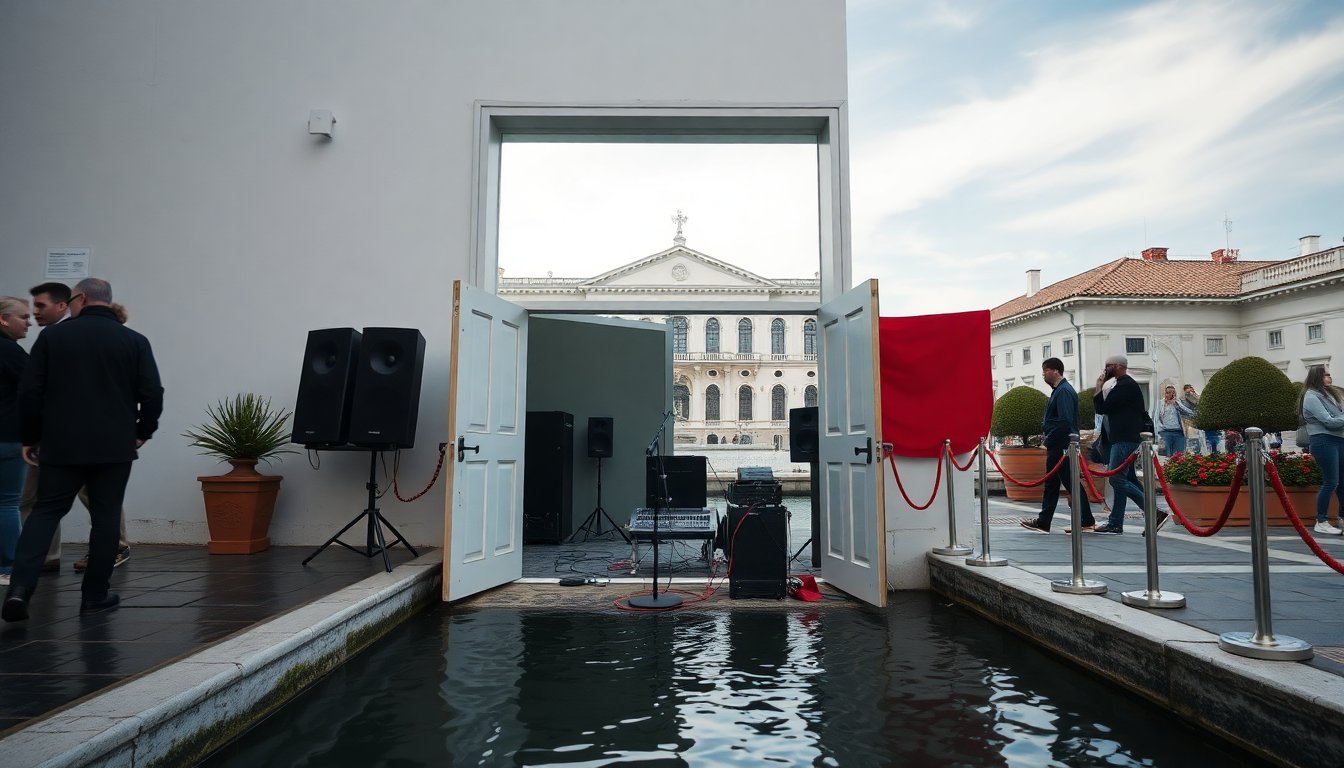
For the 2026 edition — which is due to run from May 9 until November 22 — Moscow’s project will reportedly present a sequence of sound performances under the title “The Tree is Rooted in the Sky”. According to press materials, the project involves dozens of contributors rather than the usual one- or two-artist format. The pavilion is set for a press pre-opening reported to take place from May 6–8, while other sources say festival events will be filmed across early May. Many in the art world view the unusually large roster of 38 artists as a way to avoid a single visible voice that might clash with official positions.
Backlash from artists, dissidents and governments
Opposition has come from multiple directions. Prominent activists including members of Pussy Riot have announced plans to protest in Venice, framing the pavilion’s return as part of a broader Kremlin strategy to normalise its policies abroad. Cultural figures who withdrew from past editions — and curators who resigned in protest — warn that presenting a national government’s curated show at a major international forum can function as a diplomatic tool rather than a neutral cultural exchange.
Painful comparisons and public demonstrations
Critics have invoked historical examples of authoritarian regimes using the Biennale to polish reputations, arguing that exhibitions can be manipulated into propaganda. Activists insist that counter-events and public demonstrations are necessary to make space for voices banned or repressed at home. Meanwhile, some gallerists and exiled curators propose staging alternative programmes near the pavilion to assert dissenting perspectives.
Institutional responses and the question of authority
The organisers of La Biennale have said that any country that owns a pavilion in the Giardini can notify its intention to participate, and that the foundation rejects cultural exclusion. Yet several European governments and the European Commission publicly challenged the decision; on March 9 the Commission signalled concern and warned that E.U. funding could be suspended. A joint letter from culture ministers in more than twenty countries urged organisers to reconsider, arguing that providing a prestigious platform to Russia risks undermining sanctions and sending the wrong message about accountability for violations of international law.
Who decides and how the Biennale is structured
The controversy highlights a technical but essential fact: national pavilions at the Biennale are owned and run by their governments, not by the festival’s curators. The national pavilion model dates back to the 19th century and embeds an idea that cultural prestige reflects state status. Because governments appoint curators and commissioners, the Russian Pavilion can be used to project official narratives even as the festival’s central exhibition pursues different themes.
Why the debate matters beyond Venice
This dispute goes beyond a single exhibition. It raises questions about how international cultural institutions balance artistic freedom, public values and geopolitical realities. The Biennale’s format — a mix of a central curated exhibition and state-run pavilions — makes it vulnerable to being read not only as an arts festival but as an arena for soft power projection. Observers point out that until the architecture of participation is reconsidered, similar tensions will recur whenever states with contested policies seek visibility on global stages.
At stake in Venice are principles about what international cultural platforms should represent in moments of conflict: whether they primarily host artistic experiment, act as neutral spaces for exchange, or inevitably serve as arenas where national governments can exercise influence. The unfolding events in 2026 will test both the Biennale’s rules and the willingness of European institutions to link cultural funding to geopolitical concerns.