
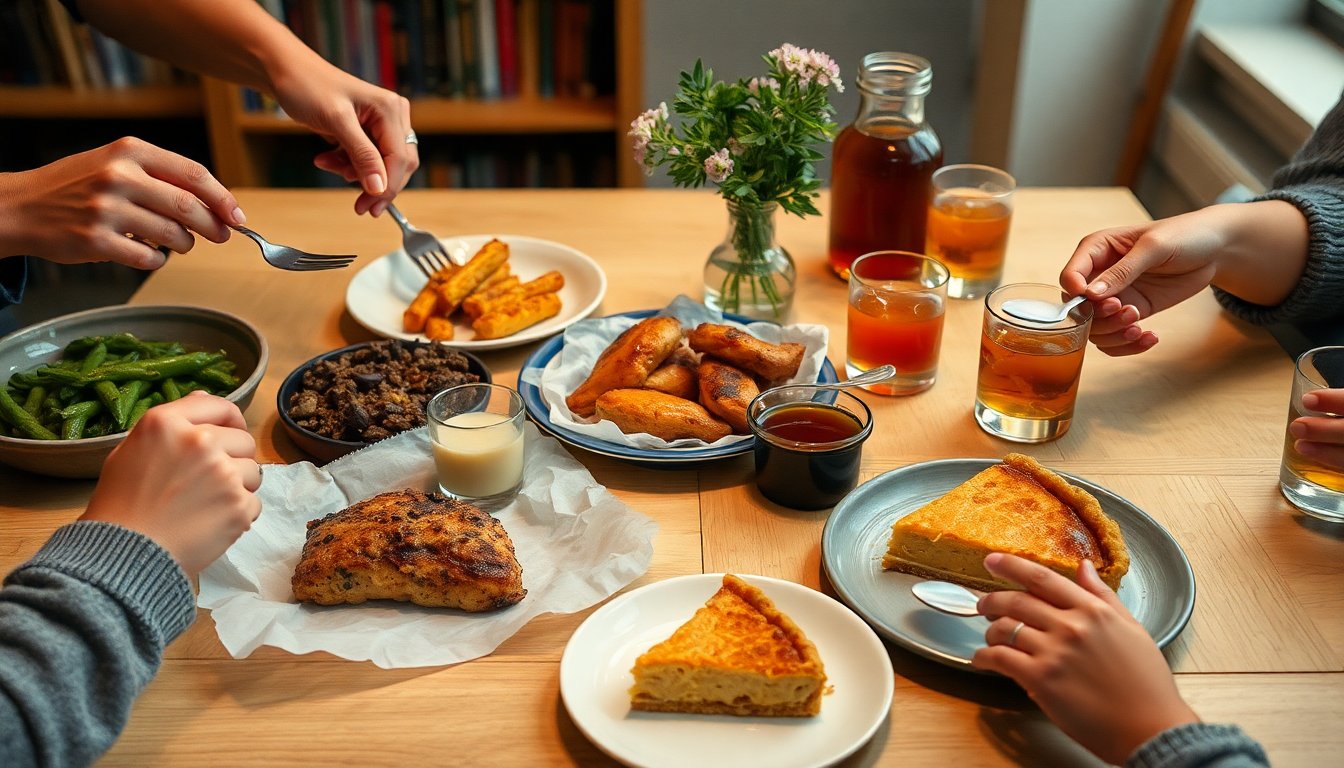
Vera “Very Vera” Stewart brought the flavors of the South to the Columbus Public Library on February 18, 2026, turning a quiet evening into a lively celebration of food, family and entrepreneurship. The program—put together by Chattahoochee Valley Libraries, the Muscogee County Library Foundation and the Columbus Public Library—mixed storytelling, tastings and historical context to show how Southern dishes carry memory as much as they carry flavor.
A taste of history
Attendees sampled small portions from Stewart’s kitchen while she narrated the stories behind each plate. Rather than presenting recipes as static instructions, Stewart tied them to migration, local agriculture and the everyday markets that shaped regional tastes. The tasting complemented a library exhibit that linked historical artifacts, photographs and oral histories to the dishes on offer, turning recipes into a kind of living archive.
Why the evening mattered
This was about more than good food. The program explored how culinary traditions intersect with history, family life and economic opportunity. Stewart traced dishes handed down through generations and explained how adapting those techniques for broader audiences allowed her to turn home cooking into a viable business. Speakers also used local transaction data to illustrate a broader point: when communities embrace heritage menus, demand for experiential programs—tastings paired with archival material—tends to rise, creating both cultural and commercial value.
From classroom lessons to a kitchen brand
Stewart’s career arc is quietly practical. A former home economics teacher, she moved into mail order, catering and eventually cookbook publication. She credits her mother and grandmother for early lessons—“under the apron strings,” she jokes—then described how she standardized family methods so they could be reproduced, packaged and sold without losing their essence. Consistency in technique, careful sourcing and simple supply chains became the backbone of her brand.
Her visibility climbed after a televised win on Throwdown with Bobby Flay, which opened retail and wholesale doors and widened her customer base. Still, Stewart emphasized incremental growth: small experiments, low-cost venues and repeatable systems that scale slowly and sustainably.
Practical lessons for food entrepreneurs
Speakers and Stewart offered concrete advice for others wanting to follow a similar path: document recipes and the stories behind them, test products in community-friendly settings, and build partnerships that handle logistics and distribution. The library’s model—an accessible, low-barrier space for testing ideas—proved especially useful. It allows cooks to pilot concepts without heavy investment and preserves culinary knowledge in an institutional setting for future study.
Stepping from local to lasting
Panelists suggested that turning heritage cuisine into a lasting business depends on reliable production capacity and distribution. Improved access to commercial kitchens and point-of-sale outlets often determines whether a project remains artisanal or grows into a sustainable enterprise. Media attention helps, but supply-chain simplicity and product consistency keep customers coming back.
Connecting local tradition to a national milestone
The event also formed part of “Food and the Soul of America,” an initiative linked to the nation’s 250th anniversary observances. Organizers framed Southern culinary practices as central to the American story, using local foodways to reflect broader questions of identity and memory. By pairing sensory experiences with historical narrative, the program aimed to deepen public understanding of how food encodes celebration, hardship and migration.
Community impact and next steps
Attendees left with three clear impressions: a renewed appreciation for the skill behind everyday dishes, a stronger sense of local heritage, and practical inspiration from Stewart on turning home cooking into a business. Organizers are now focused on the next phase—securing partners for production and distribution so that demonstrations can become durable economic opportunities. Strengthening supply chains and forming strategic collaborations are the immediate priorities.
For aspiring culinary entrepreneurs, the takeaway was candid and actionable: preserve the story as you scale, validate concepts in real-world settings, and build simple systems that protect both flavor and heritage. The evening proved that libraries can do more than lend books—they can incubate ideas, nourish culture and help communities turn tradition into economic possibility.