
Table of Contents
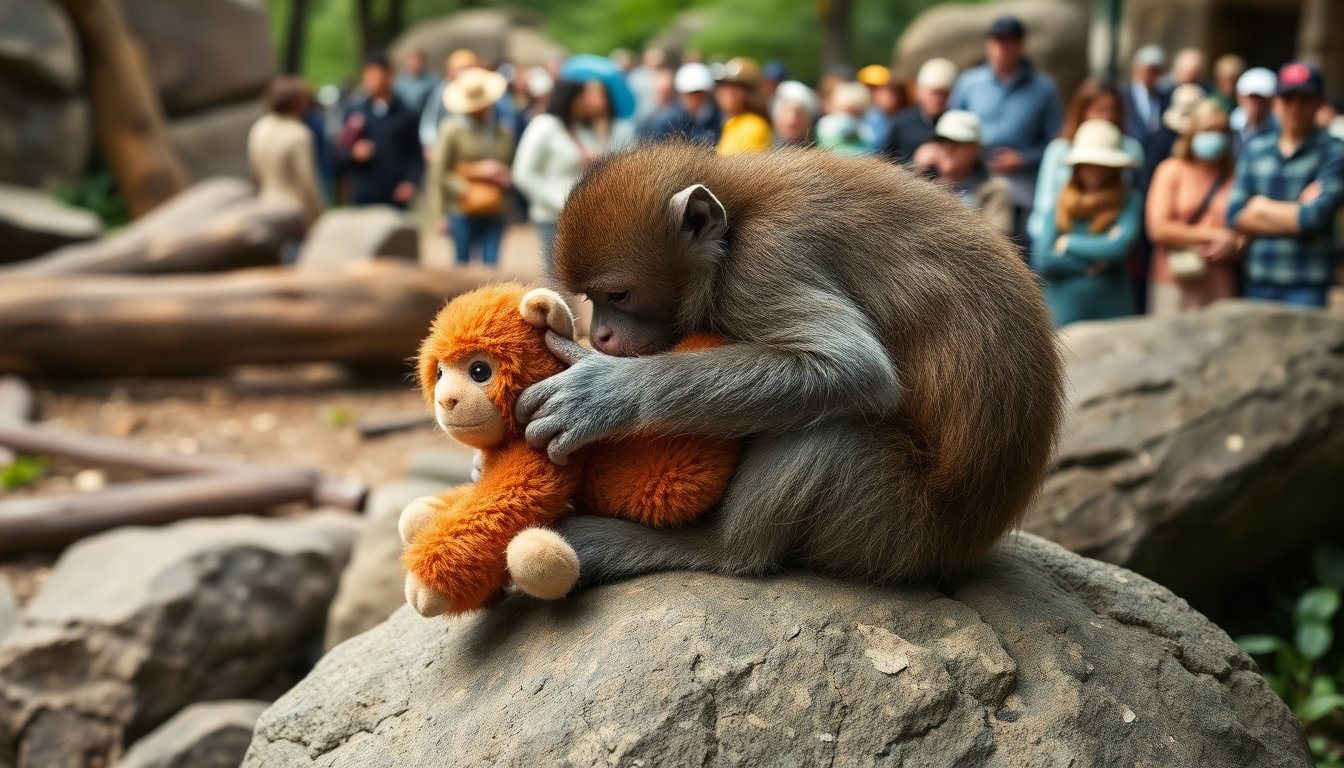
Punch, a young macaque at Ichikawa City Zoo near Tokyo, has become an unexpected cultural touchpoint. Videos of the orphaned infant clinging to a soft Ikea DJUNGELSKOG orangutan and attempting to rejoin his troop have circulated widely. The footage has reframed a local animal-care case as an international conversation about comfort, social learning and responsible fan engagement.
Zoo staff in Ichikawa have documented Punch’s gradual integration into the facility’s “Monkey Mountain” group. The team has posted updates on the animal’s movements, interactions and veterinary checks. International followers have tracked those posts, sharing clips and commentary across social platforms.
The human response has produced a tangible secondary effect. The specific stuffed orangutan featured in the videos has sold out in several markets. Ikea has confirmed it is working to restock stores and online listings.
From orphaned infant to online sensation
The orphaned infant macaque was hand-reared by keepers after being abandoned. He displays behaviors consistent with the absence of maternal care. Staff provided a plush surrogate to offer reassurance. Punch often returns to this object after tense encounters with other macaques or when he is startled. Video footage circulated online shows him cuddling the toy, approaching group members and sometimes being rebuffed or physically moved away by peers. These recordings have informed keepers’ assessments of his social progress and stress responses.
Visitor surge and zoo response
The zoo has reported a marked rise in on-site attendance following the spread of posts about Punch. Officials have urged visitors to use public transport when possible and added crowd-management notices to the facility website. Park staff say they are monitoring interactions closely and treating scoldings or exclusions as part of a natural integration process. Keepers stressed that supervised exposure to the group supports social learning, while also noting the need to limit stress for the infant and the troop.
How a comfort object became a commercial phenomenon
What began as a simple comfort measure has rippled into broader demand for the plush toy used by the macaque. Retailers, including Ikea, have moved to restock stock and online listings after viral attention. The commercial reaction highlights how a single image can reshape consumer interest and supply chains in a matter of days.
The palate never lies, and even in this story sensory detail matters: the sight of a small animal finding solace in a soft toy evokes a visceral response. Behind every image there is also a chain of decisions — from animal care to messaging — that shapes public reaction. As a chef I learned that simple comforts can carry profound meanings; in this case a plush surrogate functions as both a welfare tool and an unexpected cultural symbol.
Behind the public fascination with Punch and the DJUNGELSKOG plush lies a tension between commercial demand and animal welfare. Videos showing Punch with his stuffed orangutan prompted a sharp rise in purchases, according to Ikea. The company reported increased sales in Japan, the United States and South Korea and asked customers to wait while stock is replenished. Zoo representatives described the toy as emotionally meaningful for Punch and said marketing materials briefly referenced the orangutan as Punch’s comfort orangutan.
Branding and ethics
The surge in consumer interest illustrates how a single animal’s story can quickly shape market behaviour. Zoo staff and company spokespeople have sought to balance gratitude for public concern with reminders that Punch’s rehabilitation remains the priority. They emphasised that any commercial use should not override welfare protocols or the animal’s long-term social needs.
Animal welfare experts caution against commodifying a living individual for profit or publicity. They note that merchandising can reduce complex rehabilitation work to a simple transaction. The zoo reiterated that proceeds from any authorised merchandise will be managed in line with conservation and care objectives.
What scientists say: comfort, social bonds and development
Researchers describe comfort objects as tools that can support infant mammals when maternal care is absent. Studies of primate development show that tactile surrogates can reduce stress behaviours and provide a focus for social learning. Scientists emphasise, however, that surrogates are supplements, not substitutes, for species-typical social interactions.
From a developmental perspective, the presence of a plush object can modulate cortisol responses and facilitate calmer engagements with caregivers. Long-term social competence depends on exposure to conspecifics and structured rehabilitation that mirrors natural socialisation patterns. The zoo’s care plan, officials say, prioritises gradual integration with peers under veterinary supervision.
As a food writer turned observer of craft and care, I recognise that small comforts can tell larger stories. The palate never lies, and in animal care simple textures and familiar items can communicate safety in ways words cannot. Behind every scene of viral attention, there remains a complex programme of assessment, therapy and ethical decision-making.
Zoo staff urged the public to channel interest into support for responsible conservation and rehabilitation efforts. They encouraged donations to accredited programmes and patience as professionals restore appropriate social environments for Punch.
Researchers link Punch’s toy to historic primate findings
Primate researchers say Punch’s reliance on a plush toy echoes mid-20th-century laboratory studies that highlighted the role of affection and attachment in young primates.
Those early experiments used soft surrogates to show that infants seek comfort beyond nutrition. Observers now describe the comfort object as a source of security when the young macaque faces social stress.
Integration with the troop will determine long-term welfare
Experts say long-term success depends on gradual acceptance by the troop. A specialist in primate social structure noted that stable social bonds affect health and longevity.
Being groomed, allowed to rest near others and included in communal activities are observable signs of integration. For Punch, receiving affiliative behaviour from at least one group member would mark a key step toward normal social life.
Practical steps recommended by specialists
Specialists recommend measured interventions that prioritise the macaque’s social rehabilitation. They advise patience, close behavioural monitoring and minimal human-only contact to encourage peer bonding.
Care teams should document affiliative interactions and adjust steps as the troop’s responses emerge. Donors were urged to support accredited programmes that provide experienced rehabilitation and post-release monitoring.
Behind every dish there’s a story — and behind every gesture of care there is technique. As a former chef I learned that subtle, gradual changes often succeed where sudden shifts fail. Applied to animal welfare, that means small, consistent opportunities for social repair, overseen by specialists.
Specialists urge social repair over human intervention
Applied to animal welfare, that means small, consistent opportunities for social repair, overseen by specialists. Keepers and researchers warn against direct human-led rescue or removal attempts. They say such interventions can disrupt group dynamics and hinder long-term reintegration.
Staff recommend supporting Punch by facilitating natural monkey-to-monkey interactions, not by substituting human protection. Occasional scolding and rejection from conspecifics are described by the zoo as part of the learning process that teaches species-typical behaviour.
Caretakers describe steady progress and resilience while asking observers to celebrate developments without imposing human solutions. The episode has generated global empathy and commercial attention, illustrating how a single animal’s story can shape public feeling and market response.
Specialists will continue to monitor social exchanges and adjust interventions only when necessary, maintaining a focus on welfare, social competence and ecological appropriateness.