
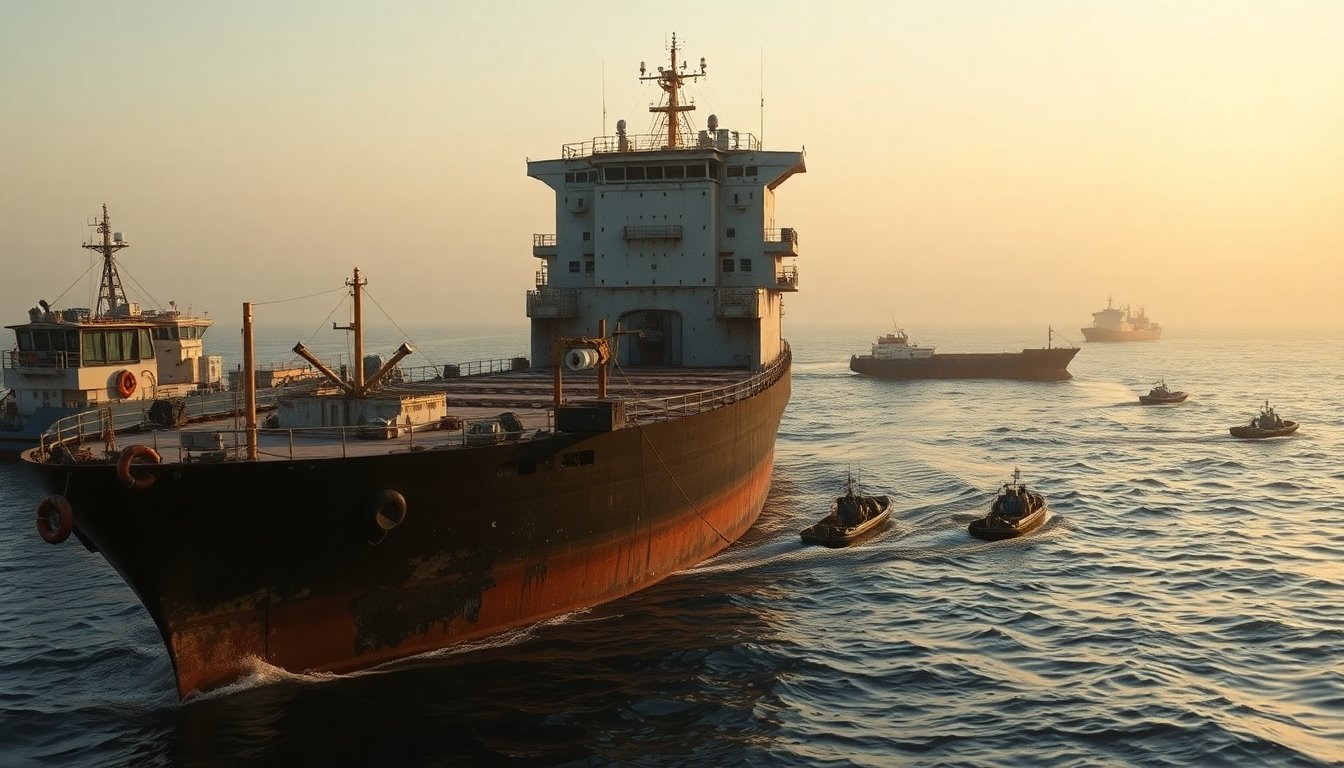
The Gulf’s shipping lanes have suddenly become a far riskier place to be. After a string of violent incidents—tankers hit, crew and shore workers killed, and reports of navigational shutdowns—insurers have begun pulling back or tightening war-risk cover for vessels passing through the Strait of Hormuz. Notices issued on March 1, with some cancellations taking effect from March 5, left many owners and charterers scrambling to secure last-minute protection.
Underwriters aren’t treating these events as isolated anymore. The clustering of attacks and near-misses has convinced many that the entire chokepoint now represents a single, elevated exposure for energy shipments. That assessment has prompted a range of reactions: some policies have had standard war-risk language removed, others now explicitly exclude missiles, drones and hostile action, and many insurers are insisting on separate short-term war-risk policies at much higher rates.
The practical result is a squeeze on cover and a squeeze on wallets. Where protection is still available, it often comes with steep surcharges, higher deductibles, reduced limits, or contingency clauses. War-risk premia that once hovered around 0.2–0.25% of a vessel’s value are spiking toward 1% in some cases. To put that in perspective: for a $100 million tanker, voyage insurance costs that might have been roughly $200,000 can jump to around $1 million—an increase that quickly ripples into freight rates and, ultimately, consumer energy bills.
On the water, the disruption is visible. Brokers and tracking services have reported clusters of vessels waiting offshore—about 150 ships were cited as effectively stranded—and the damage to several vessels has reinforced insurers’ views that exposure is unpredictable. Faced with scarce, expensive cover, operators are balancing three painful choices: pay far higher premiums, accept narrower protection, or try to find ad hoc, often temporary solutions in an overheated market.
Those higher insurance bills don’t sit in a vacuum. They translate into higher freight and bunker charges, and charter rates rise as operators try to recoup costs. Insurers are also pushing for operational changes: rerouting around high-risk waters, adding onboard security teams, more frequent voyage notifications, and tighter compliance with policy conditions. Many operators are revising voyage plans, adding schedule buffers, and renegotiating charterparty clauses so war-risk costs are allocated more clearly.
The market is responding structurally too. Underwriters are reallocating capacity away from exposed corridors, narrowing appetite for risks near the Hormuz shipping lanes. Less capacity means greater price volatility whenever an incident or policy notice occurs. Brokers report heavy demand for bespoke placements and pooled emergency covers as owners scramble to plug gaps; sentiment across the market is defensive and cautious.
Smaller owners and vessels trading on the spot market are likely to feel the pinch fastest. Large shipping groups and state-backed insurers can absorb shocks or self-insure for a while, which widens short-term competitive gaps. Practical steps for smaller players include strengthening broker relationships, stress-testing voyage economics with higher insurance assumptions, and exploring collaborative underwriting or pooled solutions to help rebuild capacity more quickly.
The broader trade and energy picture is tense. The Strait of Hormuz handles roughly one-fifth of global oil and substantial volumes of gas; any disruption or added transit cost feeds almost immediately into fuel and shipping markets. Benchmark crude and some regional gas prices already nudged upward after reports of damage and temporary LNG outages. Traders and supply-chain managers are recalibrating routes and hedges in response.
Some ships are detouring around the Cape of Good Hope, others are diverting cargoes to pipelines or alternative suppliers—moves that increase voyage length, takeaways, and costs. Container carriers are reporting backups that affect close to 10% of global capacity; ports in Europe and Asia risk congestion as ships queue or reroute. Small delays in a tight system can cascade into longer schedules and depleted inventories worldwide.
This is a fast-moving situation; market dynamics can shift quickly if incidents subside or if insurers and reinsurers restore capacity. For now, though, the combination of heightened threat perception, tightened policy terms, and sharply higher premia is reshaping how ships move through one of the world’s most important sea lanes—and transferring costs up the supply chain.