
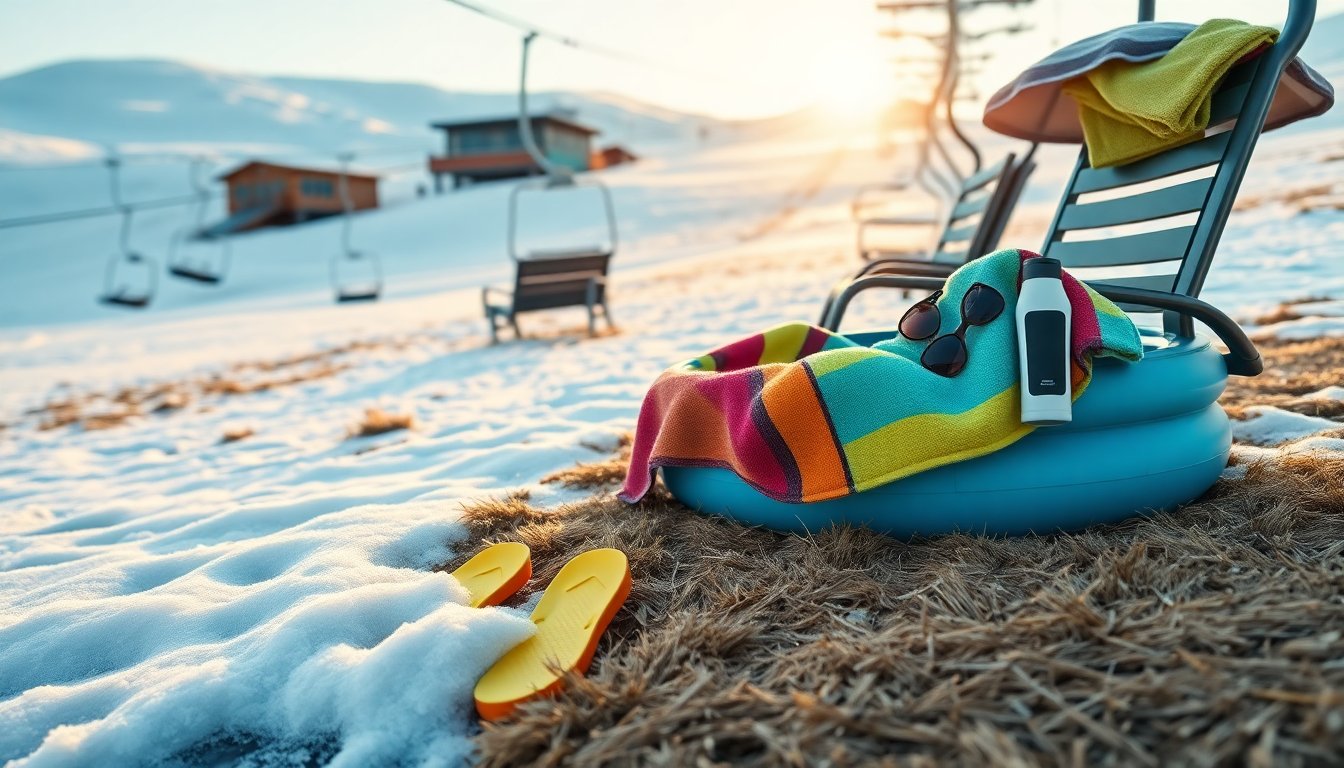
The western ski landscape has taken on an unexpected look this season as unusually high temperatures have thinned traditional snowpacks and prompted a wave of early closures and reduced operations. Photographs and videos circulating online show people navigating slushy runs in minimal clothing, a stark contrast to the heavy layering typically associated with alpine recreation. This shift is more than a curious visual: it reflects how a warm ski season and sparse snowfall are affecting both on-mountain experiences and the economic health of winter destinations. Observers and industry insiders are watching adjustments in real time as resorts scramble to maintain service and preserve what remains of their seasons.
Conditions on the mountain
Across the West, many resorts are reporting dramatically reduced coverage, with some Colorado mountains operating with fewer than 20% of their usual trails open and brown patches appearing where white slopes normally dominate. In response to thinning snow, crews are taking unusual steps: for example, teams at Taos Ski Valley have relocated snow from remote or shaded pockets to key runs to keep lifts turning. These are short-term fixes intended to extend access, but they cannot replace substantial natural snowfall. The combination of record warmth and limited natural accumulation has pressured operators to either delay openings, shorten seasons, or close facilities entirely — decisions that ripple through the local winter economy and seasonal workforce.
On-mountain mitigation efforts
Resorts are relying on a mix of artificial snowmaking, targeted redistribution of snow, and selective trail management to sustain operations. Snowmaking remains essential where water and temperatures permit, but it is resource-intensive and sometimes insufficient when the ambient climate stays warm. Maintenance crews are focusing on high-traffic corridors and beginner areas to preserve the guest experience, but many intermediate and advanced lines are left bare. These tactics buy time, yet they highlight a deeper vulnerability: when the climate offers less consistent cold and precipitation, traditional approaches to winter sports become harder and costlier to maintain.
Skier behavior and social reaction
Rather than canceling plans, many visitors have embraced the oddity of warm-slope conditions, resulting in a surge of photos showing skiers and snowboarders in swimsuits or without shirts. Social accounts feature captions celebrating the novelty — users encouraging friends to try an early-season bikini run or noting that annual ‘bikini ski’ traditions arrived prematurely. While the images capture a carefree mood, they also signal how participants are reframing skiing as a social activity as much as a sport. The trend spreads quickly online, where attention can both attract curious visitors and amplify the unusual nature of the season.
Safety and practical concerns
Industry veterans caution that lighter clothing on marginal snow presents risks: slushy runs, exposed rocks, and mixed surface conditions can cause cuts and abrasions, and falls on thin snowpack may be more hazardous. A former lift worker shared that warm days often brought riders in tank tops or sports bras who, by day’s end, returned with scratches and sore skin — a reminder that novelty should be balanced with caution. The situation underscores how changing conditions alter not just the spectacle but also the safety profile of mountain recreation, demanding clearer guest advisories and on-site risk management.
Business responses and the shift toward younger visitors
With average skier ages edging upward and fewer dependable snow seasons, many resorts are rethinking their attraction strategies to secure future clientele. Some operators are moving beyond pure skiing packages, adding concerts, events, and social programming designed to appeal to younger demographics who see winter resorts as lifestyle destinations. Vail Resorts has taken a concrete step by lowering the price of its Epic Pass by 20% for ages 13 to 30 — a targeted effort to draw Gen Z and younger millennial travelers. These changes aim to fill lifts and lodging with guests who value experiences and social offerings as much as vertical feet.
Pricing and experience retooling
Discounted passes and event-driven calendars are part of a broader pivot: operators hope to broaden revenue streams beyond lift tickets and snow-dependent services. Resort marketing teams emphasize après-ski programming, lifestyle photography moments, and multi-activity stays that remain attractive even when snow depth fluctuates. While these adaptations may help buffer short-term losses caused by a warm ski season, many stakeholders recognize that long-term resilience will require continued investment, creative planning, and perhaps a redefinition of what a modern mountain season includes.


