
Table of Contents
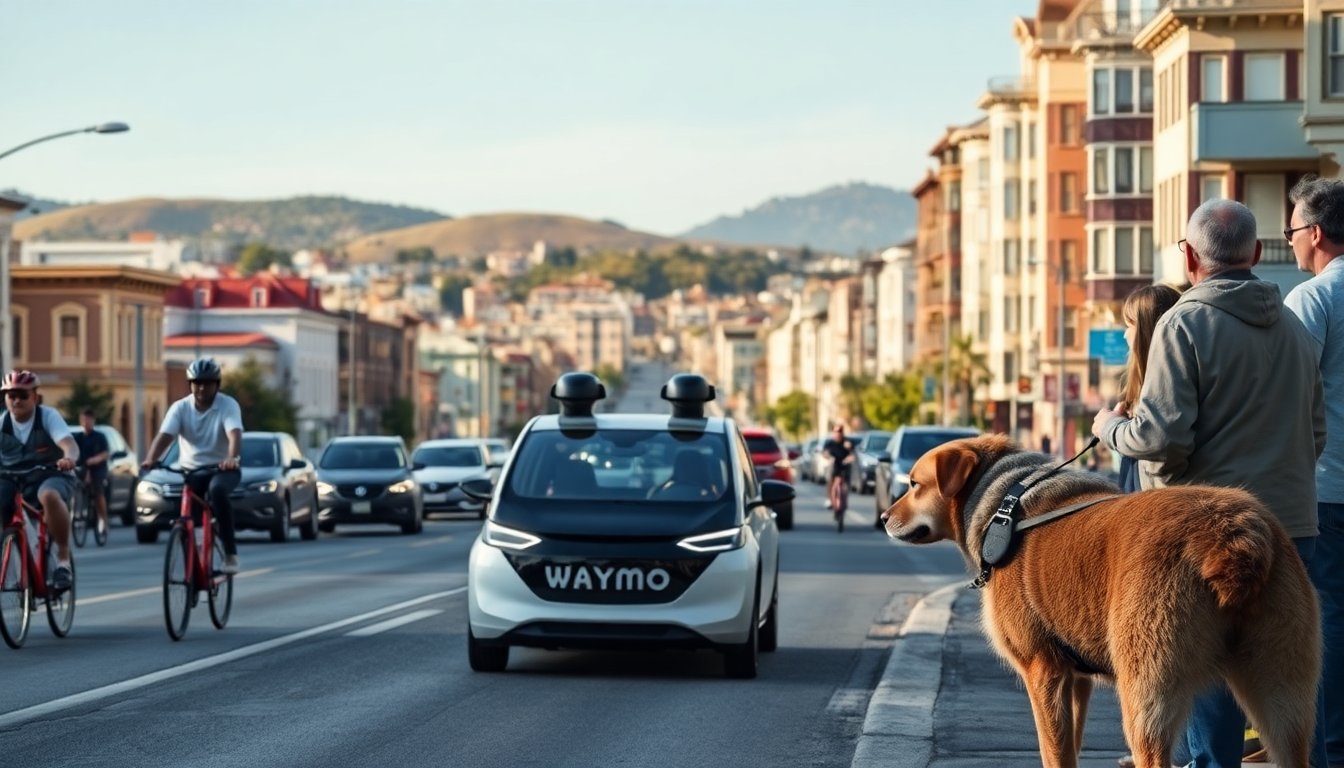
As transportation evolves, Waymo, a subsidiary of Alphabet Inc., is making significant progress in autonomous vehicles. However, its recent expansion in the busy streets of San Francisco has sparked controversy. Two tragic incidents involving pets—a cat named Kit Kat and an unleashed dog—have ignited public outcry and raised serious concerns about the safety of self-driving technology.
Waymo’s expansion amidst safety concerns
Waymo has historically maintained a strong safety record, which has facilitated its expansion into new operational areas. Recently, the company received approval to operate on the Bay Area’s freeways and to provide rides from San Jose International Airport. Additionally, Waymo’s services are set to launch in cities such as Dallas, Houston, Orlando, Miami, and Washington, D.C. However, these developments have sparked increasing concern among local residents.
Majed Zeidan, owner of Randa’s Market in San Francisco, voiced his sorrow after losing Kit Kat, his cherished grocery store cat, to a Waymo vehicle. In response to this incident, local leaders, including Jackie Fielder of the San Francisco Board of Supervisors, have started a petition urging for enhanced local oversight of autonomous vehicles. Zeidan remarked that memorials for Kit Kat have become a symbol of community frustration regarding the swift integration of self-driving cars into the city.
Regulatory challenges
California State Senator Dave Cortese has stressed the urgency for regulatory frameworks as Waymo navigates a largely unregulated landscape. The California Public Utilities Commission and the Department of Motor Vehicles currently oversee the testing and approval of autonomous vehicles. Cortese warned that without legislative intervention, the risk of further incidents could significantly endanger public safety.
Waymo asserts that its vehicles experience 91% fewer accidents than those operated by humans. However, recent incidents involving a Kit Kat and an unleashed dog have exposed the limitations of existing safety protocols. Experts, including Scott Moura from the University of California, Berkeley, argue that the software driving autonomous vehicles must enhance its capability to recognize and anticipate the actions of animals and pedestrians, an area where current systems have fallen short.
Emerging competition and implications for urban transport
Waymo is facing increasing competition from companies like Amazon’s Zoox, which has begun operations in San Francisco. The entry of new players into the market has sparked discussions about the effects of autonomous vehicles on the city’s unique environment and current transportation systems. Claire Amable from the San Francisco Bicycle Coalition raised concerns that self-driving cars could exacerbate congestion on already crowded streets.
As autonomous vehicles gain traction, many are questioning the future of public transport. Recently, city officials permitted self-driving and ride-hailing services to operate on Market Street, a commercial area previously free of cars, while simultaneously reducing public bus services. This shift raises important questions about the sustainability of public transport options amid rising dependence on ride-hailing services.
Waymo’s future and community response
Waymo’s autonomous vehicles utilize advanced sensors and artificial intelligence technologies to navigate complex urban environments. However, recent accidents highlight the ongoing need for improvement. The company is exploring various vehicle models and has formed partnerships with manufacturers like Zeekr and Hyundai. Despite these advances, challenges such as adverse weather conditions and unpredictable pedestrian behavior continue to pose significant obstacles.
In light of the community’s grief and anger, local resident Zeidan has launched merchandise, including T-shirts and baseball caps, to commemorate Kit Kat. This initiative aims to foster solidarity among residents who oppose the rapid expansion of self-driving cars. As urban transportation evolves, maintaining a balance between innovation and public safety remains crucial.
The future of autonomous vehicles in cities like San Francisco depends on effective regulation, community engagement, and a commitment to enhancing safety measures. As Waymo and its competitors progress, it is essential that discussions surrounding self-driving technology include all stakeholders to ensure a safe and sustainable urban environment.