
Table of Contents
As urban transportation evolves, Waymo, a leader in the self-driving car industry, is expanding its operations across various U.S. cities. However, this growth faces significant challenges. Recent incidents involving pets in San Francisco have raised concerns among residents, prompting discussions about the safety and regulation of autonomous vehicles.
Recent incidents spark community outrage
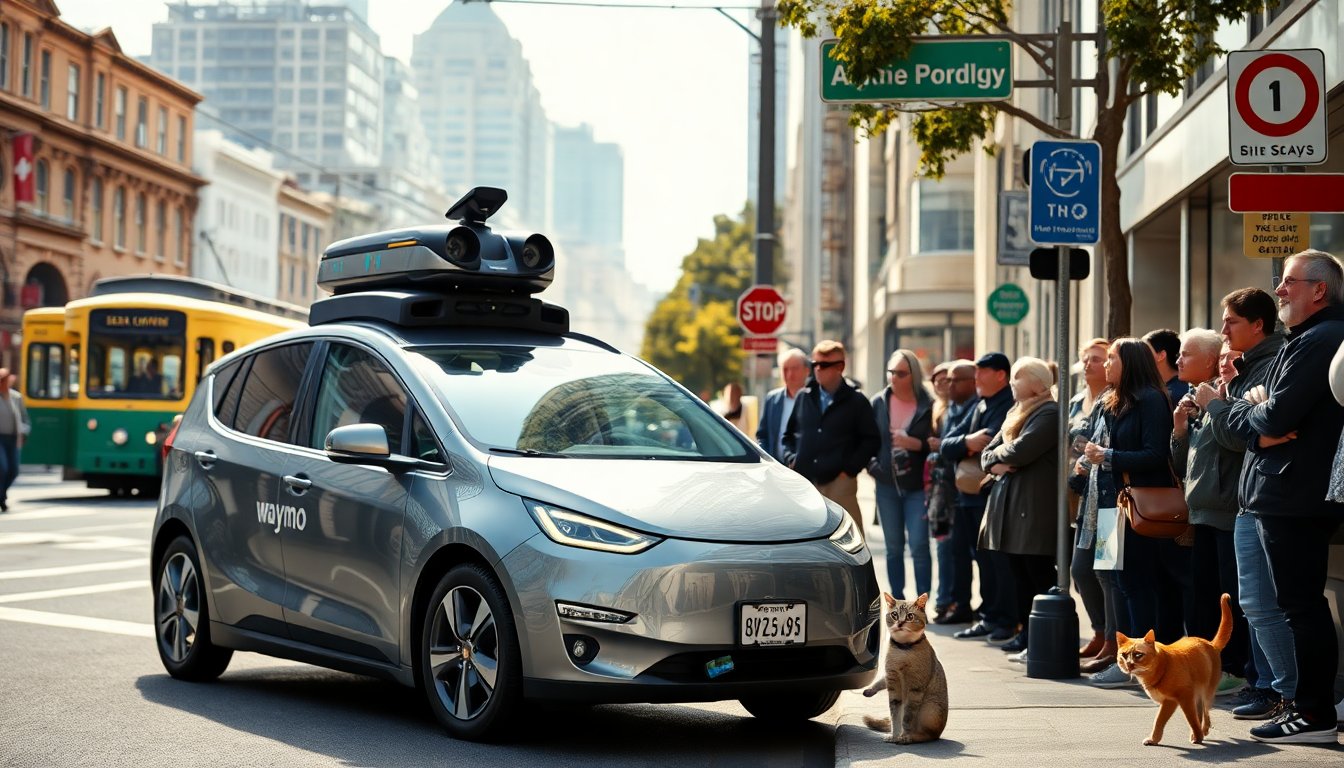
In San Francisco, the tragic death of a beloved grocery store cat named Kit Kat has become a focal point of community frustration regarding self-driving vehicles. The accident occurred when a Waymo vehicle inadvertently struck Kit Kat, leading to a makeshift memorial outside the store adorned with flowers and tributes. This incident has sparked significant discontent among local residents, who are increasingly wary of the rising presence of autonomous cars on city streets.
Petitioning for regulation
A local resident has launched a petition urging city authorities to oversee autonomous vehicles instead of relying solely on state regulators. Jackie Fielder, a member of the San Francisco Board of Supervisors, stated that the existing regulatory framework seems insufficient to guarantee the safety of pedestrians and pets. This issue has captured the attention of state officials, including California State Senator Dave Cortese, who voiced concerns regarding the absence of local control over the operations of autonomous vehicles.
Waymo’s impressive safety record challenged
Waymo, known for its strong safety record, claims to have reduced accidents by 91% compared to human-driven vehicles. However, the company is now under scrutiny. As it expands its services into urban areas and highways, including recent approvals to operate in San Jose, concerns have emerged. Recent incidents involving pets have raised questions regarding the technology’s ability to detect and respond to unexpected situations effectively.
Technical challenges in autonomous driving
Experts, including Scott Moura, a professor at the University of California, emphasize the complexities in the software that drives autonomous vehicles. A recent incident involving a Waymo vehicle illustrates these challenges. The vehicle failed to recognize a cat named Kit Kat while navigating its environment. This incident highlights the difficulties not only in detecting obstacles but also in predicting appropriate responses once those obstacles are identified. As the number of self-driving cars on the streets increases, these challenges are anticipated to intensify.
Competition intensifies in the self-driving landscape
The race for dominance in the self-driving vehicle market is heating up, with Waymo facing significant competition. Companies such as Amazon’s Zoox are emerging as key players, introducing innovative vehicle designs that lack traditional steering wheels. This unique approach has generated considerable public interest, while also raising important questions regarding safety and the integration of these vehicles into existing infrastructures.
As autonomous vehicles become more widespread, concerns about their impact on urban environments are increasing. Advocates for sustainable transportation express worries that the rise of self-driving cars may detract from funding for public transit and cycling infrastructure. This situation complicates the transportation landscape for residents in cities like San Francisco, highlighting the need for a careful balance between innovation and community needs.
Public transport vs. autonomous vehicles
The discussion surrounding self-driving vehicles also highlights the pressing need for improved public transportation systems. While the city has begun allowing autonomous taxi services on major thoroughfares, such as Market Street, funding for public transport has faced reductions. Advocates emphasize that a balanced strategy is necessary to ensure that advancements in autonomous technology do not compromise essential services like buses and cycling lanes.
As the industry progresses, residents are left to consider the implications of these changes. Some individuals, including Joel Smith, have started using Waymo’s services and have noted the convenience they provide. However, this trend raises important questions about the future of traditional commuting methods and the sustainability of an urban environment increasingly influenced by self-driving vehicles.
As regulatory discussions continue and community concerns escalate, the future of Waymo and similar companies hinges on their capacity to address both technological advancements and public trust regarding safety.