
On 28 February 2026 the security map of the Middle East changed in one afternoon. US and Israeli strikes inside Iran killed Supreme Leader Ayatollah Ali Khamenei and other senior officials. Tehran’s retaliatory attacks on US bases and regional partners quickly turned a single episode into a dangerous cascade of violence with consequences that ripple far beyond the region.
This is not just a regional crisis. Naval choke points, contested airspaces and key shipping lanes now sit at the centre of a contest that touches Europe’s energy supplies, NATO’s cohesion, and the strategic calculations of Russia, China and Indo‑Pacific partners. European capitals face hard choices: how to deter further violence, how to safeguard households and industry from energy shocks, and how to preserve diplomatic credibility without being dragged into wider conflict.
Three practical tracks for EU action
Policymakers will be judged by speed and clarity. Three interlocking tracks offer a realistic mix of short‑term moves and medium‑term trade‑offs: a diplomacy-first de‑escalation effort, stepped-up protection for maritime trade and energy flows, and discreet, rights‑based assistance to Iranian civil society.
1) A diplomatic coalition for de‑escalation
The EU should convert public appeals for calm into a concrete, verifiable roadmap that gives all parties an off‑ramp. Europe still holds diplomatic capital — ties to Gulf states, links with Turkey, and working relationships with Washington and Beijing — that can be turned into leverage. A practical first step: convene a summit with the Gulf Cooperation Council, Turkey, the UK, India and key Asian partners to spell out a stepwise reduction in violence and parallel incentives that make de‑escalation credible.
That mechanism must pair immediate confidence‑building (ceasefire channels, hostage deconfliction, humanitarian access) with staged guarantees and impartial verification. Bundling security and economic incentives — not vague promises — will be more persuasive. The EU should align this initiative with NATO and UN frameworks to boost legitimacy and avoid duplication, while laying out clear roles, monitoring timetables and contingency plans if parties backslide.
2) Protecting maritime routes and shoring up energy resilience
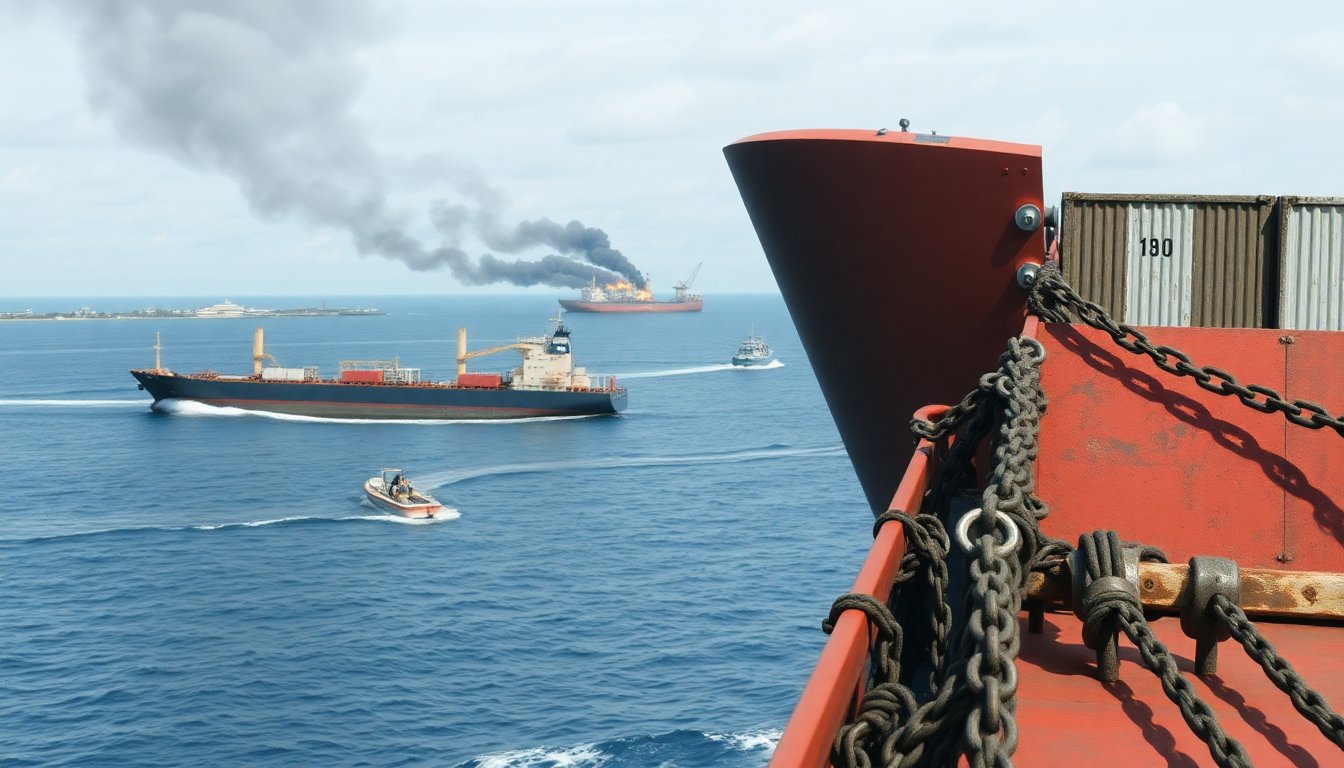
The Strait of Hormuz, the Red Sea and adjacent approaches are where disruptions translate fastest into economic pain. Attacks on tankers and rising insurance costs are already tightening supply chains for fuel and critical inputs such as fertilizer precursors. More than a fifth of seaborne oil and gas passes through these narrow passages; a prolonged disruption would ripple through markets and households.
Unilateral naval action risks widening the conflict. Europe should pursue defensive, multinational measures: escorted convoys for vulnerable shipments, expanded maritime domain awareness, and contingency plans for alternative routes. Boosting sensor networks and predictive analytics will improve early warning and reduce interdiction risk. Practical steps include accelerating talks on safe passage agreements, funding shared insurance schemes, and investing in port resilience and strategic fuel stocks to blunt immediate shocks.
3) Calibrated support to Iranian civil society
With Iran’s leadership decapitated, a political opening — and unpredictable power struggles — may follow. European assistance should aim to strengthen peaceful civic resilience without signaling support for