
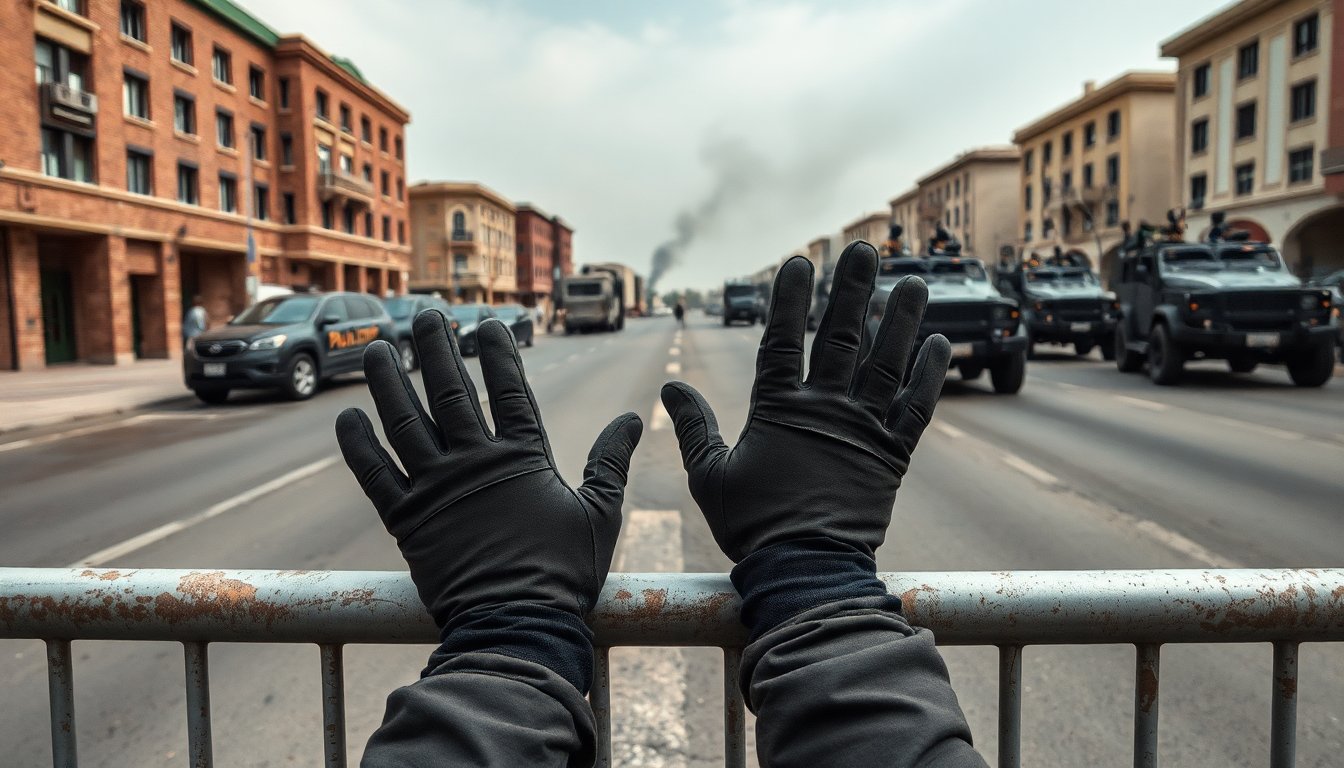
The strategic picture around Iran has changed dramatically but, according to multiple sources, not in a way that points to immediate regime collapse. A report published 12/03/2026 20:30 in the Wall Street Journal summarized Israeli officials’ judgment that despite sustained military pressure and public unrest, Iranian security services retain a firm hold on order and many demonstrators remain intimidated. At the same time, think tanks and expert panels emphasize the strong institutional roles of the Islamic Revolutionary Guard Corps (IRGC), the fragility yet persistence of the protest movement, and the complex calculus of succession inside the clerical establishment.
Why analysts see short-term durability
Several factors underpin the prevailing assessment that the government is likely to endure through the near term. First, the security apparatus—including the IRGC and intelligence services—continues to demonstrate capacity for surveillance, crowd control, and rapid repression, which deters large-scale public mobilization. Second, many ordinary citizens weigh the risks of street action against severe reprisals and often choose caution; this dynamic has limited the momentum of antigovernment protests. Finally, outside military pressure has focused on degrading capabilities rather than dismantling the regime’s core control mechanisms, leaving the state’s coercive infrastructure largely intact and able to manage instability.
Succession choices and their political meaning
The leadership transition has added another layer of stabilizing logic. Following the deaths of senior figures in the strikes that began on February 28, a clerical committee selected Mojtaba Khamenei as successor to the late supreme leader, a move discussed in depth by RAND experts and other commentators. That selection signals a preference for continuity over dramatic institutional reform. By elevating an insider with close ties to the security elite, the clerical body appears to prioritize an orderly transfer of authority that preserves the regime’s command-and-control networks. Observers note this approach risks public resentment but offers immediate coherence for the state.
Strikes, leadership losses, and the fragmenting of proxies
The campaign of U.S.-Israeli strikes has had tangible effects: key leaders were killed and Iran’s command structure suffered losses that reverberated across the region. Yet the damage has not translated into a political vacuum that civil society can exploit. Instead, the conflict has reshaped Iran’s external posture and strained its proxy network. Groups like Hezbollah and various militias in Iraq and Syria face attrition of senior cadres, reduced coordination, and logistical bottlenecks. The forward defense concept—meaning a layered proxy architecture meant to absorb threats before they reach Iran—has been stressed, and analysts argue the network is degrading faster than it can be rebuilt.
Proxy warfare and asymmetric resilience
Despite losses, proxies retain local roots and organizational depth that make them difficult to eliminate entirely. Actors such as Hamas, Iraqi Shia militias, and the Houthis operate with varying degrees of autonomy and capability; some are weaker without direct Iranian inputs, while others can still launch disruptive operations. Experts warn that fragmentation may lead to unpredictable and decentralized violence rather than coordinated campaigns, raising the risk of sporadic attacks and sabotage beyond Iran’s borders even as Tehran concentrates on defending its own territory.
Regional alignments and the international balance
The broader geopolitical response has been mixed and, in many cases, conditional. Washington and Tel Aviv have pursued options aimed at degrading Tehran’s military reach, but the long-term political strategy to alter Iran’s governing order is far more complicated. Russia and China, despite formal partnerships and recent pacts, have been cautious—balancing their investments in Iran against relationships with Gulf states and other economic interests. Meanwhile, regional governments have grown closer to Israel in security terms, often covertly, while wary Arab capitals continue to weigh the political costs of overt alignment amid unresolved Palestinian issues.
Given these realities, the near-term outlook favors regime survival in some form: the state’s coercive capacity, succession decisions favoring insiders, and the uneven degradation of proxy networks all point to continuity rather than prompt collapse. At the same time, the situation remains fluid—economic disruptions from airspace closures and threats to shipping lanes, shifting alliances, and persistent domestic grievances could produce new ruptures over time. Observers agree that while military pressure has altered the environment, political transformation would require sustained internal momentum and a weakening of the security services that, for now, show no signs of losing their grip.


