
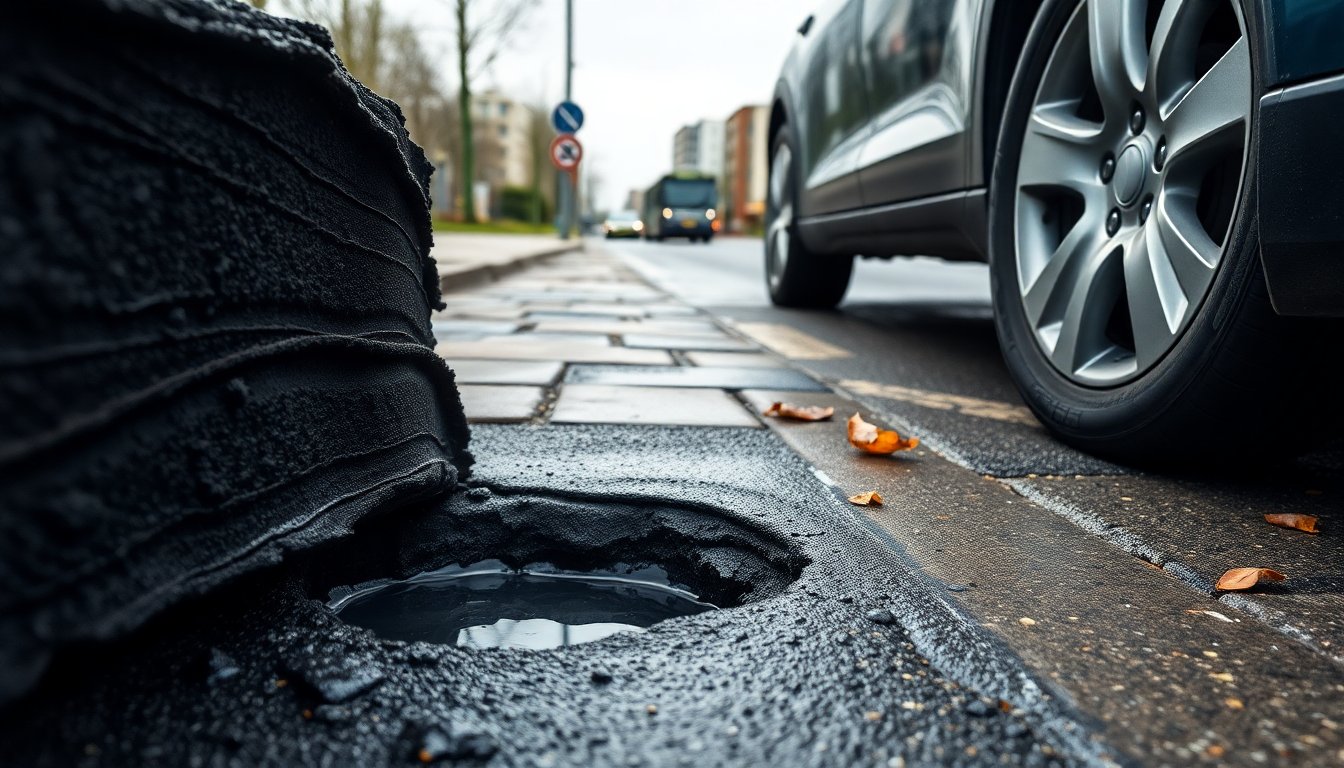
Montreal drivers are increasingly paying the price for a road system in decline. Cracked pavements, recurring potholes and deeper structural failures are damaging tires, rims and suspension components — and forcing commuters onto longer, slower routes. The result: higher repair bills, longer commutes and growing frustration across the city.
What drivers are experiencing — and why it matters
– On many neighbourhood streets, surfaces look more like patchwork than pavement. Motorists report blowouts, bent rims and suspension repairs after hitting hidden craters. To avoid damaged stretches, some people add time and distance to everyday trips, which means more fuel burned and more traffic on already-crowded alternate routes.
– Consumer advocates and auto groups have tallied out-of-pocket costs. City audits back up those claims, showing a substantial portion of Montreal’s road network rated in poor condition. Yet municipal contracts often favour quick surface fixes instead of replacing failing road structures — a short-term savings that leads to long-term expense.
What the pavement lab has found
A technology college’s pavement research lab has been running accelerated tests that compress years of wear into months. Their experiments compare asphalt mixes, recycled materials and alternative binders tailored to northern climates. The lab director says the science points to practical, longer-lasting options — but turning those findings into citywide policy will take money, time and commitment.
Key technical takeaways:
– Freeze-thaw cycles are a major accelerant. Water seeps into cracks, freezes and expands, then repeats the cycle, progressively weakening both the surface and the layers underneath.
– When the base or subbase is compromised, simply resurfacing hides the problem rather than fixing it. Structural renewal is needed where foundations have deteriorated.
– Some promising approaches include higher proportions of recycled asphalt pavement, climate-adapted binders, and lower-cost alternatives (like compacted aggregate) for low-traffic streets. These could reduce upfront costs and simplify future repairs — but they would require updates to municipal standards and procurement rules.
Why innovation stalls
There’s a gap between the lab bench and the city garage. Montreal’s transport department follows its own testing protocols and specifications, and changing those standards demands staff time, political will and budget reallocations. Procurement rules and short-term budgets often favour the cheaper, faster patch jobs over deeper, more expensive fixes — even when those fixes would save money over time.
Funding, policy and accountability
Solving the problem means aligning several things at once: sustained funding for structural repairs, updated technical standards that reflect current research, and procurement practices that reward long-term value instead of immediate low cost. Without coordinated action across engineering, finance and city leadership, laboratory innovations are unlikely to scale beyond isolated pilots.
The Practical, research-backed solutions exist, but implementing them will require shifting priorities from short-term patches to long-term renewal. Otherwise motorists and the municipal budget will keep paying the price.