
Table of Contents
The Winter Olympics at Milano Cortina have been dominated by a familiar storyline: a small country punching well above its weight. Norway—roughly the size of Minnesota in population—has again surged to the top of the standings, combining depth, specialized programs and cultural affinity for snow sports to convert breadth into medals. At the same time, Team USA has produced headline moments, from a record-setting speedskating performance to breakthrough podiums in freestyle skiing and ice dance.
In the background of the medal count are individual narratives of resilience, ambition and unexpected setbacks. These human stories, whether medical comebacks or candid interviews gone wrong, underscore that the Olympics remain as much about people as they are about points and times.
Why Norway keeps winning
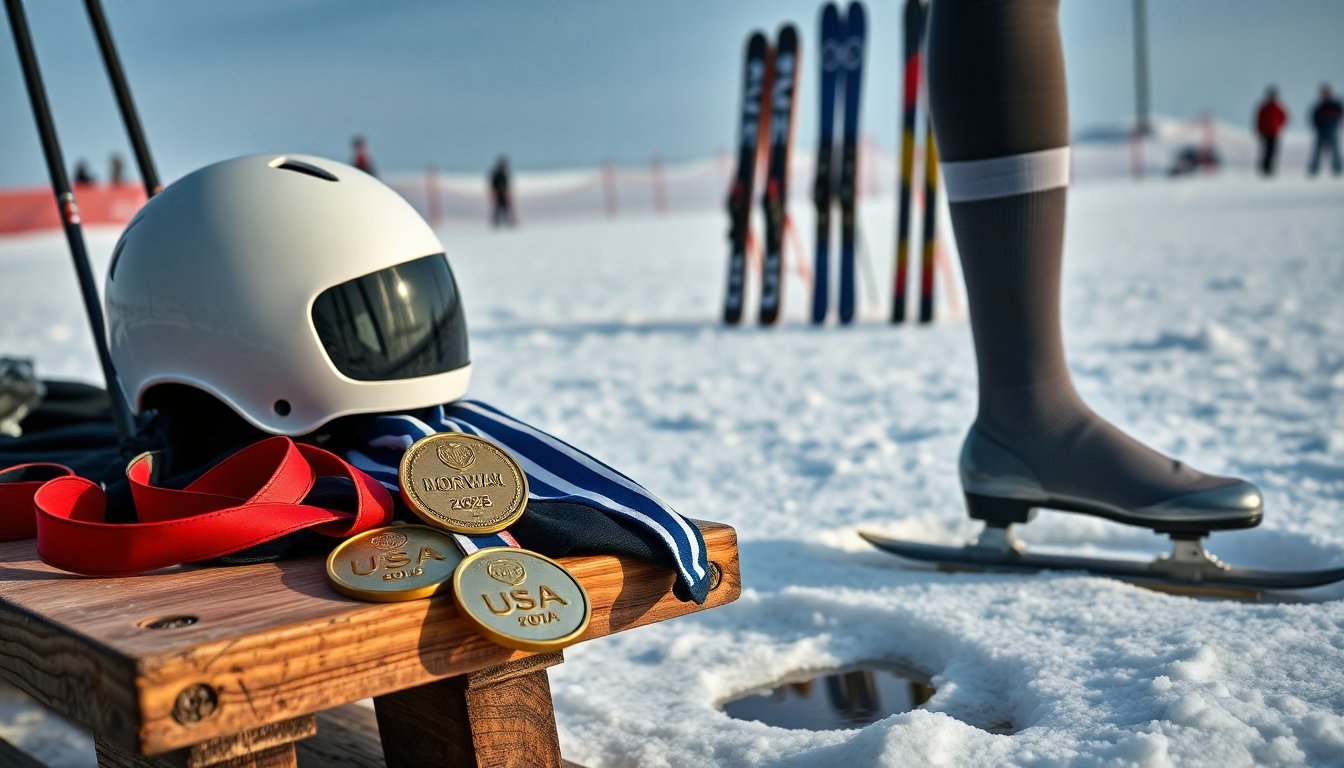
Norway’s medal haul at these Games illustrates a long-term, systemic advantage. As of Feb. 11, , the standings listed Norway with 13 total medals—including 7 gold, 2 silver and 4 bronze—tied on total with Italy but leading on golds. Their success reflects a combination of grassroots participation, year-round training environments and targeted investment in sports like cross-country, biathlon and skating. The Norwegian model emphasizes consistent athlete pipelines, community-level coaching and a national culture that treats Winter sports as a normal part of childhood.
That approach creates a steady flow of elite performers who can peak at major championships. The result is not only top-tier stars but also broad medal distribution across disciplines, which helps a small population produce outsized results on the world stage.
Team USA: highlights and breakout performances
Team USA has been lively in Milan and Cortina, registering several memorable performances. One of the most striking was Jordan Stolz of Wisconsin, who set an Olympic record in the men’s 1,000 meters speedskating with a time of 1:06.28. That run put him in prime position to pursue further medals across multiple distances and added a spotlight on American speedskating.
In freestyle skiing, the U.S. celebrated a one-two finish in women’s moguls as Liz Lemley took gold and Jaelin Kauf claimed silver. Lemley’s breakthrough as a first-time Olympian and Kauf’s repeat podium performance reinforced the depth of American moguls skiing. Meanwhile, ice dance veterans Madison Chock and Evan Bates earned silver—their first Olympic medal in free dance—adding to their prior successes in the team event and validating long careers built on refinement and resilience.
Slipstream wins and near-misses
Other U.S. results included strong showings in snowboarding and luge, with several American athletes qualifying for finals. In the men’s doubles luge, Americans set an early track record on their first run, signaling medal contention even as Italy capitalized on home-ice advantage to sweep the doubles events. The mixed fortunes of American snowboarders—some advancing while others narrowly missed finals—illustrate how margins at this level can be razor-thin.
Human stories shaping the Games
The Olympics consistently reveal personal journeys that deepen the competition’s narrative. Curler Danny Casper competed while managing Guillain-Barré syndrome, an autoimmune condition that disrupted his mobility and forced a hiatus from the sport. His return to Olympic competition is an example of rehabilitation and determination intersecting with elite performance.
Off-ice moments also made headlines. Norwegian biathlete Sturla Holm Lægreid issued an apology after revealing a personal mistake in a post-medal interview—an episode that served as a reminder of the emotional intensity athletes carry into competition. These candid human moments coexist with record-breaking runs and podium celebrations, providing context and complexity to medal tables and results pages.
Regional threads and unexpected contributors
Small regions and individual communities have left a disproportionate mark on the U.S. team. Vermont, despite its modest population, has produced multiple recent American medalists in skiing, reflecting how certain landscapes and local programs can feed international success. That pattern resembles Norway’s national model at a smaller scale: community access plus targeted development leads to elite outcomes.
Additionally, emerging athletes from places like Wisconsin—home state of Jordan Stolz—show how pockets of specialized training and supportive ecosystems can create new centers of excellence within larger nations.
What the medal table tells us
Medal counts are a snapshot, not a long-form narrative. As of Feb. 11, the top of the table read: Norway 13 medals (7 gold, 2 silver, 4 bronze), Italy 13 medals (4 gold, 2 silver, 7 bronze), and the United States 12 medals (4 gold, 6 silver, 2 bronze). Those numbers reflect both home-track boosts and longstanding national strengths. Norway’s gold-heavy total explains why it is widely perceived as the dominant force, while Italy’s breadth and the U.S.’s cluster of high-profile performances show alternative pathways to Olympic prominence.
Ultimately, the Milano Cortina Games are unfolding as a mix of expected national dominance, surprise breakout stars, and deeply human stories of recovery and imperfection. The results so far underline that elite sport rewards systems as much as singular talent—and that the most compelling narratives often lie behind the raw medal totals.