
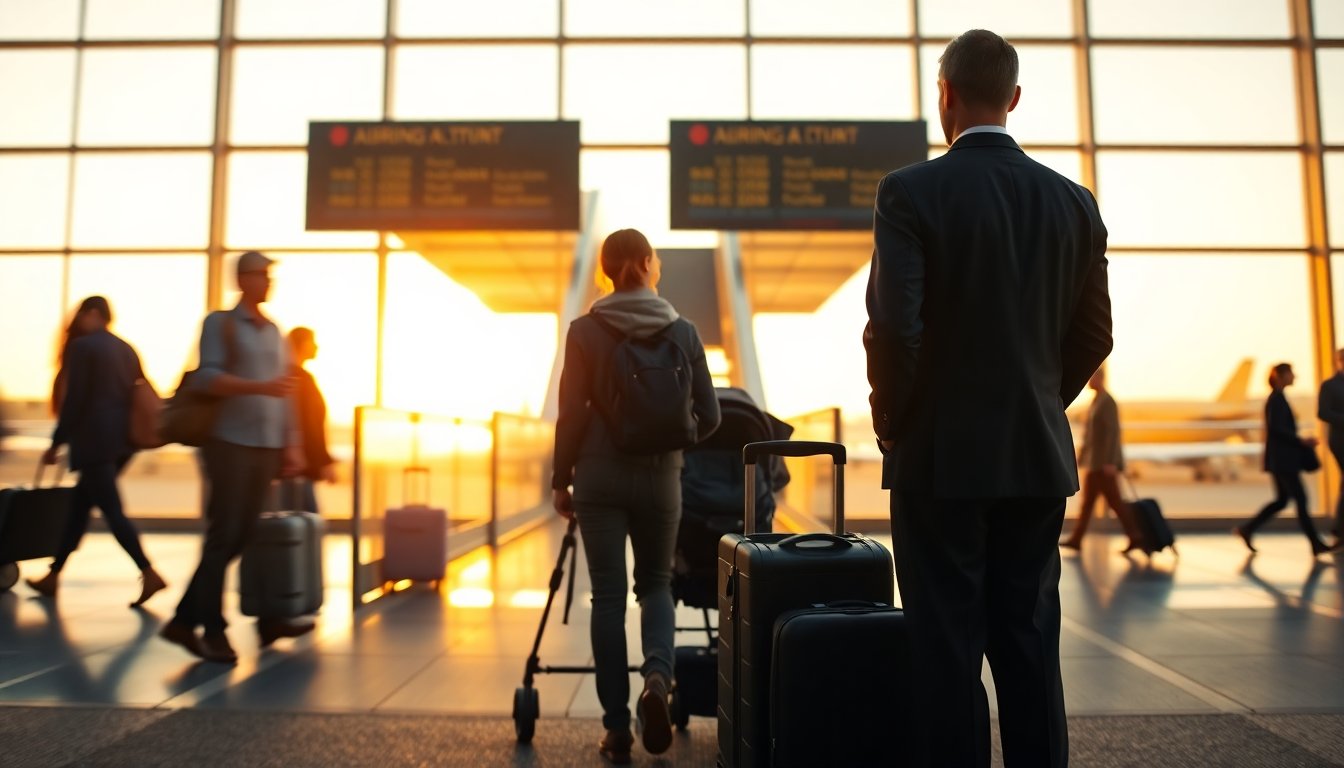
Air travel with small children often feels like an obstacle course: corralling bags, folding strollers and calming restless toddlers while lines move around you. A Florida-based former flight attendant named Laura ignited a fresh conversation on this subject after sharing a short clip on TikTok that has attracted more than 2 million views. In her message she suggested a counterintuitive change to conventional practice: families traveling with infants and young children might be better off boarding last rather than taking advantage of the usual early boarding privilege.
The clip framed the issue as both practical and psychological. Laura explained that years of working the cabin taught her to notice what happens when families board early: bags get shuffled in the aisle, strollers and car seats require extra space, and the child often becomes anxious during the extended wait on board. Her claim — that a quicker turnaround and later boarding could reduce stress for parents and infants alike — prompted over 4,000 comments and a wide range of proposed alternatives.
Why the idea is controversial
At the center of the debate is the pre-board policy many airlines offer to passengers with young children. The policy exists to give families time to secure bulky items and settle in, but critics argue it can prolong the period a child must remain restrained and surrounded by strangers. Laura described watching families “unravel” while waiting on a packed jet, suggesting that a late entry minimizes that stressful interval: board when the plane is otherwise ready to go, take seats quickly and avoid a long pre-takeoff wait. This approach reframes the benefit of early access into a potential liability.
Practical concerns: luggage, strollers and car seats
One practical objection is about space. Parents often need the overhead bin for carry-ons or room to stow a stroller, and families traveling with a car seat may need time to install it properly. Commenters who opposed Laura’s suggestion argued that boarding first secures the best access to the overhead bin and ensures car seats are safely fitted. Others countered with strategies that combine both aims: for example, one parent boards early to load items while the other stays with the child until boarding closes, or parents choose seats near the rear so they can enter and exit with less disruption.
What viewers proposed instead
The TikTok discussion produced a variety of improvised boarding strategies. Some suggested a split approach where one adult handles baggage and seat setup while the other keeps the child entertained outside the cabin until the final call. Another idea was to board via the back of the plane first to avoid squeezing down the aisle, an arrangement that prioritizes convenience and limits the time a child spends confined. Less charitably, a few responders argued families should forfeit early boarding entirely—an opinion that sparked pushback given genuine logistical needs.
Balancing safety and comfort
Those defending early boarding emphasize how it supports safe travel: securing a car seat, settling an infant and arranging items within reach can all be safety issues. Laura acknowledged these points while maintaining that the current system sometimes turns a helpful accommodation into a stressor. Her view reframes pre-board not merely as a convenience but as a policy with trade-offs that could be reassessed to improve overall passenger experience.
Every family is different
Ultimately, many comments converged on a pragmatic compromise: tailor boarding to the family’s configuration. Two adults traveling with a child and a stroller have different needs than a solo parent flying with an infant. Suggestions included assigning roles—one person loads and sets up while the other boards last with the child—so the baby spends minimal time confined. The variety of responses underlines a single reality: no single boarding rule fits every scenario, and flexibility may serve families and crews best.
Takeaways for travelers and airlines
Laura’s post succeeded in turning a routine policy into a wider conversation about practical comfort, safety and etiquette. Whether airports and carriers will revisit boarding order remains uncertain, but travelers can take away some immediate tactics: consider seat choice, coordinate duties between adults, and think creatively about when to load bulky gear. Small adjustments to timing or roles can reduce the stress of airport time and lead to smoother departures for both parents and fellow passengers.


