
Table of Contents
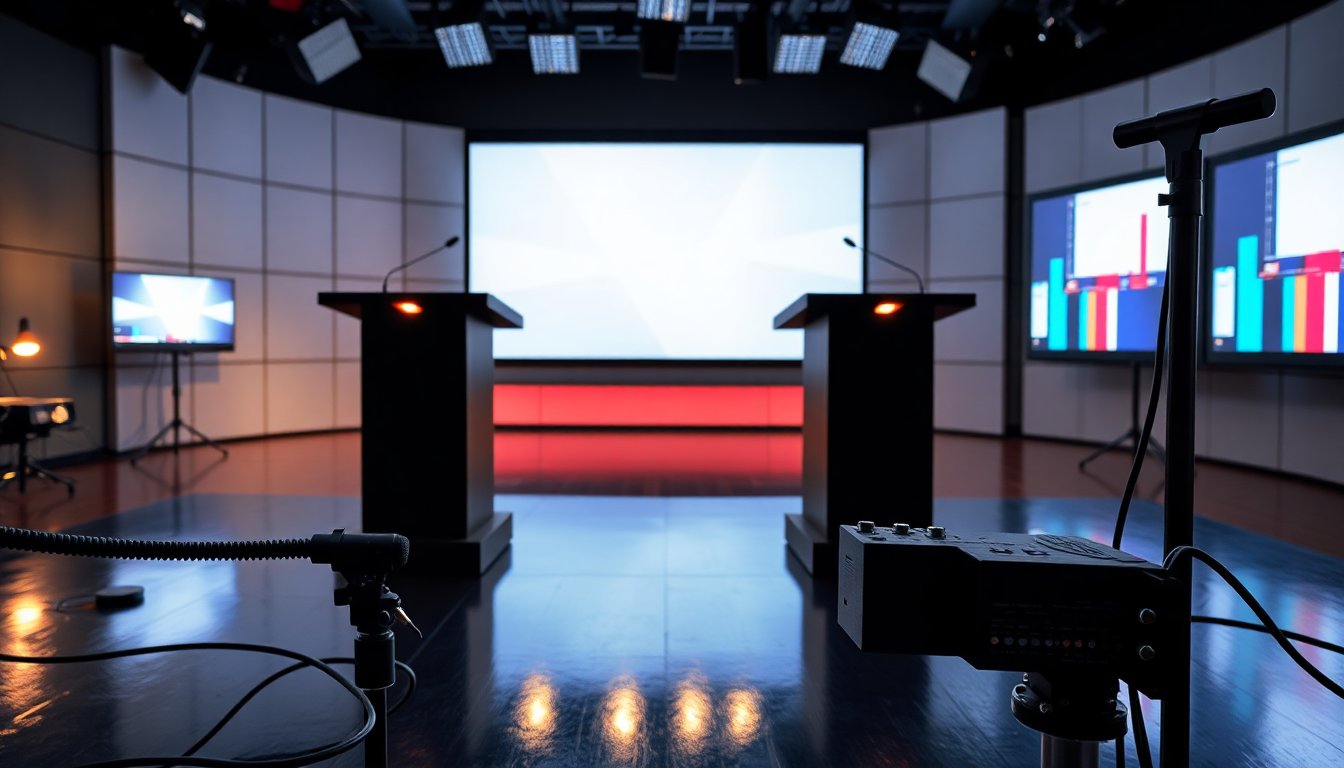
Paris runoff: head-to-head TV debates disappear
The Paris municipal campaign has entered an unusual phase: planned televised face-offs between front-runners have largely evaporated. Major networks pulled scheduled debates after Rachida Dati, the center-right candidate, announced she would not take part in any pre-runoff debates. Broadcasters, mindful of Arcom’s rules on equal speaking time, scrambled to rethink live formats.
Broadcasters and campaigns are quietly reshuffling their media plans. With votes set for 15 and 22 March 2026, teams are favoring segmented appearances — one-on-one interviews, filmed statements and panel shows with fewer participants — over the classic multi-candidate showdown.
What voters lose — and why it matters
For viewers, the change narrows direct comparisons between candidates. Research shows televised debates can sway undecided voters by exposing policy contrasts and revealing demeanor under pressure. A front-runner’s refusal to participate doesn’t just change programming; it alters how information reaches citizens in the crucial run-up to the runoff.
Poll snapshot and the stakes
An Ipsos-BVA poll for ICI Paris Ile-de-France, published on 3 March 2026 (online, 20–28 Feb; 800 registered Paris voters), puts Emmanuel Grégoire on 35% in first-round projections and Rachida Dati on 27%. Pierre-Yves Bournazel and Sarah Knafo each hover around 11.5%, Sofia Chikirou near 10% and Thierry Mariani about 4%. Those numbers leave several lists close to the 10% threshold that determines who can proceed or carry bargaining power into the second round — making withdrawals and alliances potentially decisive.
Why debates were shelved
Broadcasters gave several overlapping reasons for canceling head-to-heads. Legal constraints are the headline problem: Arcom’s equal-airtime rules complicate staging fair encounters when one major candidate opts out. Producers also cited tight schedules, last-minute lineup changes and the practical difficulties of mounting secure live shows with competing teams under pressure.
Audience metrics matter too. With support fragmented across several lists, networks judged that uneven matchups might undercut viewership and dilute the impact of special broadcasts. Campaign logic reinforced this trend: parties teetering near the qualification threshold often prefer private negotiations or tactical withdrawals to public sparring, shrinking the pool of willing participants.
Editorial responses and new formats
Faced with a legal and editorial bind, newsrooms have experimented with alternatives designed to inform voters while limiting regulatory risk. Options under consideration include:
– Sequential one-on-one interviews, giving each candidate a controlled slot.
– Small-group town-hall formats with stricter time limits.
– Pre-recorded exchanges that allow precise time allocation and post-production fact-checking.
Some outlets have already tested these approaches. FranceInfo, for instance, staged a debate where Dati and Grégoire were represented by running mates — a workaround meant to preserve representation without violating campaign calendars. Other channels proposed week-long series of individual interviews: LCI suggested a run hosted by Darius Rochebin; BFMTV floated a similar standalone sequence.
How this shapes voter information
These formats change how voters evaluate contenders. Recorded and one-on-one interviews limit spontaneous confrontation, which can make differences in temperament and quick thinking harder to observe. But they also allow clearer time management and deeper fact-checking, giving space for policy detail on housing, safety and urban planning.
The poll highlights what may move undecided voters and spur turnout: security tops the list at 51%, cleanliness at 44% and housing at 38%. Strong majorities back restrictions on short-term rentals (72%), free school meals for disadvantaged children (65%), and more social housing (63%). Transport questions split opinion: 61% favor raising the Boulevard Périphérique limit back to 70 km/h, while 55% support adding cycle lanes. These issue patterns suggest compact, tangible promises on services and safety could be decisive.
Strategic consequences for the campaign
Broadcasters and campaigns are quietly reshuffling their media plans. With votes set for 15 and 22 March 2026, teams are favoring segmented appearances — one-on-one interviews, filmed statements and panel shows with fewer participants — over the classic multi-candidate showdown.0
Broadcasters and campaigns are quietly reshuffling their media plans. With votes set for 15 and 22 March 2026, teams are favoring segmented appearances — one-on-one interviews, filmed statements and panel shows with fewer participants — over the classic multi-candidate showdown.1
What to watch before 15 March
- – Who: candidates who refuse multi-party debates or send substitutes.
- What: a shift toward controlled interviews, recorded segments, digital outreach and intensified ground mobilization.
- Where: national channels, targeted online platforms and local events.
- Why: teams are aiming to control risk, manage messaging and maximize the impact of limited exposure.
Broadcasters and campaigns are quietly reshuffling their media plans. With votes set for 15 and 22 March 2026, teams are favoring segmented appearances — one-on-one interviews, filmed statements and panel shows with fewer participants — over the classic multi-candidate showdown.2
Takeaway
Broadcasters and campaigns are quietly reshuffling their media plans. With votes set for 15 and 22 March 2026, teams are favoring segmented appearances — one-on-one interviews, filmed statements and panel shows with fewer participants — over the classic multi-candidate showdown.3