
Who, what, where, why
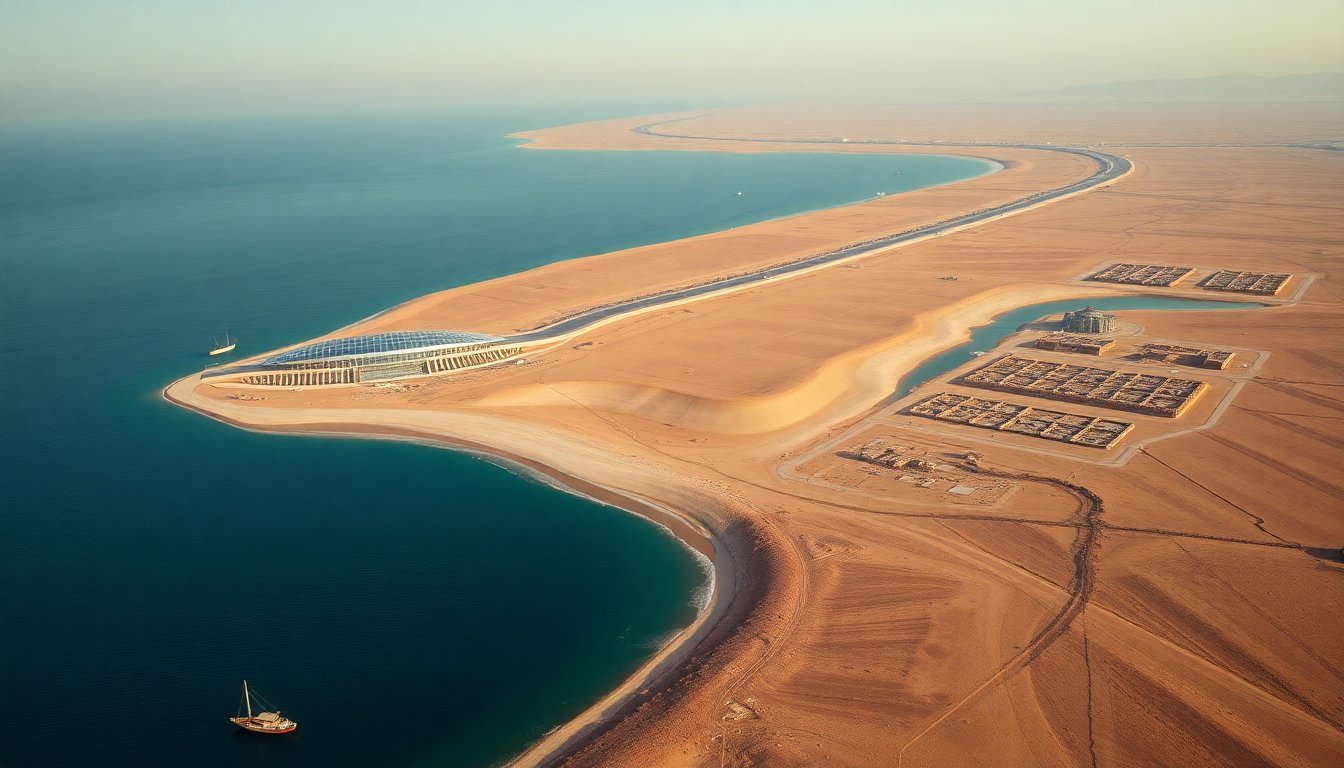
Saudi Arabia has quietly shifted course on The Line — the famously ambitious plan for a 170 km mirrored city along the northwestern Red Sea. Instead of one sweeping spine built all at once, officials are moving to a scaled, phased approach. The reasons are simple: money, engineering headaches and social risks.
Big idea, new playbook
Originally, The Line was sold as a futuristic linear metropolis — car-free, vertically dense, millions of people, glassy mirrored facades. That vision pushed architects and planners to rethink density, mobility and climate-aware design. But turning that thought experiment into reality at full scale exposed tough practical limits: ballooning costs, complex infrastructure integration, supply-chain pressures and the political risk of failing public promises.
So the plan has been recast: think modular pilots instead of one monolithic build. Small, testable districts first. If the pieces work reliably together, they get linked up later.
How the phased approach actually works
– Start small: pick a few demonstrator corridors or neighborhoods where systems can be tried in the real world rather than on paper. These are a few kilometers long, not hundreds.
– Modular stacks: each pilot contains its own mobility, energy and digital control layers. Microgrids, transit prototypes (short tunnel or podway segments), edge computing and sensor suites get tested in isolation.
– Shared standards: pilots use common data protocols, APIs and physical connection points so modules can later interoperate.
– Iteration over spectacle: build, measure, fix, repeat. Financing ties to milestones and performance data rather than flashy launches.
Why this helps
– Lower upfront risk: less capital tied up at the start, fewer big bets on unproven tech.
– Faster wins: visible infrastructure and services can be delivered sooner, which helps political and community buy-in.
– Better data: early operational datasets let AI models and control systems be trained on real behavior instead of assumptions.
– Flexible scaling: standard interfaces make it easier to plug in new modules without ripping everything up.
Trade-offs and headwinds
– Fragmentation risk: if pilots aren’t standardized, later scaling might be expensive or messy.
– Slower grand vision: the full network effect and transformative scale take longer to achieve.
– Political danger: small successes can reduce appetite for further investment, or be misread as the project being permanently shrunken.
– Environmental costs: repeated construction and mirrored facades raise ecological concerns — from habitat disturbance to bird disorientation and heat concentration — that must be monitored continuously.
Technical snapshots
– Mirror panels and sensor arrays: prototypes appear to meet optical tolerances in controlled tests, but field forces (wind, sand, thermal shift) complicate installation. Bolt‑together joints and phased assembly help on-site adjustments.
– Energy pilots: microgrids plus battery storage validate load balancing and demand response before scaling.
– Digital layer: edge compute and redundant mesh networks cut latency; shared data models govern provenance, anonymization and access control.
– Interop tests: API-level compatibility and common telemetry reduce integration time during scale-up.
Social and governance angle
The project isn’t just engineering. Resettlement, local livelihoods and community consultation are front and center. Pilot data feeds governance dashboards; community liaisons log grievances and progress. That transparency matters — missed milestones or empty promises quickly erode trust.
Market and financing effects
– Procurement shifts: developers and vendors now compete for modular contracts rather than a single megabuild. That opens doors to niche specialists in tunnelling, microgrids and AI orchestration.
– Funding style: investors prefer milestone-based disbursements and evidence from pilots. Staggered demand helps supply chains adapt but requires financing tools that bridge phases without killing continuity.
– Competitive landscape: firms that demonstrate interoperable modules and clear delivery milestones will attract staged financing most easily.
Practical use cases
Early wins will likely come in neighborhood-scale projects: transit corridors, mixed-use blocks, distributed energy systems, retrofits that show measurable gains in walkability, emissions and service reliability. These pilots also produce the metrics that lenders and governments need to greenlight the next tranche.
Big idea, new playbook
Originally, The Line was sold as a futuristic linear metropolis — car-free, vertically dense, millions of people, glassy mirrored facades. That vision pushed architects and planners to rethink density, mobility and climate-aware design. But turning that thought experiment into reality at full scale exposed tough practical limits: ballooning costs, complex infrastructure integration, supply-chain pressures and the political risk of failing public promises.0