
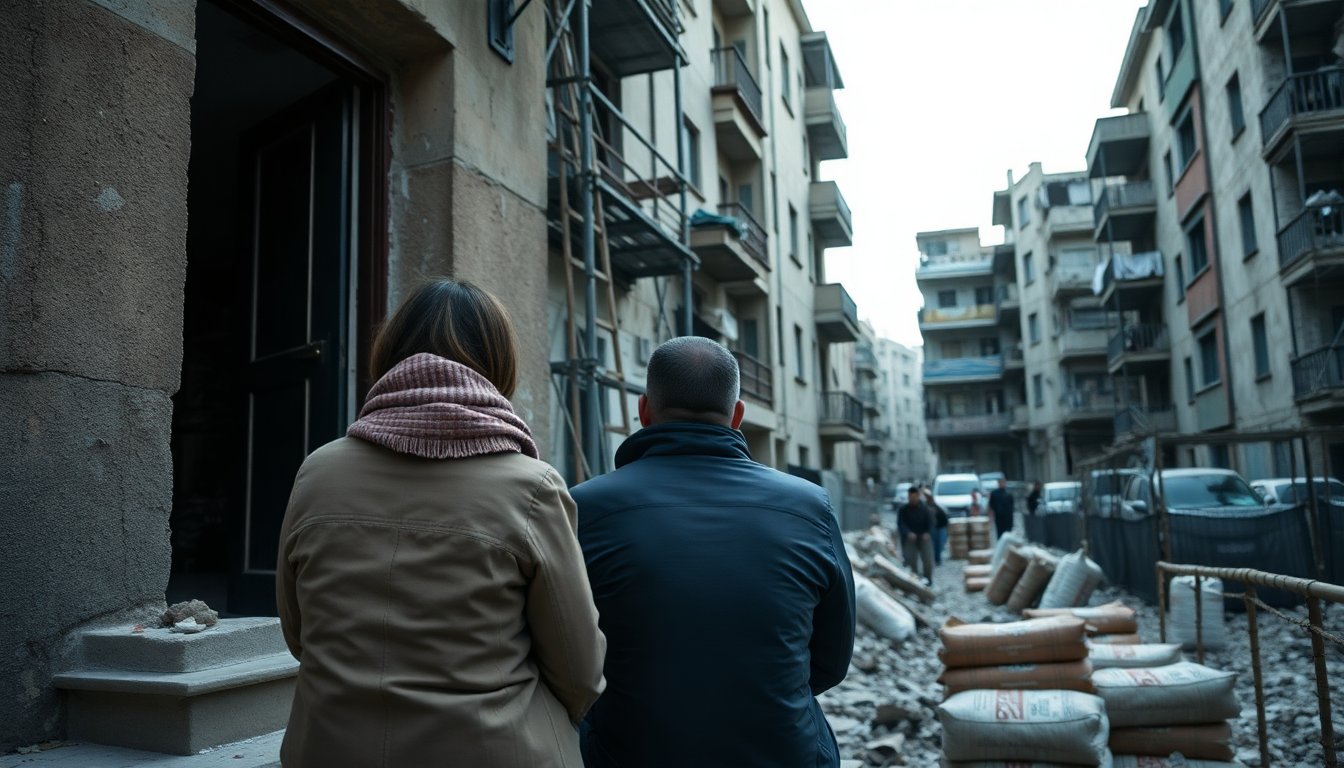
Four Syrian Canadians have gone back since the Assad government collapsed, and their experiences resist easy summaries. For some, the return brought relief and a fragile sense of safety. For others, it reopened wounds: neighborhoods erased, lives interrupted, and the quiet, exhausting work of putting things back together bit by bit. These were not spur-of-the-moment trips. Each person weighed risks, family obligations and finances before deciding to leave the lives they had established abroad, including in Canada.
Journeys that confront memory and loss
Some crossed at the Nasib border; others slipped into familiar quarters only to find streets reduced to rubble. Their paths led to Latakia, Damascus and Aleppo — places that are public history and private archive at once, marked by the 2011 uprising and the sieges that scarred much of the last decade. One returnee described walking into Al-Qadam and feeling as if a whole era had been wiped clean: buildings gone, shops shuttered, the normal hum of daily life missing.
Family ties and unfinished goodbyes
For many, emotion tipped the balance. A man who left Syria as a student in 2007 finally went home after the regime fell to visit his father’s grave — a visit he’d postponed since 2010. Sitting by the graveside, he read words he had held back for years. A woman who arrived in Canada in 2016 after taking part in the opposition returned when a relative died early in the uprising; in a battered drawer she found letters and household items she had sent during shortages — small objects that tied her to a life interrupted but never forgotten.
What remains and what’s returning
The physical recovery is uneven. In some blocks, houses have been rebuilt and shops reopened; in others, entire streets remain gutted. Clinics, electricity and water services are sporadic. Markets operate in pockets, but supply lines are patchy and many businesses never reopened. In Latakia a sporting club stands intact yet empty, its equipment frozen in time; in besieged parts of Damascus, rubble is the dominant landscape. Simple artifacts — a shard of marble, a faded bottle — become anchors of memory amid the ruin.
Everyday pressures and the limits of reconstruction
Beyond the visible damage, returnees confront high prices, scarce jobs and stretched public services. Basic goods are expensive while wages are low, so many households depend on remittances from relatives overseas. Clinics operate below capacity, schools struggle to rebuild enrollment, and public transport is unreliable. Where goods do appear on shelves, affordability often remains out of reach.
Reconstruction, they say, can’t stop at repairing buildings. It needs to revive governance, restore markets and rebuild health and education systems. Measurable indicators — market activity, clinic visits, school registration, employment figures, consumer prices — offer practical ways to chart progress and shape policy. Digital work also plays a role: one returnee kept a remote job in refugee advocacy, creating a financial buffer and demonstrating how cross-border employment can ease fragile transitions.
Staying, commuting, or living split lives
Returning doesn’t always mean resettling permanently. Some split their time between countries, holding on to careers and services abroad while keeping a presence at home. A former PhD candidate returned right after the regime’s fall but now travels frequently to teach and advise rather than settle full-time. Others face the classic migrant dilemma: how to keep cultural roots alive for children while ensuring stable incomes and services overseas. One father speaks French at home to preserve linguistic ties while his child attends a bilingual daycare mixing English and Arabic.
These mixed arrangements reshape household budgets, social networks and long-term plans. Tracking remittance flows, school registrations and travel patterns could help tailor support to different kinds of returnees.
Politics and the slow work of rebuilding public life
Everyone interviewed stressed that the regime’s fall is only the start of a long transition. Decades of authoritarian rule have left civic institutions weak and many citizens unused to public life beyond survival. Restoring a pluralistic political culture will take time, legal reform, independent media, civic education and real opportunities for participation — not just proclamations on paper.
The stories of these four returnees are small windows onto a bigger picture: relief mixed with sorrow, incremental rebuilding, and tough choices about identity, livelihood and belonging. Their returns illuminate the practical and human dimensions of recovery — a slow, uneven process that will demand patience, resources and persistent civic energy.