
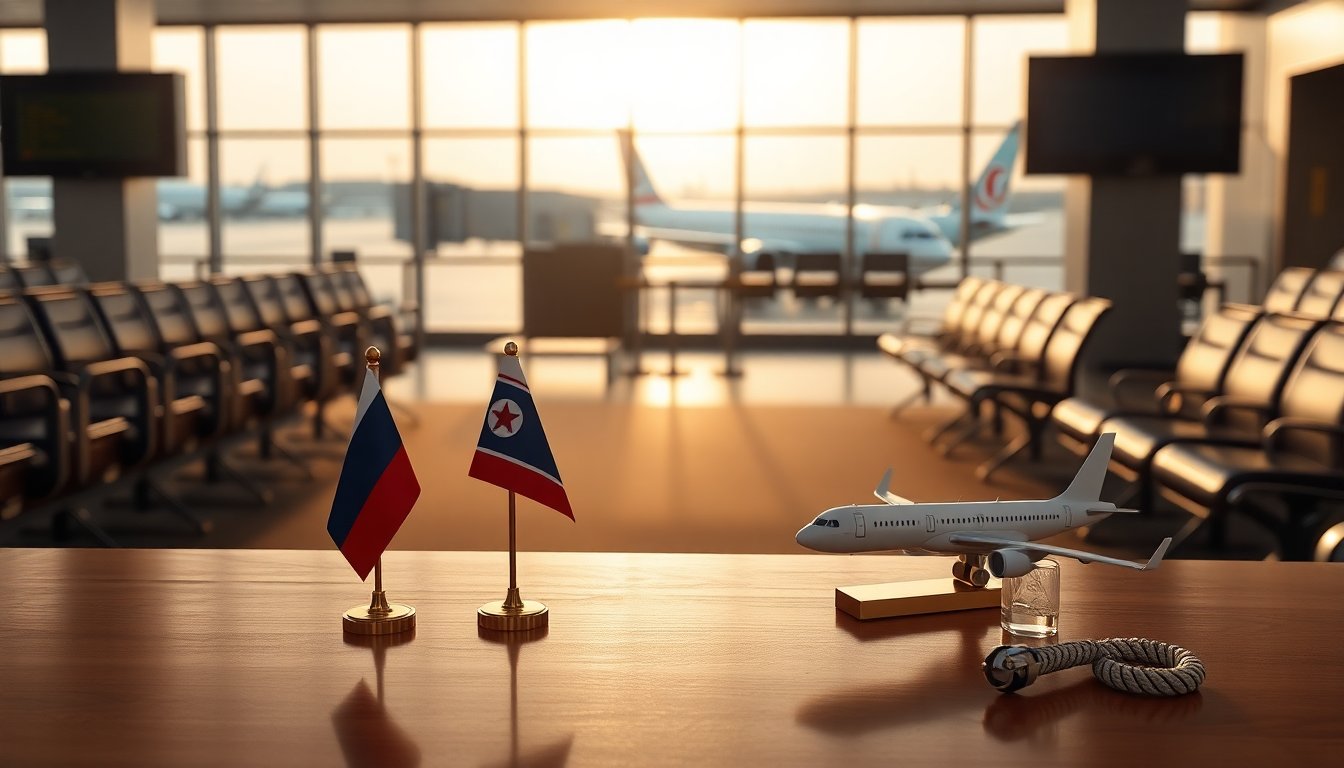
The launch of a direct air link between Moscow and Pyongyang in mid-2026 was intended to reconnect two capitals and stimulate travel, but the route has not attracted significant leisure traffic. Approved in July 2026, the service operated under strict conditions: a government-backed subsidy, monthly rotations, and restrictions on how tickets could be sold. Despite those measures, operators and border records indicate that the flights carried almost no ordinary tourists, focusing instead on select passengers and specialists.
That contrast between expectations and reality became apparent as the route progressed through the summer and autumn. The state allocated funds from a reserve to support operations, and the carrier ran only part of the schedule it had committed to. Officials emphasized the diplomatic and strategic rationale for keeping the corridor alive, while travel agents and industry insiders pointed to concrete numbers showing limited take-up by holidaymakers.
How the service performed against the plan
Under the subsidy terms the airline was required to operate 10 one-way flights between July and November 2026, but reporting counted just five such departures in that window. The route’s inaugural flight took place on July 27, 2026, and the Transport Ministry had signalled an intention to fly once a month to let demand build. Sources close to the carrier said tourists were “practically non-existent” on the flights, though some seats were occupied. The operator maintained the connection partly for ties between the two countries and to transport specialists in sectors such as energy and IT.
Demand patterns and ticketing rules
Part of the weak tourist interest can be traced to the way tickets were distributed: travel to North Korea was sold only through a small number of accredited intermediaries. There are currently five Russian travel agencies authorised to offer trips, and border data show Russians made just over 5,000 visits to North Korea for tourism in 2026. Nearly 4,000 of those tourists reached Pyongyang via flights from Vladivostok operated by Air Koryo with tour operator Vostok Intur, rather than on the Moscow link.
Money, aircraft and operating math
The financial picture helps explain why the Moscow departure saw so few rotations. The carrier reported receiving about 40.8 million rubles in direct subsidies for the route, while the government had initially set aside 124.4 million rubles in reserve funding. Industry estimates put the cost of a round-trip on a wide-body long-haul aircraft at roughly 30–35 million rubles, meaning the subsidy covered barely one flight at that level. Observers noted that, even without renewed support, the airline might continue operations if a state necessity is asserted.
Aircraft choices and scheduling
When the service started the carrier deployed large wide-body jets before switching equipment. The operation initially used a Boeing 777 configured for high capacity and later moved to Airbus A330 aircraft with a smaller seat count. Although regulators authorised up to two weekly rotations, the carrier opted for much less frequent service—typically monthly departures—citing the need to cultivate a steady passenger base rather than risk repeated empty legs.
Who flew and what comes next
The passenger mix on the Moscow–Pyongyang flights leaned away from leisure tourists and toward business travelers and specialists. Sources described groups including energy and IT professionals among those using the link. Given the low tourist numbers and the subsidy covering only a fraction of operating expenses, prospects for expanding scheduled leisure service hinge on either a policy decision to keep the route active for strategic reasons or a measurable uptick in demand facilitated by tour operators and eased booking channels.
Ultimately the experiment highlights the limits of using subsidies alone to generate tourism on a politically sensitive corridor. The route’s short first season delivered precise data: partial schedules, concentrated funding of 40.8 million rubles versus an initial allocation of 124.4 million rubles, and a clear preference among Russian tourists for the Vladivostok–Pyongyang link operated by Air Koryo. Any future adjustments will depend on whether authorities prioritise diplomatic connectivity over commercial viability or vice versa.


