
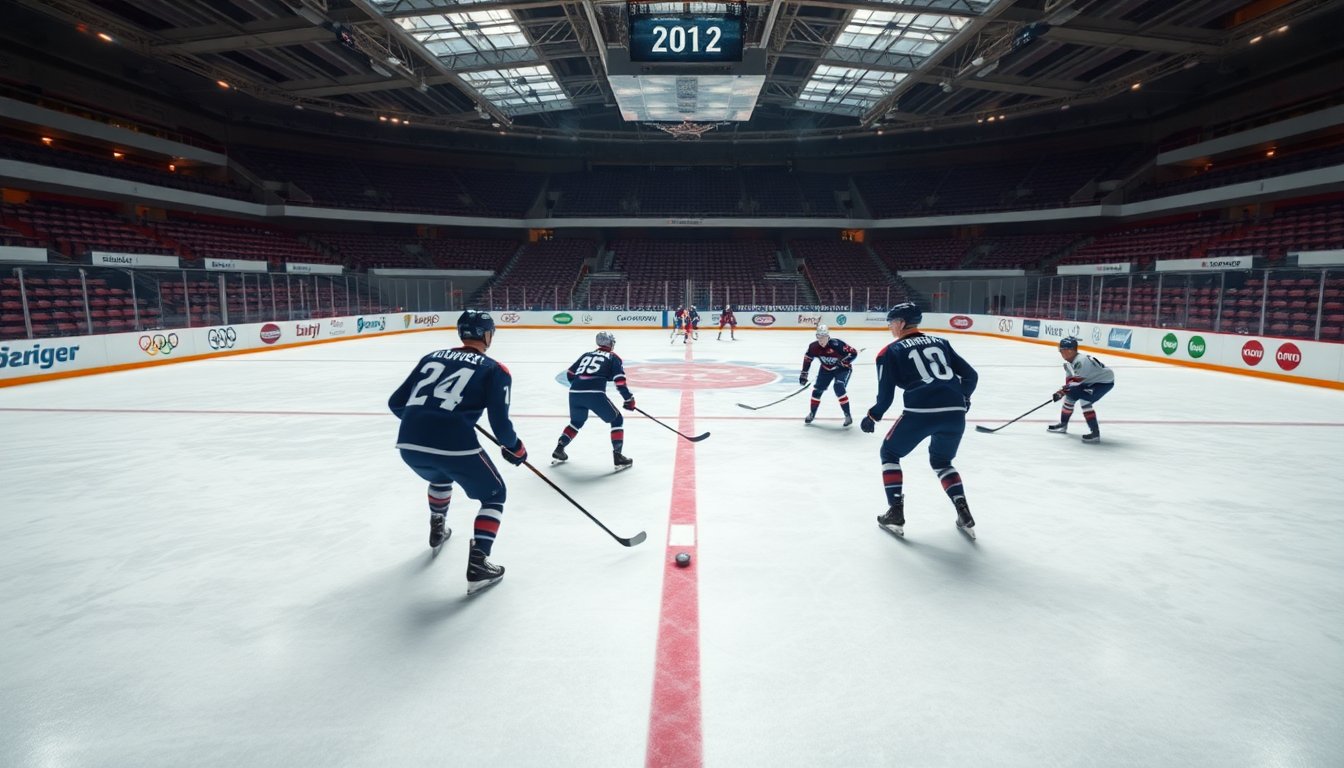
The United States women’s hockey team arrived in Milano Cortina as the clear favorite — and didn’t waste time proving it. In four preliminary games Team USA went 4-0 and outscored opponents 20–1, a run of form that left opponents, analysts and rival coaches asking a blunt question: who can stop them? Their first knockout test comes against host nation Italy at the Milano Rho Ice Hockey Arena on Feb. 13, 2026, at 3:10 p.m. ET. The game will be on USA Network and available to stream on Peacock and DIRECTV.
How they dominated
From the footage, reports and internal notes reviewed, the U.S. success in pool play was far from accidental. Three strengths stood out: breakneck transition play through the neutral zone, a disciplined defensive structure that limited high-danger chances, and a deep scoring roster that didn’t rely on a single top line.
Video and analytics repeatedly show the same patterns. Quick outlet passes turned defense into attack in an instant, creating 2-on-1s and odd-man rushes. Coaches rotated lines to keep pressure up late in games, sending college-based contributors onto the ice in middle and late periods to take advantage of tiring opponents. On the backend, a conservative gap and smart positioning funneled shots to the outside, letting goaltender Aerin Frankel handle the limited, lower-quality chances that did get through. The result: multiple shutouts, a high save percentage and consistent control of tempo.
Tactical reconstruction
Early in each game the U.S. established a relentless rhythm: aggressive puck retrievals, immediate outlets, and north-south movement that turned turnovers into scoring opportunities. Midgame, the staff preserved top minutes while bringing younger players into high-energy shifts. Play-by-play notes link deliberate line deployments to the scoring bursts, suggesting proactive planning rather than reactive scrambling.
Standout contributors
This was a collective effort. Veterans set tempo and ran the special teams; collegiate standouts supplied secondary scoring and relentless forechecking; and defensive specialists plus Frankel kept the net safe. Internal documents single out Aerin Frankel for multiple shutouts and steady goaltending. Caroline Harvey emerged as a key playmaker in marquee moments: in the U.S.–Canada game she scored and added two assists. Abbey Murphy — Minnesota’s captain — repeatedly opened space and created chances, while Laila Edwards and Kristen Simms both found the net, with Edwards’ goal marking a milestone as the first Black woman to score for the U.S. at the Olympics.
The Canada game and what it revealed
The 5–0 win over Canada reshaped the tournament narrative. Canada were hampered by injuries — notably the absence of Marie-Philip Poulin while she was under re-evaluation for a lower-body issue — and by lapses in puck management, both of which the U.S. exploited. Possession charts and shot maps showed prolonged U.S. control of the neutral zone and frequent high-danger looks from the slot. Video logs point to at least four defensive-zone turnovers by Canada that directly led to scoring chances. For the U.S., the victory confirmed that their depth model could produce goals from multiple lines rather than a single dominant unit.
Italy matchup: the variables
Italy reached the quarterfinals from Group B with a 2-2 record and will have home ice and a partisan crowd behind them. Their plan, according to scouting notes, is straightforward: clog passing lanes, apply disciplined forechecking and force the U.S. into lower-percentage shots. If Italy can disrupt quick outlets and keep the game tight, the match is likely to hinge on special teams and goaltending — situations where a hot goalie can flip expectations in a single elimination setting.
What to watch in the quarterfinal
– Transition control: If Italy contains the quick outlets, expect longer possessions and more neutral-zone battles. – Special teams: Both sides have tweaked personnel recently; power play and penalty kill performance could decide the outcome. – Goaltending: A strong individual performance in net can be decisive in one-off knockout games. – Line management: Will the U.S. preserve energy through rotation, or tighten minutes around trusted veterans if the game gets tense?
Broader implications
Short-term, a convincing U.S. win will validate the rotation strategy and give coaches more latitude to tinker later in the tournament. A loss or narrow escape would likely trigger tighter minute management and a quicker turn to a core group of high-trust players. On a longer horizon, the success of collegiate contributors reinforces the national pipeline and could affect how future rosters are selected and developed.
What happens next
Coaching staffs will refine match plans, monitor recovery metrics and run scenario drills in the days before the quarterfinal. The U.S. is expected to continue blending college talent with veteran stability while maintaining the defensive template that has limited high-danger chances so far. Opponents will study the U.S. outlet sequences and practice counter‑pressure schemes meant to cut off the quick transitions. And for viewers: the quarterfinal is set for Feb. 13 on USA Network, Peacock and DIRECTV; the women’s gold-medal game is scheduled for Feb. 19, 2026.
How they dominated
From the footage, reports and internal notes reviewed, the U.S. success in pool play was far from accidental. Three strengths stood out: breakneck transition play through the neutral zone, a disciplined defensive structure that limited high-danger chances, and a deep scoring roster that didn’t rely on a single top line.0