
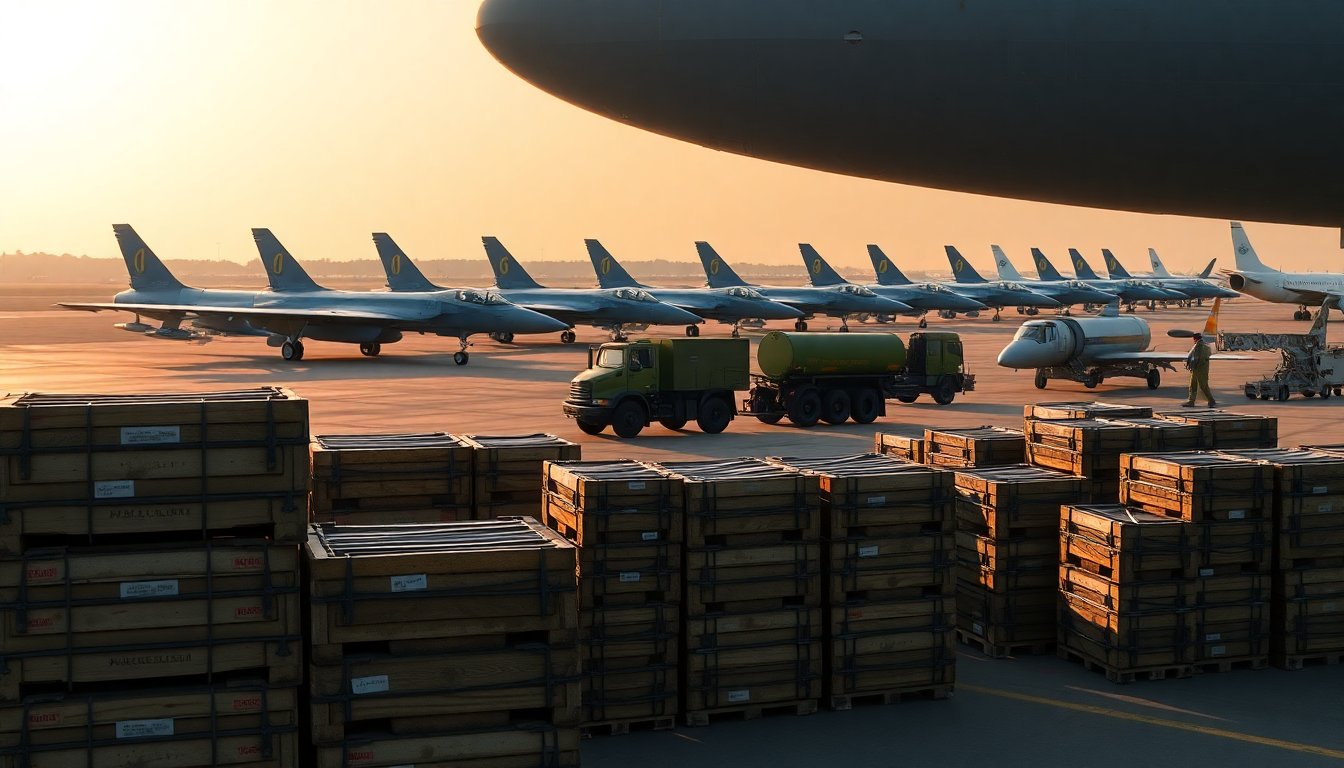
A contemporaneous account dated 19/02/reports that the United States has deployed what journalists are calling the largest concentration of air power in the Middle East since the 2003 Iraq invasion. Jets, tankers and stocks of heavy munitions have flowed into the region even as Washington maintains active diplomatic channels with regional governments. The result: a strained equilibrium where readiness for combat and ongoing negotiations move in parallel.
President Donald Trump has been briefed on military options regarding Iran while diplomacy continues, and that dual posture has sparked a fierce debate in Washington. Should the U.S. back — or even take part in — any Israeli offensive? The answer carries consequences well beyond the immediate battlefield, shaping alliances, regional politics and the credibility of future U.S. diplomacy.
What the buildup signals A surge of aircraft and ordnance is a clear message: the U.S. can strike if political leaders authorize it. Such a concentration expands the menu of military choices — from symbolic shows of force and precise, limited strikes to sustained campaigns. The presence of very large munitions, including 30,000-pound-class weapons, widens operational options, but those weapons are not a silver bullet. Destroying facilities can slow programs and degrade capabilities, yet it rarely erases the technical expertise, networks and institutional knowledge that underpin complex programs.
Whether strikes produce strategic, lasting results depends on many factors: pinpoint targeting, dependable intelligence, rigorous damage assessment and follow-up political measures. For reducing the risk of a nuclear weapon, intrusive inspections, enforceable transparency and negotiated limits generally yield more durable outcomes than strikes alone.
Perception and signaling How Tehran — and other capitals like Beijing and Moscow — interpret U.S. moves may matter more than the hardware on the tarmac. A force surge can be read as a genuine preference for diplomacy backed by coercive options, or as a warning that talks are merely cover for imminent action. Ambiguity is dangerous: it can harden Iran’s internal politics, empower hardliners, and make moderates’ negotiating position weaker.
Clear, calibrated messaging reduces the odds of miscalculation. Mixed signals, by contrast, hand opponents a propaganda advantage and raise the risk of unintended escalation.
Israel’s aims and the limits of allied intervention Analysts looking at Israel’s recent operations see aims that may reach beyond simply slowing Tehran’s nuclear progress. Target choices and timing suggest goals such as undermining U.S.-Iran diplomacy and redirecting global attention from Israel’s actions in Gaza. If the United States becomes militarily entangled, it risks being cast not as a neutral guarantor of regional security but as an advocate for a particular Israeli political and military agenda.
That political framing matters. American involvement would be filtered through regional perceptions, shaping public opinion, straining alliances, and influencing whether other states sign on to future diplomatic or security initiatives.
Short-term strikes versus long-term containment Air strikes can disrupt logistics, damage infrastructure and buy time. History, however, shows that bombing campaigns tend to produce temporary setbacks. Facilities can be rebuilt, and specialist know-how often survives personnel losses. If the aim is durable nonproliferation, military blows need to be paired with robust verification, sanctions that bite, and diplomatic mechanisms that lock in limits.
Regime change — and the hard lessons Past U.S. interventions offer cautionary tales. Removing a regime or decapitating its programs rarely produces tidy outcomes. Power vacuums, nationalist backlashes and asymmetric retaliation are common follow-ons. Policymakers should weigh not just the immediate military benefits of action but also the messy political fallout that can follow, sometimes for years.
President Donald Trump has been briefed on military options regarding Iran while diplomacy continues, and that dual posture has sparked a fierce debate in Washington. Should the U.S. back — or even take part in — any Israeli offensive? The answer carries consequences well beyond the immediate battlefield, shaping alliances, regional politics and the credibility of future U.S. diplomacy.0
President Donald Trump has been briefed on military options regarding Iran while diplomacy continues, and that dual posture has sparked a fierce debate in Washington. Should the U.S. back — or even take part in — any Israeli offensive? The answer carries consequences well beyond the immediate battlefield, shaping alliances, regional politics and the credibility of future U.S. diplomacy.1
President Donald Trump has been briefed on military options regarding Iran while diplomacy continues, and that dual posture has sparked a fierce debate in Washington. Should the U.S. back — or even take part in — any Israeli offensive? The answer carries consequences well beyond the immediate battlefield, shaping alliances, regional politics and the credibility of future U.S. diplomacy.2